

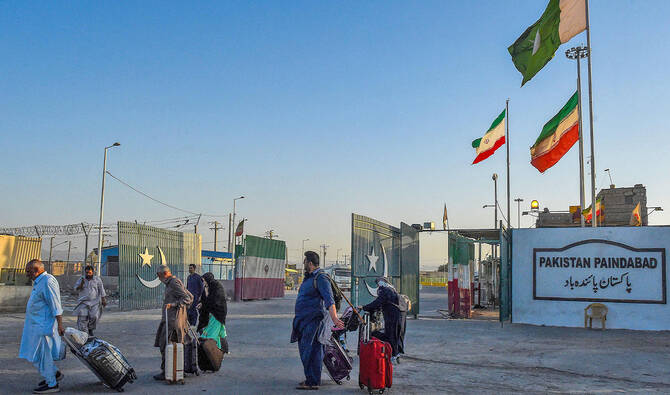

ISLAMABAD: Hundreds of Pakistani pilgrims, students and workers have finally made it back home from Iran this week, telling stories of tense roads, sleepless nights and missiles flashing overhead as the conflict between Israel and Iran pushes the region to the brink of wider war.
A week of Israeli air and missile strikes against its major rival that started on June 13 has wiped out the top echelon of Iran’s military command, damaged its nuclear capabilities and killed hundreds of people, while Iranian retaliatory strikes have killed two dozen civilians in Israel.
In the immediate aftermath of Friday’s attacks, Iran closed its airspace to commercial traffic, leaving hundreds of expats, including Pakistani pilgrims, students and workers, stranded.
For Hassan Raza, a 22-year-old student at Al-Mustafa International University in Qom, the abrupt closure of the skies turned an ordinary day into a marathon journey through the heart of a country on edge.
“When Israel attacked Iran on 13th June, I was at Tehran International Airport, and after a few moments, all flights were canceled and we entered Pakistan from the border of Rimdan by road,” Raza told Arab News on Wednesday in a telephone interview.
Pakistan and Iran share a 909-kilometer (565-mile) border, which separates Balochistan from the Iranian province of Sistan-Baluchestan. Forced to abandon plane tickets, many stranded Pakistanis like Raza pooled resources to travel by bus, heading south from Tehran toward the remote border at Rimdan.
The bus route took Raza and his group past Natanz, a name known worldwide for being the site of Iran’s main uranium enrichment facilities and one of the prime targets of repeated Israeli attacks since Friday.
“We passed by Natanz, which is a nuclear power plant in Iran and has been targeted multiple times by Israel,” Raza said.
As they continued, they witnessed firsthand the flashes and arcs of missiles fired in retaliation.
“We saw that many missiles were launched from Iran toward Israel and made videos of this as well,” he said. “After 20 to 22 hours, we reached the Rimdan border crossing and entered Pakistan.”
Along the road journey, Raza added, despite the echo of distant missile exchanges, daily life seemed remarkably calm.
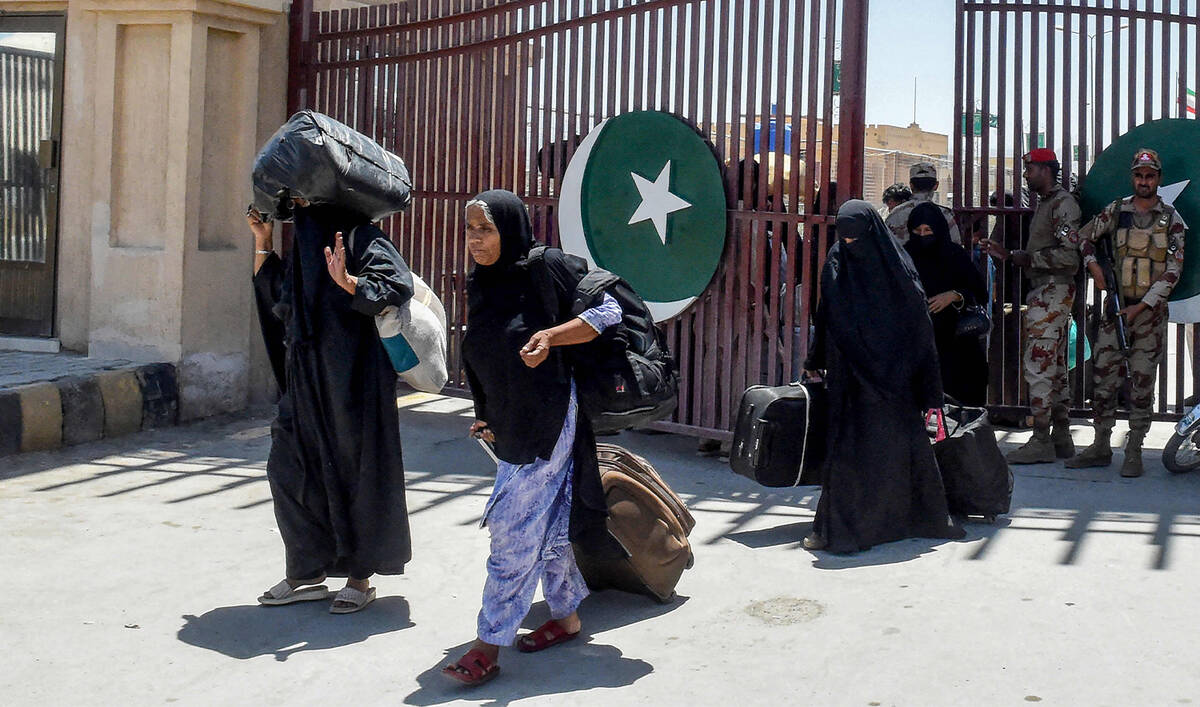
Pakistani pilgrims evacuated from Iran walk across the Pakistan-Iran border at Taftan, in Balochistan province on June 18, 2025, amid the ongoing conflict between Israel and Iran. (AFP)
“JUST IN TIME”
Syed Nadeem Abbas Shirazi, a pilgrim from Mandi Bahauddin in Punjab province, had arrived in Mashhad, a sacred city for Shiite Muslims, to visit holy shrines when the attack threw the region into uncertainty.
“When Iran was attacked, I was in Mashhad. We went out and interacted with the local people, and they showed no signs of fear. In fact, they were very emotional,” Shirazi said.
“They were chanting slogans against Israel and the United States, and many said they had no fear of martyrdom, they desired it,” he added.
As the situation remained tense, Shirazi and his group decided to return by road rather than wait for flights to resume.
“From Mashhad, we boarded a bus at 1pm and reached Chabahar at noon the next day,” he said.
The group then hired a taxi for the final stretch to the Pakistan border near Gwadar.
For others, the trip home meant navigating jam-packed highways and rationed fuel in a country bracing for more strikes.
Syed Ali Hassan, an electrician from Layyah who worked near Tehran, said he felt the atmosphere change instantly when the attacks began on Friday.
“People were not openly panicking, but you could feel the fear in the air, everyone seemed to be preparing for the worst,” Hassan said.
Amid the quiet fear, Hassan and a handful of other Pakistanis found a bus heading west toward the Taftan border in Pakistan’s Balochistan province.
“The journey wasn’t easy. Highways were packed with vehicles, fuel stations had long lines, and we traveled all night with brief stops, mostly in silence,” he said.
Some passengers were worried about possible airstrikes or roadblocks, but the group managed to reach the border without incident.
At Taftan, exhausted and emotionally drained, many Pakistanis breathed a sigh of relief as they stepped back onto home ground.
“It felt like we had made it out just in time,” Hassan said.


