Syrian leader makes first visit to cradle of country’s uprising

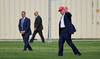
Syria's interim President Ahmed al-Sharaa on Friday visited the southern city of Daraa, the cradle of the country's uprising, for the first time since ousting longtime ruler Bashar al-Assad almost six months ago. (X/@TAldughim)
Short Url
Updated 06 June 2025
Follow

Syrian leader makes first visit to cradle of country’s uprising

  • SANA published footage showing a cheering crowd greeting Sharaa
  • Sharaa and Interior Minister Anas Khattab visited Daraa’s historic Omari mosque during the trip

DAMASCUS: Syrian Arab Republic’s interim President Ahmed Al-Sharaa on Friday visited the southern city of Daraa, the cradle of the country’s uprising, for the first time since ousting longtime ruler Bashar Assad almost six months ago.

State news agency SANA published footage showing a cheering crowd greeting Sharaa, who was seen waving and shaking hands with people during the visit, which came on the Muslim holiday of Eid Al-Adha.

Sharaa and Interior Minister Anas Khattab visited Daraa’s historic Omari mosque during the trip, the presidency said in a statement, releasing images of the visit showing the leader among the crowd.

SANA also said he met with local civil and military officials, as well as a delegation from the Christian minority.

Provincial governor Anwar Al-Zoabi said in a statement that the visit was “an important milestone in the course of national recovery.”

In 2011, young boys who had scrawled graffiti against Assad were detained in Daraa, sparking nationwide protests.

After the war erupted following the brutal repression of protests, rebels seized control of Daraa and hung on until 2018, when the city returned to Assad under a deal mediated by Russia that allowed former fighters to keep their light weapons.

On December 6, as Sharaa’s Islamist group Hayat Tahrir Al-Sham (HTS) led a lightning offensive on Damascus from the country’s northwest, a coalition of armed groups from Daraa province was formed to help oust Assad, who was toppled two days later.

The province was plagued by unrest in recent years.


Algeria inaugurates strategic railway to giant Sahara mine

President Tebboune attended an inauguration ceremony in Bechar. (AFP file photo)
Updated 02 February 2026
Follow

Algeria inaugurates strategic railway to giant Sahara mine

  • The mine is expected to produce 4 million tons per year during the initial phase, with production projected to triple to 12 million tons per year by 2030
  • The project is financed by the Algerian state and partly built by a Chinese consortium

ALGEIRS: Algerian President Abdelmadjid Tebboune on Sunday inaugurated a nearly 1,000-kilometer (621-mile) desert railway to transport iron ore from a giant mine, a project he called one of the biggest in the country’s history.
The line will bring iron ore from the Gara Djebilet deposit in the south to the city of Bechar located 950 kilometers north, to be taken to a steel production plant near Oran further north.
The project is financed by the Algerian state and partly built by a Chinese consortium.
During the inauguration, Tebboune described it as “one of the largest strategic projects in the history of independent Algeria.”
This project aims to increase Algeria’s iron ore extraction capacity, as the country aspires to become one of Africa’s leading steel producers.
The iron ore deposit is also seen as a key driver of Algeria’s economic diversification as it seeks to reduce its reliance on hydrocarbons, according to experts.
President Tebboune attended an inauguration ceremony in Bechar, welcoming the first passenger train from Tindouf in southern Algeria and sending toward the north a first charge of iron ore, according to footage broadcast on national television.
The mine is expected to produce 4 million tons per year during the initial phase, with production projected to triple to 12 million tons per year by 2030, according to estimates by the state-owned Feraal Group, which manages the site.
It is then expected to reach 50 million tons per year in the long term, it said.
The start of operations at the mine will allow Algeria to drastically reduce its iron ore imports and save $1.2 billion per year, according to Algerian media.