

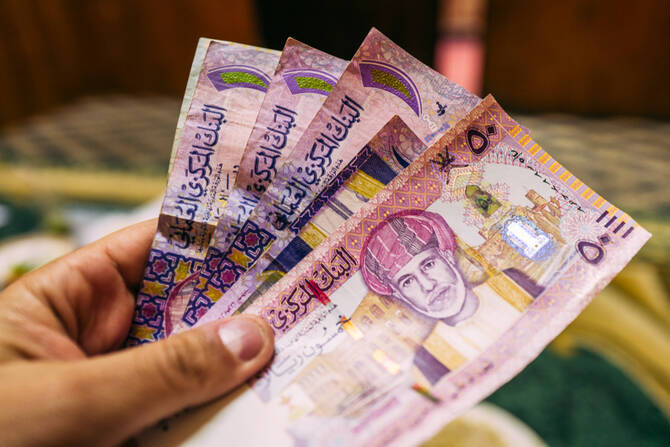

RIYADH: Inflation in Oman rose 3.6 percent year on year in March, driven primarily by increases in transport and miscellaneous goods and services, according to official data.
The release by the National Centre for Statistics and Information showed price pressures varied across regions and spending categories, with Muscat recording the highest inflation rate among governorates at 4.5 percent, while Dhofar registered one of the lowest at 1.8 percent.
By expenditure category, miscellaneous goods and services registered the sharpest increase at 13.8 percent, followed by transport at 9.4 percent and restaurants and hotels at 5.8 percent.
Oman’s latest inflation data highlights emerging price pressures across key consumer categories, even as overall inflation remains relatively contained compared with regional peers, with average inflation at 2.3 percent in the first quarter of 2026 underscoring a broadly stable price environment across the Gulf.
In Saudi Arabia, consumer price inflation stood at 1.7 percent year on year in February, according to official data from the General Authority for Statistics, indicating a significantly lower rate than Oman’s March reading.
In Qatar, the Consumer Price Index rose to 110.60 points in February, marking an increase of 0.64 percent compared to January and a year-on-year rise of 2.51 percent compared with February 2025.
In the UAE, while March consumer price data has not been released, the Central Bank of the UAE said in its latest bulletin that “the inflation outlook is expected to be contained in its moderate track, in the short to medium term, with the headline inflation projected at 1.8 percent in 2026 and 2.0 percent in 2027.”
The central bank’s guidance points to broadly stable price conditions across the UAE economy.
Across Oman’s governorates, inflation rates remained uneven. In addition to Muscat’s 4.5 percent increase, Al Dhahirah and Al Dakhiliyah recorded 4.2 percent and 4.1 percent, respectively, while Al Buraimi posted 3.9 percent.
South Al Batinah saw a 3 percent rise, and Al Wusta saw a 2.8 percent growth. Lower increases were observed in South Al Sharqiyah at 2.7 percent, North Al Sharqiyah at 2.6 percent, North Al Batinah at 1.7 percent, and Musandam at 3.1 percent.
Food and non-alcoholic beverages rose 4.3 percent, while furnishings and household equipment increased 3 percent. Education prices were up 2.2 percent, health rose 1.7 percent, and recreation and culture edged higher by 0.2 percent. Clothing and footwear recorded a marginal increase of 0.1 percent.
Other categories, including housing, water, electricity, gas and other fuels, as well as communication and tobacco, showed no change compared to the same month last year.
The NCSI data also highlighted that the miscellaneous goods and services group recorded an average inflation rate of 13.5 percent during the first three months of 2026, underscoring sustained price increases in that segment.


