


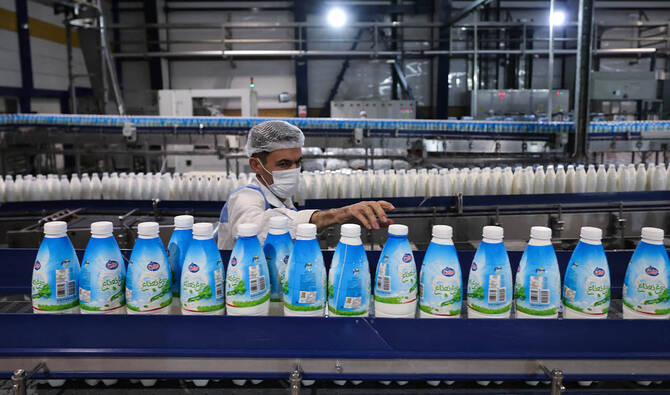
ISLAMABAD: Pakistan is seeking to overhaul its vast but largely informal dairy sector through tax cuts, regulation and productivity reforms, officials said on Monday, as the government looks to unlock growth in one of the country’s biggest but underperforming industries.
The move comes as Pakistan ranks among the world’s largest milk producers, generating more than 70 million tonnes annually, but processes only a small fraction of its output, with most milk sold unregulated in loose form, limiting exports and value addition.
Analysts say reforms in processing, taxation and supply chains could help Pakistan tap export markets in the Middle East and beyond, where demand for dairy products is rising.
On Monday, Federal Minister for Commerce Jam Kamal Khan discussed proposed reforms with industry representatives at a meeting in Islamabad, focusing on taxation, productivity and formalization challenges facing the sector.
“Without proper genetic direction, farmers cannot achieve the desired milk yields and structured support, regulation, and farmer education are essential to transform the sector,” Khan said, according to a statement from the information ministry.
Industry representatives highlighted that Pakistan imposes an 18% general sales tax on dairy products, significantly higher than many countries where such items are either exempt or lightly taxed, and urged the government to reduce it to 10%.
Officials said the government had asked for detailed proposals on tax reductions and directed coordination with federal and provincial authorities to advance reforms aimed at formalizing the sector.
Pakistan’s dairy industry is dominated by small-scale farmers and informal supply chains, with weak cold storage, low productivity and quality concerns limiting its ability to compete globally despite strong domestic demand.
At the meeting, the Pakistan Dairy Association proposed stricter regulation to ensure only pasteurized or properly packaged milk is sold, alongside financial support for farmers, improved access to banking, and investment in breeding programs to boost yields.
The government said it would work with stakeholders to develop a comprehensive plan to improve productivity, enhance regulatory compliance and increase the sector’s contribution to the economy.


