



RIYADH: Hajj is often described as the journey of a lifetime. For many Saudis, it is even more meaningful when it is shared with their parents.
Young pilgrims accompany their mothers and fathers to Hajj as a way of renewing their commitment to family and to create a deeper sense of spiritual responsibility, especially among first-time pilgrims.
The experience becomes an intergenerational bond built through shared rituals, resilience and reflection.

Many young pilgrims accompany their parents to Hajj as a way of renewing their commitment to family and to create a deeper sense of spiritual responsibility. (SPA)
“You need someone to guide you — and who better than your mother?” said 22-year-old Ethar Abdulrahman.
For her, the idea of going to Hajj alone felt overwhelming: “It’s not easy for someone my age to go through Hajj alone. You need someone to guide and support you, and emotionally you need someone to ease the loneliness of being away from family. Having that person be your parent is just beyond amazing.”
While accompanying her mother, Abdulrahman’s role quickly shifted from daughter to caregiver — one who packed thoughtfully, walked attentively and remained emotionally present through every stage of the pilgrimage.
I wasn’t just performing rituals. I was also caring for someone I love — holding her hand in Tawaf, supporting her through heat and crowds. I’ll never forget those moments.
Rania Al-Mutairi
“I packed medications and creams in case she got tired or needed anything,” she said. “The most meaningful moment was after we finished the stoning ritual and returned to the camp. She would tell me stories about the Prophet and how difficult Hajj used to be before all the services and facilitation. It brought a sense of history to the present.”
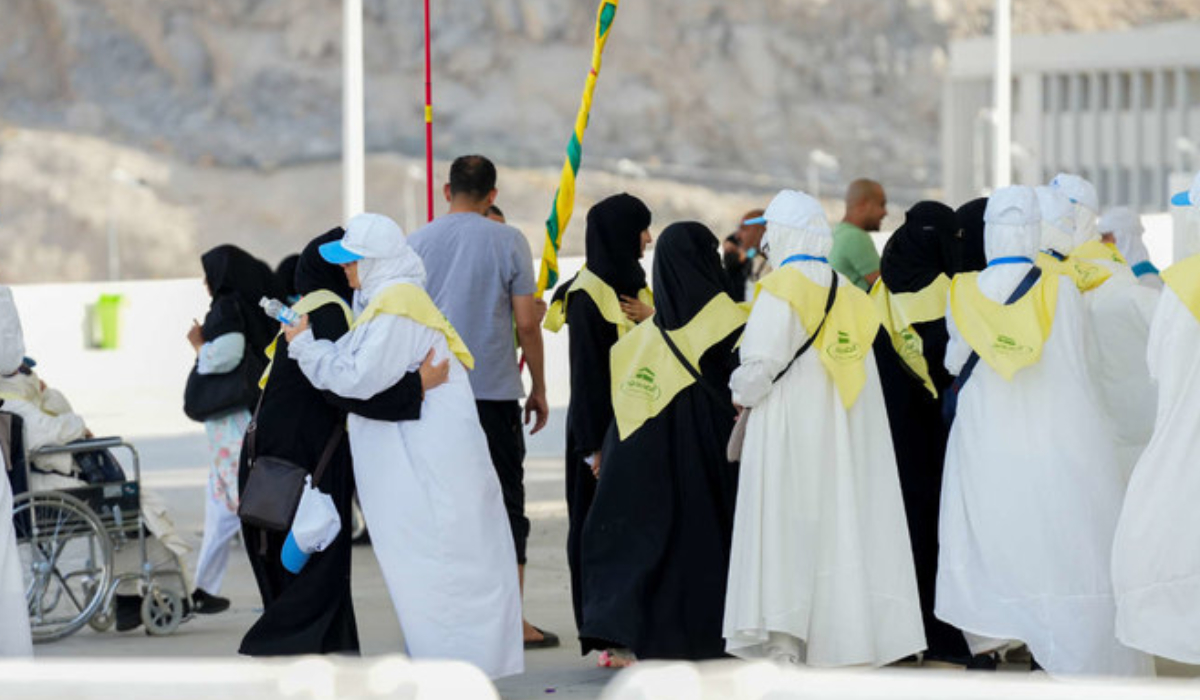
One of the most moving aspects of these journeys is the storytelling, with older pilgrims recalling their first Hajj decades ago under vastly different conditions. (Supplied)
Spending days and nights side by side, praying, walking and resting, had a profound effect on their relationship.
“It brought me much closer to my mother,” said Abdulrahman. “I realized how wise and spiritually grounded she is.”
For Rania Al-Mutairi, 24, the decision to accompany her mother held deep intentions.
At first I was anxious about the time and logistics, but soon I realized Hajj isn’t a race. Slowing down with (my father) gave me more time to reflect and be present. It was a spiritual recalibration.
Hamad Al-Qahtani
“I wasn’t just performing rituals,” she said. “I was also caring for someone I love — holding her hand in Tawaf, supporting her through heat and crowds. I’ll never forget those moments.”
She described the journey as a spiritual and emotional balancing act: “When your focus is on someone else, it can be easy to forget your own needs. But somehow Hajj makes you grow into both roles — servant and seeker.”

Many young pilgrims accompany their parents to Hajj as a way of renewing their commitment to family and to create a deeper sense of spiritual responsibility. (SPA)
The role of a caregiver during Hajj is not limited to carrying bags or fetching water. It is about constant emotional attentiveness — watching for signs of exhaustion, navigating crowds carefully, and offering reassurance when the heat or pressure becomes overwhelming.
Hamad Al-Qahtani, 26, accompanied his elderly father and said the experience transformed his understanding of patience.
“My dad walks slower and needs frequent breaks,” he said. “At first I was anxious about the time and logistics, but soon I realized Hajj isn’t a race. Slowing down with him gave me more time to reflect and be present. It was a spiritual recalibration.”
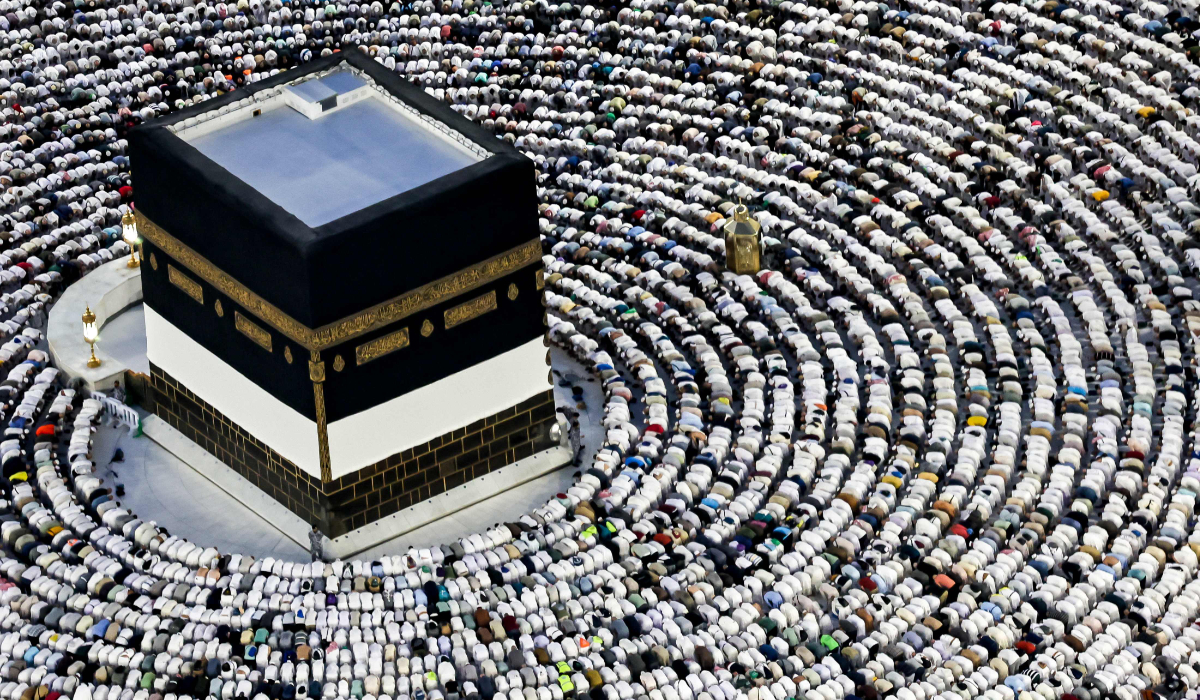
Muslim pilgrims pray around the Kaaba, Islam's holiest shrine, at the Grand Mosque in the holy city of Makkah, Saudi Arabia. (AFP file photo)
One of the most moving aspects of these journeys is the storytelling, with older pilgrims recalling their first Hajj decades ago under vastly different conditions.
“Every time we sat down to rest, my mother would tell me how she did this 30 years ago,” Abdulrahman recalled. “Back then, it was tents with barely any cooling, long walks with no shade, and limited access to health services.
“Today I watched her marvel at the buses, the apps, the water stations. It reminded me of how far we’ve come as a country — and how much easier it is now, thanks to the efforts of the Saudi authorities.”
You need someone to guide you — and who better than your mother?
Ethar Abdulrahman
While many young pilgrims embark on Hajj focused on their own internal transformation, those who accompany parents often find their biggest growth comes from the act of service.

One of the most moving aspects of these journeys is the storytelling, with older pilgrims recalling their first Hajj decades ago under vastly different conditions. (Supplied)
Serving a parent during Hajj is, for many, a form of worship — one that aligns with Islamic values of honoring one’s mother and father, especially in moments of vulnerability and need.
Al-Mutairi said: “I think I learned more from serving my mother than I did from any book. Hajj gave me the space to observe her strength, her patience and her unwavering faith. It taught me what submission really looks like.”
The young Saudis feel there is something profoundly symbolic about guiding a parent through the same rituals they once performed for their own elders. The circular nature of the experience — care being returned, support offered back — creates a spiritual loop that extends across time and generations.
While every pilgrim walks their own path, those who share it with a parent carry more than just ihram and water bottles. They carry legacy, love and a living reminder that faith is not only inherited but also nurtured.


