

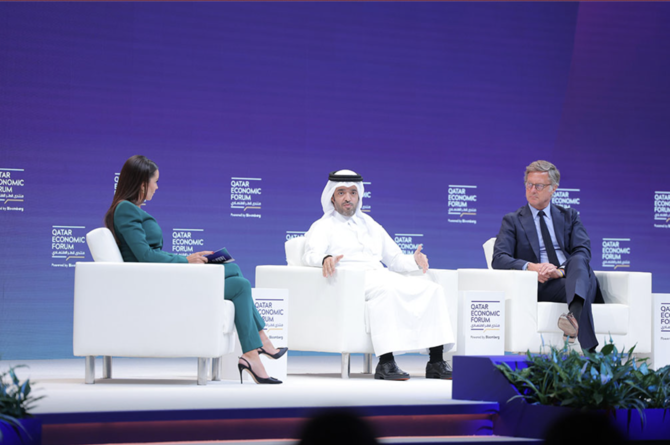

RIYADH: Qatar’s tourism industry contributed 55 billion Qatari riyals ($15.1 billion) to the country’s gross domestic product in 2024, accounting for 8 percent of total economic output, according to a senior official.
The figure marks a 14 percent increase compared with 2023, Chairman of Qatar Tourism Saad bin Ali Al-Kharji said during a high-level business forum in Doha, the country’s news agency reported.
The uptick aligns with the Gulf nation’s broader Tourism Strategy 2030, which aims to boost the sector’s contribution to 12 percent of GDP and attract 6 million visitors by the end of the decade.
The report stated: “His Excellency highlighted some of 2024’s achievements, which saw international visitor arrivals reached 5 million, a 25 percent year-on-year increase, with in-destination spend totaling nearly QAR 40 billion.”
It added: “The hospitality sector also achieved a key milestone, recording 10 million room nights sold during the year.”
Speaking during a panel discussion titled “Tourism in Focus” at the 5th edition of the Qatar Economic Forum, Al-Kharji emphasized the global shift in travel demand toward lifestyle-oriented and purpose-driven experiences, such as wellness retreats, cultural immersion, and luxurious nature-based getaways.
He further noted that travelers are increasingly prioritizing experiences like personalized accommodations, culinary adventures, and curated cultural activities over traditional material purchases.
“Qatar’s strategy aligns with these trends, focusing on six high-potential demand spaces and delivering 54 strategic projects across product development, regulation, and visitor experience enhancement,” the QNA report stated.
The chairman highlighted that his organization is working closely with the Ministry of Public Health to develop a dedicated health tourism strategy, with several plans already approved.
The Gulf nation ranks among the highest spenders on healthcare, allocating up to 12 percent of its annual budget to the sector, and Al-Kharji added that further investments will boost tourism related to the industry.
Qatar is also gearing up to host several major international sporting events in the coming years, including the FIFA U-17 World Cup annually from 2025 to 2029, the FIBA Basketball World Cup in 2027, and the 2030 Asian Games.
The chairman underscored Qatar’s commitment to combining luxury with sustainability across all projects, citing examples such as the Ras Abu Aboud Resort and the Qatar National Convention Centre. The center was the first venue in the region to be certified for both luxury and sustainability, alongside Msheireb Downtown Doha, which was developed to embody both eco-consciousness and upscale living.
According to figures released in May, Qatar welcomed over 1.5 million international visitors in the first quarter of 2025, as the country continues to advance its tourism strategy built on major events, strategic partnerships, and diverse travel experiences.
While slightly below the 1.6 million visitors recorded during the same period in 2024, the latest figures underscore Qatar’s sustained momentum in attracting global travelers.


