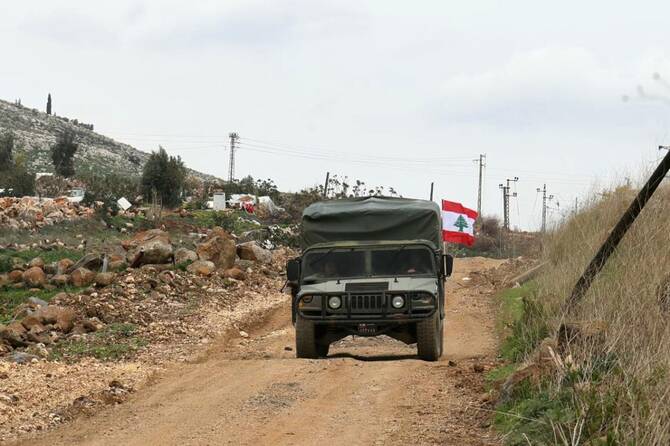
BEIRUT: The Lebanese army has dismantled “over 90 percent” of Hezbollah’s infrastructure near the border with Israel since a November ceasefire, a security official said Wednesday.
“We have dismantled over 90 percent of the infrastructure in the area south of the Litani,” the official, who requested anonymity as the matter is sensitive, told AFP.
Lebanese President Joseph Aoun meanwhile said in an interview with Sky News Arabia that the army was now in control of over 85 percent of the country’s south.
The November truce deal, which ended over a year of hostilities between Hezbollah and Israel, was based on a UN Security Council resolution that says Lebanese troops and United Nations peacekeepers should be the only forces in south Lebanon.
Under the deal, Hezbollah was to pull its fighters north of Lebanon’s Litani River, some 30 kilometers (20 miles) from the Israeli border, and dismantle any remaining military infrastructure to its south.
Much of Hezbollah’s robust underground infrastructure in the south was “filled and closed” by the army, the official said.
Soldiers have also reinforced their control of crossing points into the area south of the Litani “to prevent the transfer of weapons from the north of the river to the south.”
Aoun, on a visit to the United Arab Emirates, said the Lebanese army was “fulfilling its role without any problems or opposition.”
He said the single obstacle to the full deployment of soldiers across the border area was “Israel’s occupation of five border positions.”
Under the ceasefire agreement, Israel was to withdraw all its forces from south Lebanon, but its troops remain in five positions that it deems “strategic.”
The security official meanwhile said that Hezbollah has been cooperating with the army.
“Hezbollah withdrew and said ‘do whatever you want’... there is no longer a military (infrastructure) for Hezbollah south of the Litani,” the official said.
The official added that most of the munitions found by the army were either “damaged” by Israeli bombing or “in such bad shape that it is impossible to stock them,” prompting the army to detonate them.


![]()

Lebanese army dismantled ‘over 90 percent’ of Hezbollah infrastructure near Israel: security official
Short Url
https://arab.news/rp88s
Lebanese army dismantled ‘over 90 percent’ of Hezbollah infrastructure near Israel: security official
- “We have dismantled over 90 percent of the infrastructure in the area south of the Litani,” the official said
- Aoun, on a visit to the UAE, said the Lebanese army was “fulfilling its role without any problems or opposition”


Latest updates


© 2026 SAUDI RESEARCH & PUBLISHING COMPANY, All Rights Reserved And subject to Terms of Use Agreement.