GCC banks poised to weather global trade turbulence: S&P report

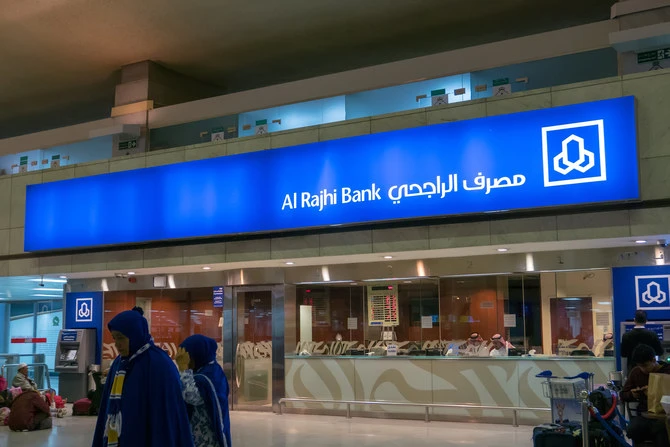
S&P highlighted investor risk aversion and market volatility as the most immediate threats, but noted that Gulf banks are well-positioned to absorb potential shocks. File
Short Url
Updated 16 April 2025
Follow

GCC banks poised to weather global trade turbulence: S&P report

RIYADH: Despite rising global trade tensions and heightened market volatility, banks across the Gulf Cooperation Council are expected to remain resilient, according to a recent report by S&P Global Ratings.

In its analysis titled “GCC banks can cope with the fallout from intensifying trade tensions,” the ratings agency pointed to the region’s strong financial fundamentals as a key buffer against economic uncertainty stemming from evolving US tariff policies and global investor jitters.

S&P highlighted investor risk aversion and market volatility as the most immediate threats, but noted that Gulf banks are well-positioned to absorb potential shocks. “GCC banks appear to be in a good position to withstand these threats,” the report stated, citing robust liquidity levels, solid profitability, and healthy capitalization as major strengths.

While the direct impact of trade tensions on GCC economies is expected to be limited—due in part to their relatively low export exposure to the US — the report warned of more significant indirect effects. In particular, a sustained decline in oil prices could weigh on fiscal spending and economic sentiment across the region. S&P has revised its assumed oil price forecast for 2025 to $65 per barrel.

“A prolonged period of lower oil prices could lead to reduced government spending, dampen business confidence, and potentially trigger an uptick in non-performing loans,” the report noted.

To gauge the sector’s resilience, S&P conducted stress tests modeling severe scenarios, including sharp capital outflows and a surge in NPLs. Even under a worst-case scenario—where NPLs increase by 50 percent—the top 45 banks in the GCC would face cumulative losses of $30.3 billion, significantly lower than their combined projected net income of $60 billion in 2024.

The findings reinforce the region’s financial stability amid global economic headwinds, underlining the strength of its banking sector even in the face of mounting external pressures.

“Even in our worst-case scenario, we still expect the shock to affect banks’ profitability rather than their solvency,” the report noted.  

Qatari banks were identified as more vulnerable due to their net external debt position, but strong government support mitigates risks. In contrast, UAE banks exhibit the highest resilience, thanks to their robust net external asset position.  

The report also pointed to regulators’ proactive measures as a critical factor. During the COVID-19 pandemic, forbearance policies helped banks navigate uncertainty, and similar actions are expected if trade tensions escalate further.   

While challenges loom, GCC banks enter this period of uncertainty from a position of strength. “Banks continue to display strong capitalization, with an average Tier 1 capital ratio of 17.2 percent at year-end 2024,” S&P noted.

The combination of solid fundamentals and potential regulatory backstops suggests the sector is prepared to weather the storm. 


Saudi Arabia needs local talent to build modern financial oversight, minister says 

Updated 6 sec ago
Follow

Saudi Arabia needs local talent to build modern financial oversight, minister says 

RIYADH: Saudi Arabia must invest in national talent alongside regulatory reforms to build a modern financial oversight system, Finance Minister Mohammed Al-Jadaan said. 

Speaking at the Financial Oversight Forum, Al-Jadaan said developing an effective oversight framework requires sustained investment in human capabilities through training and development programs.  

This aligns with Saudi Arabia’s broader efforts to build future-ready skills, including the launch of the National Skills Platform in April to equip the workforce with capabilities aligned with global trends. 

It also comes as the Kingdom’s financial ecosystem reached a record SR1 trillion ($267 billion) in locally managed assets in 2024, marking a key milestone in its transformation under Vision 2030.  

“Institutions don't advance through systems alone, but also through the culture of their employees,” Al-Jadaan said during his speech. 

During the forum, the minister said the Financial Control System represents a fundamental shift in oversight methodology, strengthening the legislative framework governing financial operations in government entities through a more flexible and comprehensive model focused on protecting public funds, Argaam reported. 

He added that the new system enhances technical oversight by leveraging government financial systems and data to support continuous monitoring, while also enabling early detection and effective management of risks. 

Al-Jadaan said Saudi Arabia continues to make significant progress toward the objectives of Vision 2030, with public finance management and oversight serving as a cornerstone for improving the efficiency and sustainability of government performance. 

He also emphasized the vital role played by the General Auditing Bureau, noting its professional efforts to develop oversight practices and raise levels of financial discipline, contributing to integrated oversight and more efficient public spending. 

In a post on X, the minister said: “I was pleased to participate in the Financial Oversight Forum organized by the General Auditing Bureau, which reflects the importance of developing the financial oversight system to protect public funds and enhance governance and financial discipline, thereby supporting the sustainability of public finances and aligning with the objectives of Saudi Vision 2030.”  

He added: “I also commend the bureau’s pivotal role and its professional efforts in developing oversight practices, including this forum.”