

Cybertrucks in the desert: Tesla launches in Saudi Arabia

Visitors look at the Tesla Model Y, displayed during the inauguration ceremony of first Tesla showroom, in Riyadh. REUTERS/Mohammed Benmansour
Short Url
Updated 11 April 2025
Follow

Cybertrucks in the desert: Tesla launches in Saudi Arabia

  • Tesla launches operations in Saudi Arabia amid improved relations
  • Saudi aims for 30 percent EV adoption in five years
  • Tesla plans online orders, pop-up stores, and charging stations

RIYADH: Tesla launched operations in Saudi Arabia on Thursday, a sign that CEO Elon Musk has patched up relations with the Kingdom and that the oil capital was moving forward with an ambitious electric-vehicle policy.

A Tesla Cybertruck and a redesigned Model Y sedan dominated a plaza dotted with palm trees, as the EV maker officially opened for business.

A small crowd tried out the vehicles as a massive outdoor video screen showed a Cybertruck plowing through a dusky desert, leaving behind plumes of sand.
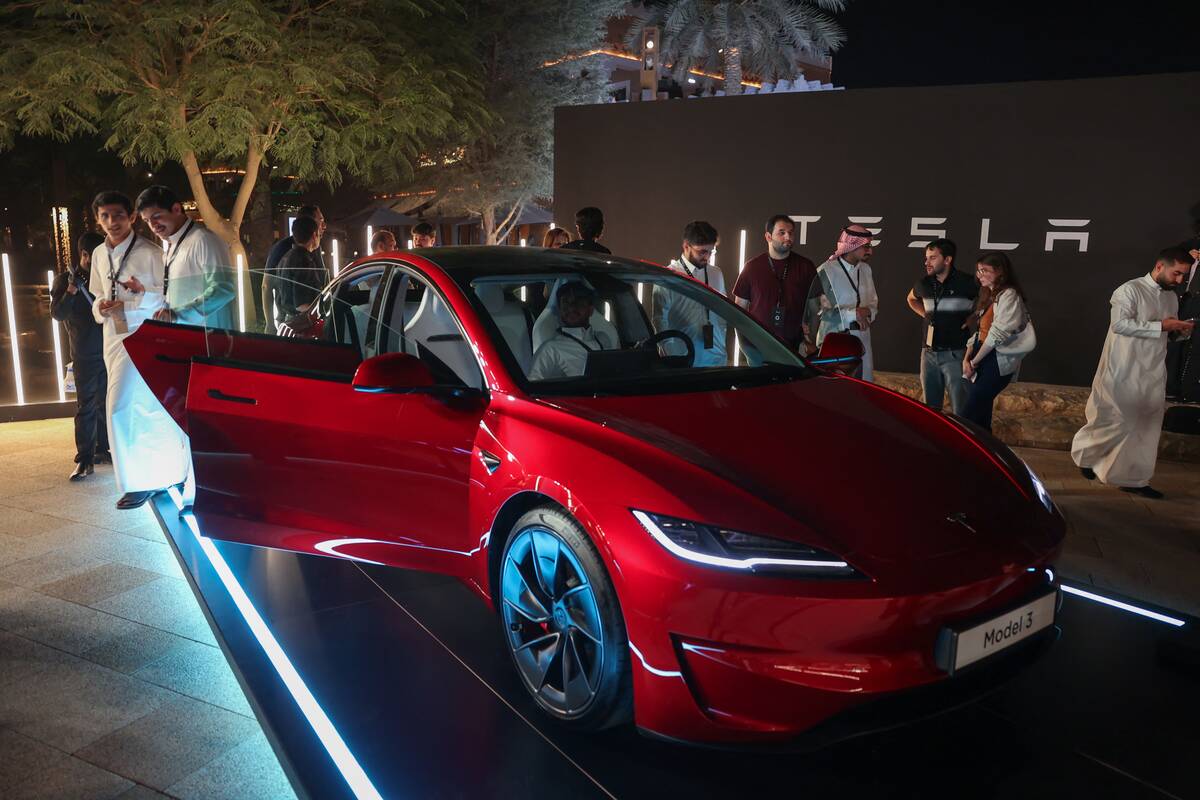


The Tesla electric vehicle company owned by billionaire Elon Musk opened its first showrooms Saudi Arabia on April 10. AFP/Fayez Nureldine

Tesla needs new customers: globally, it posted a 13 percent drop in first-quarter sales, its weakest performance in nearly three years, driven by a backlash against Musk’s role in the Trump administration, rising competition and an aging product lineup, beyond the refreshed Model Y.

The Kingdom, a major investor in Tesla rival Lucid, aims for 30 percent EV adoption five years from now, up from about 1 percent last year.

Musk engaged in a high-profile feud with the Kingdom’s sovereign wealth fund over a potential investment nearly a decade ago, but relations between Riyadh and Musk have improved since he took a high-profile role in US President Donald Trump’s election campaign and administration.

Trump is set to visit Saudi Arabia in the coming weeks in his first foreign trip. Local Tesla executives at the launch described plans to allow online ordering of vehicles, open pop-up stores in malls and to build Supercharger stations and service centers, but Musk did not show up in person or by video.

“I’m honestly very disappointed I cannot see him,” said fan Mohammed Usama, who said he was “in love” with the Cybertruck. “I was very close to the stage, but unfortunately he didn’t come.”
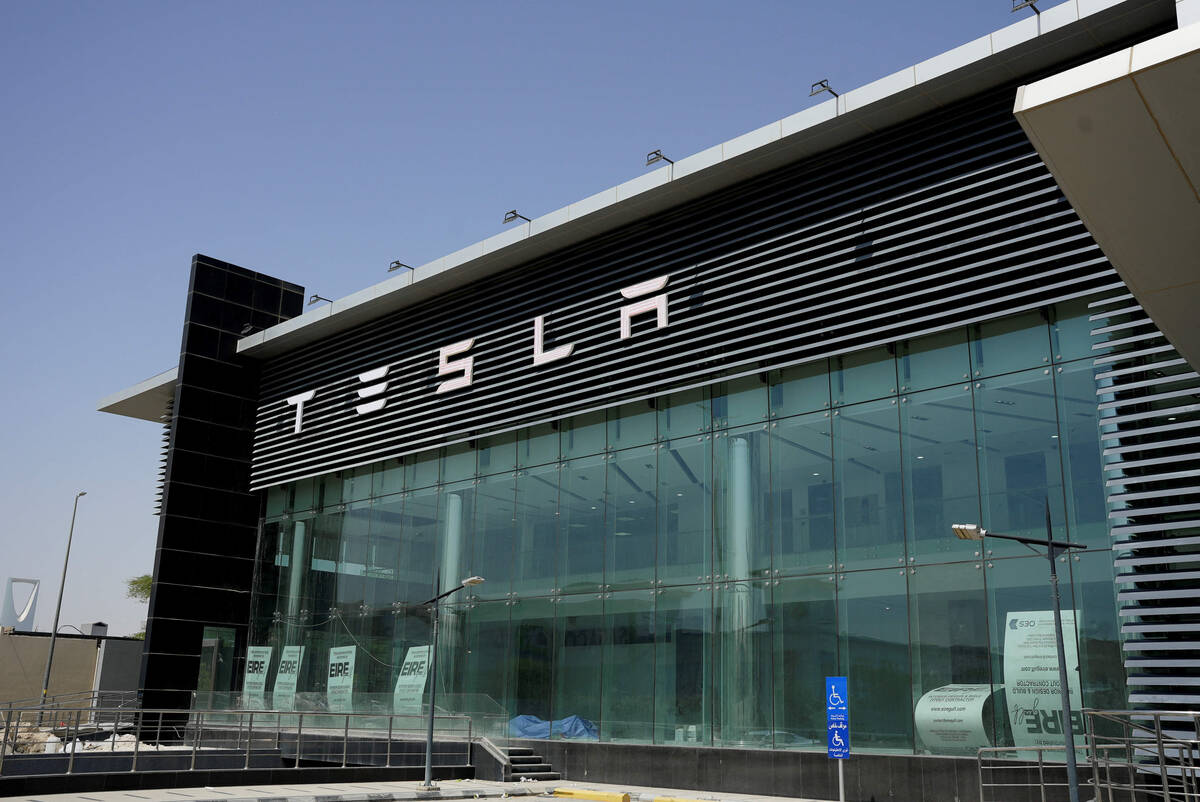


The Tesla car showroom in Riyadh. Reuters/Mohammed Benmansour

Saudi has a long way to go to hit its EV goals. The country’s main east-west highway does not have a single charging station in the 900-kilometer (559 mile) stretch linking the financial and religious cities of Riyadh and Makkah.

Saudi Arabia in 2024 had just 101 EV charging stations, compared with 261 in neighboring UAE, a country with a third the population, data from Statista based on Electromaps showed. Tesla plans to put its first charging stations in three cities.

Rival EV brands like China’s BYD and Zeekr, along with the Saudi Public Investment Fund-backed Lucid, already have Saudi beachheads.

The feud between Musk and the governor of the Kingdom’s sovereign wealth fund began when Musk tweeted in 2018 that he had “funding secured” to take Tesla private after a meeting with the fund.

That led to a lawsuit from investors when a bid failed to materialize. “You are throwing me under the bus,” Musk wrote in a text to fund chief Yasir Al-Rumayyan, according to court documents.

Shortly after the US presidential election, Trump, Rumayyan, and Musk were all pictured together sitting in ringside seats at an Ultimate Fighting Championship event in an early signal that relations had healed.


Lebanese social entrepreneur Omar Itani recognized by Schwab Foundation

Updated 23 January 2026
Follow

Lebanese social entrepreneur Omar Itani recognized by Schwab Foundation

  • FabricAID co-founder among 21 global recipients recognized for social innovation

DAVOS: Lebanon’s Omar Itani is one of 21 recipients of the Social Entrepreneurs and Innovators of the Year Award by the Schwab Foundation for Social Entrepreneurship.

Itani is the co-founder of social enterprise FabricAID, which aims to “eradicate symptoms of poverty” by collecting and sanitizing secondhand clothing before placing items in stores in “extremely marginalized areas,” he told Arab News on the sidelines of the World Economic Forum in Davos, Switzerland.

With prices ranging from $0.25 to $4, the goal is for people to have a “dignified shopping experience” at affordable prices, he added.

FabricAID operates a network of clothing collection bins across key locations in Lebanon and Jordan, allowing people to donate pre-loved items. The garments are cleaned and sorted before being sold through the organization’s stores, while items that cannot be resold due to damage or heavy wear are repurposed for other uses, including corporate merchandise.

Since its launch, FabricAID has sold more than 1 million items, reached 200,000 beneficiaries and is preparing to expand into the Egyptian market.

Amid uncertainty in the Middle East, Itani advised young entrepreneurs to reframe challenges as opportunities.

“In Lebanon and the Arab world, we complain a lot,” he said. Understandably so, as “there are a lot of issues” in the region, resulting in people feeling frustrated and wanting to move away. But, he added, “a good portion of the challenges” facing the Middle East are “great economic and commercial opportunities.”

Over the past year, social innovators raised a combined $970 million in funding and secured a further $89 million in non-cash contributions, according to the Schwab Foundation’s recent report, “Built to Last: Social Innovation in Transition.”

This is particularly significant in an environment of geopolitical uncertainty and at a time when 82 percent report being affected by shrinking resources, triggering delays in program rollout (70 percent) and disruptions to scaling plans (72 percent).

Francois Bonnici, director of the Schwab Foundation for Social Entrepreneurship and a member of the World Economic Forum’s Executive Committee, said: “The next decade must move the models of social innovation decisively from the margins to the mainstream, transforming not only markets but mindsets.”

Award recipients take part in a structured three-year engagement with the Schwab Foundation, after which they join its global network as lifelong members. The program connects social entrepreneurs with international peers, collaborative initiatives, and capacity-building support aimed at strengthening and scaling their work.