Pakistani religious scholars say Islam permits organ donation after death

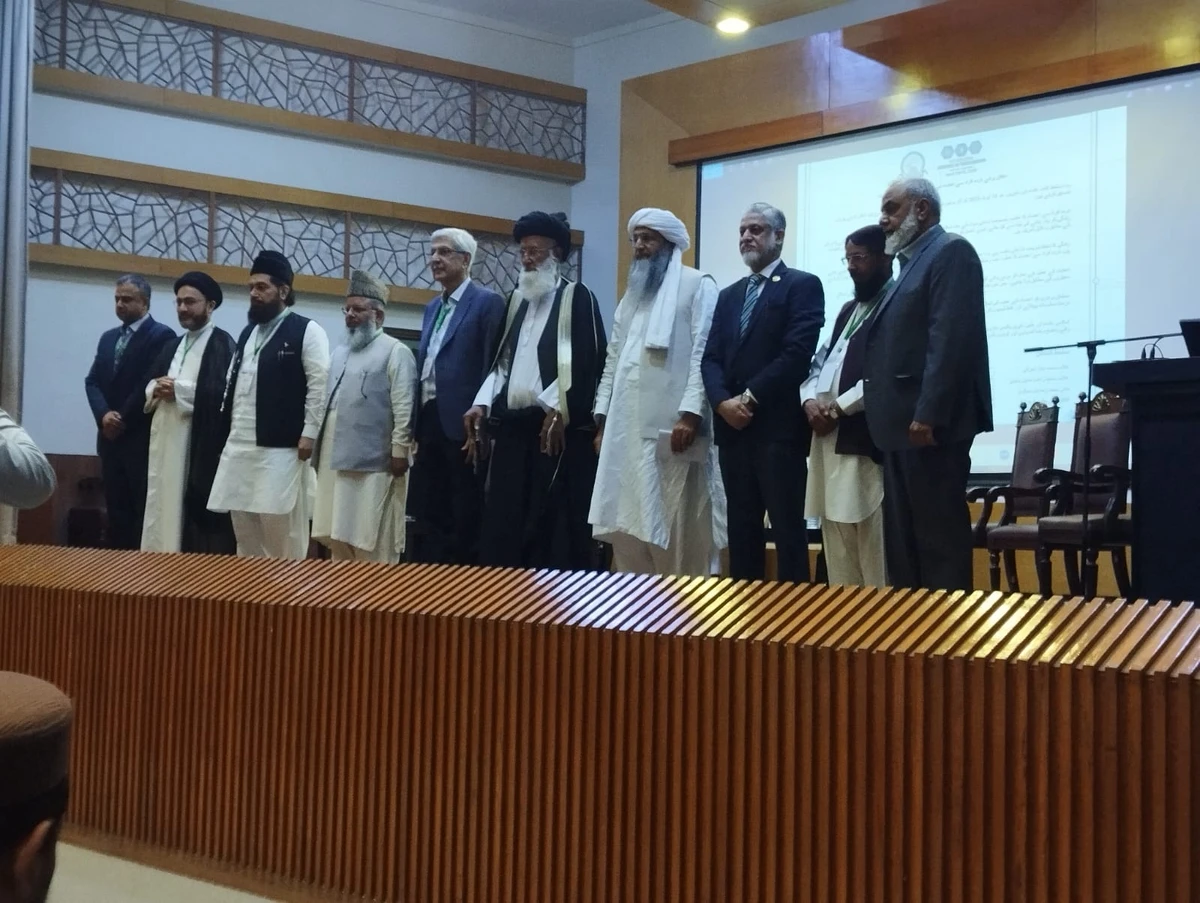
Religious scholars and medical experts pose for a group photo at an event organized by Dow University of Health Sciences in Karachi, Pakistan, on April 10, 2025. (Photos Courtesy: DOW University of Health Sciences)
Short Url
Updated 11 April 2025
Follow

Pakistani religious scholars say Islam permits organ donation after death

  • Islamic scholars sign joint declaration endorsing organ donation as ‘ongoing charity’
  • Pakistan faces shortage of transplantable organs with many patients on waiting lists

KARACHI: A group of prominent Pakistani religious scholars and medical professionals have declared organ donation after death permissible in Islam, a leading medical college said on Thursday, amid an effort to tackle low donation numbers due to religious concerns on the matter.

While many Muslims consider organ donation permissible, there are varying interpretations and opinions among scholars and individuals. Some believe that the human body is sacred and should not be harmed, even in death, which can lead them to oppose organ donation. Others interpret verses in the Qur’an and Hadith that emphasize the value of saving lives, leading them to support organ donation as a compassionate act.

Pakistan faces a significant shortage of organ donors. The demand for organs far exceeds the availability, leading to long waiting times and increased mortality rates for patients in need of transplants. Apart from cultural and religious beliefs and lack of awareness and education, the shortage is also fueled by Pakistan lacking the infrastructure and resources to effectively support deceased organ donation programs. While organ donations, particularly from family members, are more common in Pakistan, the country lacks a proper system for deceased organ donation.

“Donating organs after death, with proper consent and ethical compliance, is not only allowed but also considered an act of sadaqah jariyah (ongoing charity) in Islamic teachings,” Dow University of Health Sciences said in a joint declaration following an event on the ethical and religious dimensions of brain death and organ transplantation in Islam.

All the scholars agreed to raise awareness among Muslims about the “permissibility and spiritual reward” of organ donation, it added.

The statement quoted Chairman of the Council of Islamic Ideology (CII), Allama Raghib Hussain Naeemi, as saying organ donation could only take place with “prior consent or family approval” after brain death was confirmed. Another scholar Mufti Ramzan Sialvi said organ donation was only permissible if the dignity of the deceased was preserved. 

Doctors estimate around 50,000 lives could be saved annually in Pakistan through organ donation, the statement added, calling for widespread awareness to promote the practice.

By aligning medical ethics with Islamic teachings, experts hope to encourage more Pakistanis to register as donors and help address the country’s critical shortage of transplant organs. 


Pakistan’s Lahore marks Basant festival after government lifts decades-old ban on kite flying

Updated 5 sec ago
Follow

Pakistan’s Lahore marks Basant festival after government lifts decades-old ban on kite flying

  • Pakistan’s Punjab province outlawed Basant in 2000s after authorities linked metal-coated kite strings and celebratory gunfire to multiple deaths and injuries
  • The three-day festivities began after midnight on Thursday as residents gathered on brightly lit rooftops to fly colorful kites to welcome the cultural festival

ISLAMABAD: The eastern Pakistani city of Lahore on Friday welcomed the return of Basant spring festival after the government this year lifted a more than two-decade-old ban on kite flying for a period three days, with Punjab Chief Minister Maryam Nawaz urging masses to follow precautions.

Provincial officials, including Punjab Information Minister Azma Bokhari, were seen flying kites in videos widely shared online. Meanwhile, the prices of air tickets from various Pakistani cities to Lahore have skyrocketed during the three days of the festival as more and more people try to join the celebrations after over a 20-year-hiatus.

Basant, once a vibrant tradition signaling the arrival of spring with colorful kites and rooftop festivities, was outlawed in Pakistan’s Punjab province in the 2000s after authorities linked metal-coated kite strings and celebratory gunfire to multiple deaths and injuries.

The government of CM Nawaz this year allowed Basant festivities in the provincial capital of Lahore, Pakistan’s cultural heart, on Feb. 6-8, but issued an extensive safety plan regarding kite materials and motorcyclists and pedestrians to avoid any untoward incident.

Commuters ride past a large model of a kite celebrating the Basant festival in Lahore on February 3, 2026. (AFP)

The three-day festivities began after midnight on Thursday as residents of Lahore gathered on their brightly lit rooftops along with family, friends and guests visiting from other cities and abroad to fly colorful kites to welcome the return of Basant.

“Kites return to the skies of Lahore as Basant comes alive again after 25 years,” CM Nawaz said on X. “A celebration of culture, color, and community! Let’s enjoy the festivities together responsibly, follow all safety SOPs (standard operating procedures), and make this Basant safe for everyone.”

The Pakistan Meteorological Department (PMD) this week forecast favorable weather conditions for kite flying in Lahore on Feb. 6-8, marked by light westerly winds blowing at speeds of 10–15 kilometers an hour.

Authorities have distributed 1 million safety rods among motorcyclists through designated safety points across Lahore, with spending on the initiative crossing Rs110 million ($392,000), according to local media reports. To enforce regulations and manage traffic flow, around 100 road safety camps have been set up in the city, staffed by teams from the district administration, traffic police and rescue services.

In addition, the Punjab government has launched a free shuttle service to reduce traffic congestion and promote safer travel via 695 buses deployed across Lahore.