

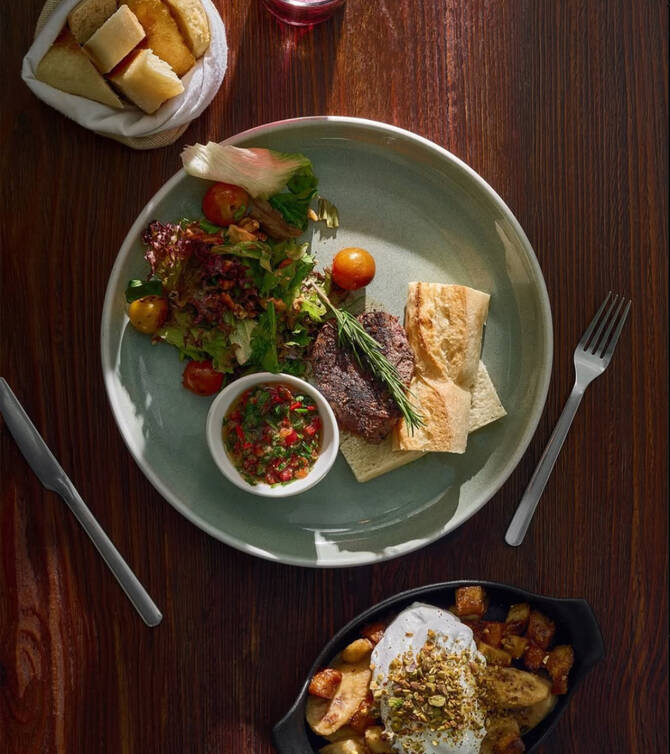
Where We Are Going Today: Ext. Seventeen Restaurant in Jeddah

1 / 3
Photo/Supplied
2 / 3
Photo/Supplied
3 / 3
Photo/Supplied
Short Url
Updated 06 April 2025
Follow

Where We Are Going Today: Ext. Seventeen Restaurant in Jeddah

  • The menu offers a mix of Saudi flavors with a contemporary twist

Ext. Seventeen, a home-grown eatery by chef Amal Fakeih in Al-Yamamah district is a great spot for breakfast in Jeddah.

If you are looking for a place where you can enjoy a hearty breakfast and let time slip into lunch, this is it. The space is intimate, casual, and feels like a second home. The bistro-inspired environment, complemented by serene music, makes for a peaceful dining experience.

The menu offers a mix of Saudi flavors with a contemporary twist. During my visit, I decided to try their signature dishes, including the shakshuka with cherry tomatoes and thyme, and the labneh toast topped with sun-dried tomatoes, and it did not disappoint.

The fusion of Middle Eastern ingredients and Western techniques is evident in dishes like the popular apple pancakes and fondue, which are worth indulging in. For something lighter, I recommend the sweet salad with roasted beetroot and kale.

If you are dining with others, the “To Share” section of the menu is a great option, with offerings like a cheese platter and spicy dip served with pita chips.

The menu may not appear extravagant at first glance, but instead it leans towards familiar, home-style dishes.

Chef Amal takes the comfort of traditional home-cooked meals and gives each dish a thoughtful twist.

That being said, while the food is generally delicious, the space, though cozy, can feel a bit cramped, especially during peak hours. Additionally, I feel that the portion sizes could be slightly larger.

You can enjoy a hearty plate for around SR60 ($16), while more premium choices like the steak and eggs come in closer to SR100. If you are dining with friends or family, the sharing boxes and platters, priced around SR150.

When it comes to sweets, the lineup is both comforting and creative. There is cardamom French toast, cinnamon banana pancakes, and the standout fluffy coffee pancakes  layered with coffee custard, maple syrup, toasted walnuts, and their signature cream is heavenly.

Check @extseventeen on Instagram for more details.


Chef serves up a taste of Spain at Ithra Cultural Days in Saudi Arabia 

Updated 20 January 2026
Follow

Chef serves up a taste of Spain at Ithra Cultural Days in Saudi Arabia 

DHAHRAN: Among the attractions of the Ithra Cultural Days: Spain at the King Abdulaziz Center for World Culture (Ithra), visitors can try a tantalizing selection of Spanish foods — none more renowned than its famous paella. 

Arab News spoke with chef Jose Zafra at the event, which runs until Jan. 31, who flew in from Spain to offer a taste of his homeland to the people of Saudi Arabia. 

A “master rice cook, paella researcher and promoter,” according to his business card, his logo is even designed around the recognizable cooking pan and the phrase “Pasion por la paella,” or “Passion for paella.”

“That's why the pan is round because people get around and eat all together — to share culture and passion and life,” Zafra told Arab News as foodies lined up behind him, eager to try a plateful.

Arab News spoke with chef Jose Zafra at the event, which runs until Jan. 31. (Supplied)

“It’s not just a food. It’s a link, a connection. Paella is the symbol of unity and sharing. And people now are going to try it — authentic Spanish paella in Saudi Arabia.”

The word “paella” comes from the Latin “patella,” meaning pan.

In Spanish, it refers both to the rice dish itself and the pan in which it is cooked.

Paella was introduced to Spain during Moorish rule. It originated in Valencia, on the country’s eastern coast, as a rural peasant dish that was cooked by farm workers over open fires using local ingredients. Over time, the dish’s popularity spread and other versions evolved, for example featuring seafood and meat.

It is different to Saudi Arabia’s kabsa, a communal dish which similarly uses rice and meat. Kabsa is cooked in a deep pot to ensure the rice stays soft and aromatic from the meaty broth, whereas paella uses a wide, shallow pan to fully absorb flavors evenly, often creating a prized crispy layer at the bottom. 

Visitors to Ithra’s Culture Days can enjoy the flavors of Spain made with a sprinkling of local love — true to the origins of the dish.

Find the scoops of Spanish joy near the food truck area and try chicken paella, seafood paella —or both! You will see the signs offering a plate, at SR35 ($9) for chicken and SR40 for seafood, or let your nose lead you there.

Zafra concluded: “The chicken is from here, the seafood is from here — and the passion, well, that is from Spain.”