Saudi Arabia launches incentives package to attract FDI in mining sector 

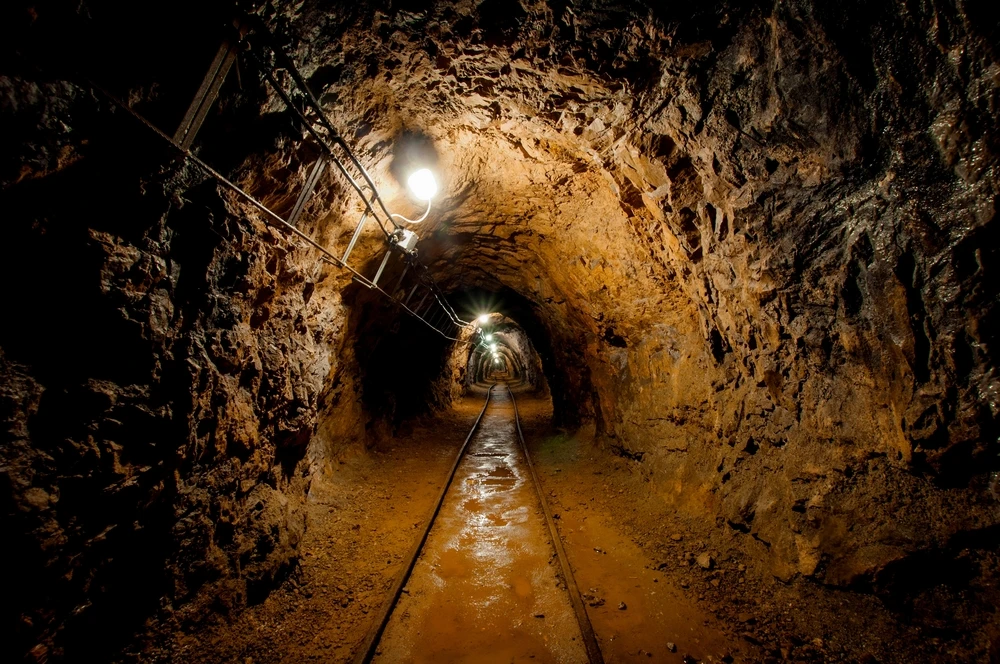
In 2024, Saudi Arabia revised upward estimates for its untapped mineral resources to $2.5 trillion from a 2016 forecast of $1.3 trillion. Shutterstock
Short Url
Updated 25 March 2025
Follow

Saudi Arabia launches incentives package to attract FDI in mining sector 

RIYADH: Saudi Arabia has launched a new incentive package to attract foreign direct investments into the nation’s mining sector as the Kingdom steadily continues its economic diversification efforts. 

According to a Saudi Press Agency report, the Ministry of Investment is collaborating closely with the Ministry of Industry and Mineral Resources through an exploration enablement program aimed at simplifying investments in the mineral exploration industry. 

This initiative is also part of the Kingdom’s efforts to enhance exploration and create an attractive investment environment for local and international mining companies.

Speaking at the Future Minerals Forum in Riyadh in January, Saudi Arabia’s Minister of Industry and Mineral Resources Bandar Alkhorayef said that the nation seeks to promote exploration opportunities across 5,000 sq. km of mineralized belts in 2025, aligned with the country’s broader plans to establish mining as the third pillar of its industrial economy. 

During the same event, Abdulrahman Al-Belushi, deputy minister for mining development at the Ministry of Industry and Mineral Resources, said that the Kingdom is projected to invest SR120 million ($32 million) in 2025 as mining incentives aimed at supporting companies with the right technical expertise. 

Attracting international investments in the mining sector also aligns with Saudi Arabia’s ambitious goal to secure $100 billion a year in FDI by the end of this decade. 

The latest collaboration between both ministries follows the granting of exploration licenses for multi-mineral sites in Jabal Sayid and Al-Hajjlah.

The licenses cover a total area of 4,788 sq. km. and companies are expected to spend approximately SR366 million ($97.6 million) on exploration over the next three years.

In 2024, Saudi Arabia revised upward estimates for its untapped mineral resources to $2.5 trillion from a 2016 forecast of $1.3 trillion. 

In January, the Saudi Cabinet also authorized the Kingdom’s Ministry of Industry and Mineral Resources to sign a cooperation agreement with the World Economic Forum to implement a project aimed at securing critical minerals for development.

In the same month, Saudi Arabia also allocated five sites for establishing mining complexes in the Makkah and Asir regions as part of the Kingdom’s strategy to attract quality investments, enhance transparency, and support local communities.


UAE’s Masdar seals deal for 200MW floating solar project in Malaysia 

Updated 11 sec ago
Follow

UAE’s Masdar seals deal for 200MW floating solar project in Malaysia 

RIYADH: Abu Dhabi’s renewable energy firm Masdar has signed its first partnership in Malaysia, setting the stage for the largest floating solar project in Southeast Asia. 

Masdar, together with Malaysian partners Citaglobal and Tiza Global, has signed a power purchase agreement with national utility Tenaga Nasional Berhad to develop a pioneering 200-megawatt floating photovoltaic plant at the Chereh Dam in Pahang state, the Emirates News Agency reported. 

Spanning approximately 950 acres of reservoir surface, the Chereh Dam plant will boast a generation capacity exceeding 300MW-peak, delivering clean electricity equivalent to the needs of more than 100,000 homes. 

With an estimated project value exceeding $208 million, the venture represents a significant step toward Malaysia’s goal of deriving 35 percent of its national energy mix from renewables by 2030. 

Mohamed Jameel Al-Ramahi, CEO of Masdar, said: “This is a milestone project, our largest floating solar development globally and our inaugural project in Malaysia, reaffirms Masdar’s expertise in floating solar and our position as a trusted partner across the region.” 

He added: “By leveraging our experience in delivering utility-scale solutions worldwide, we can provide affordable, secure, clean energy to the Malaysian people.” 

The CEO said he looked forward to working closely with Citaglobal, Tiza Global, and the Malaysian government to help deliver the country’s ambitious renewable energy roadmap. 

The consortium secured the project through a competitive tender under Malaysia’s Large Scale Solar Cycle 5+ program, offering the lowest tariff in its category, supported by Masdar’s global supply-chain capabilities and regional experience, including the 145-MW Cirata floating solar plant in Indonesia. 

Tan Sri Mohamad Norza Zakaria, executive chairman and president of Citaglobal Berhad, said: “This collaboration gives us confidence that the Chereh floating solar project will be delivered to the highest international standards, while strengthening Malaysia’s energy security and long-term economic resilience.” 

The Chereh floating solar plant will be the first project under the 10-gigawatt renewable energy roadmap agreed in 2023 between Masdar and the Malaysian Investment Development Authority, the WAM report added. 

Beyond Pahang, Masdar is advancing a feasibility study for a major floating solar installation at Sarawak’s Murum reservoir, in collaboration with Sarawak Energy and Gentari, initiatives aligned with Malaysia’s National Energy Transition Roadmap and New Industrial Master Plan 2030. 

The Chereh Dam project also emphasizes local integration, partnering with Pahang Water & Energy Resources for execution. It will deploy advanced floating solar technology tailored to the dam’s topography, optimizing performance while conserving freshwater. 

Financed through a non-recourse structure with international lenders, the project reflects strong market confidence. Floating solar is particularly well suited to Malaysia, offering a land-efficient, scalable solution enhanced by natural water-cooling effects.