



RIYADH: Established seven years ago as part of Saudi Vision 2030, the Prince Mohammed bin Salman Royal Reserve stands as a testament to the Kingdom’s commitment to environmental conservation.
Saudi Arabia has made significant strides in protecting its ecosystems and wildlife, expanding its protected areas from 19 to more than 400 — now covering 18 percent of the Kingdom’s territory.

“When I was invited to come and look at Saudi Arabia, I was struck by its rugged expansive beauty, natural wildness and unique biodiversity,” Andrew Zaloumis, CEO of the Prince Mohammed bin Salman Royal Reserve, told Arab News.
“I was impressed by the vision and strong leadership and direction with respect to conservation. Vision 2030 puts in place a framework to make the Kingdom’s commitments to the environment a reality and globally relevant.
“Its potential to be a serious global contender was an opportunity I could not pass up.”
Located in northwestern Saudi Arabia, the reserve spans about 24,500 sq. km, encompassing 15 ecosystems and hosting more than 50 percent of the Kingdom’s marine and terrestrial species, making it one of the most biodiverse protected areas in the Middle East.

“The reserve is home to exceptional plant and animal biodiversity,” Zaloumis said, noting that it covers 1 percent of Saudi Arabia’s terrestrial area and 1.8 percent of its marine area.
“The reserve’s 170 km coastline is the longest under the management of a single conservation agency in the Kingdom.
“It is home to 64 percent of the Kingdom’s coral species, 22 percent of its fish species, as well as hawksbill and green turtle populations, spinner dolphin, dugong, whale shark, and critical gray mangrove ecosystems.”
DID YOU KNOW?
• The reserve is home to more than 1,300 species and 2,000 historical and archaeological sites.
• It protects 50 percent of the Kingdom’s species, making it one of the region’s most biodiverse areas.
• It stretches from the Harrat lava plains to the Red Sea, linking NEOM, the Red Sea Project and AlUla.
Not every piece of land is suitable for reserve status, Zaloumis explained, as such areas must possess particular ecological significance.
“To be of global significance, a reserve must have the conservation values that enable this,” he said. “It is not any piece of land — it is being conserved for a very specific conservation reason.”
A nature reserve safeguards biodiversity by protecting plant species, providing a sanctuary for endangered animals, and maintaining ecological balance.
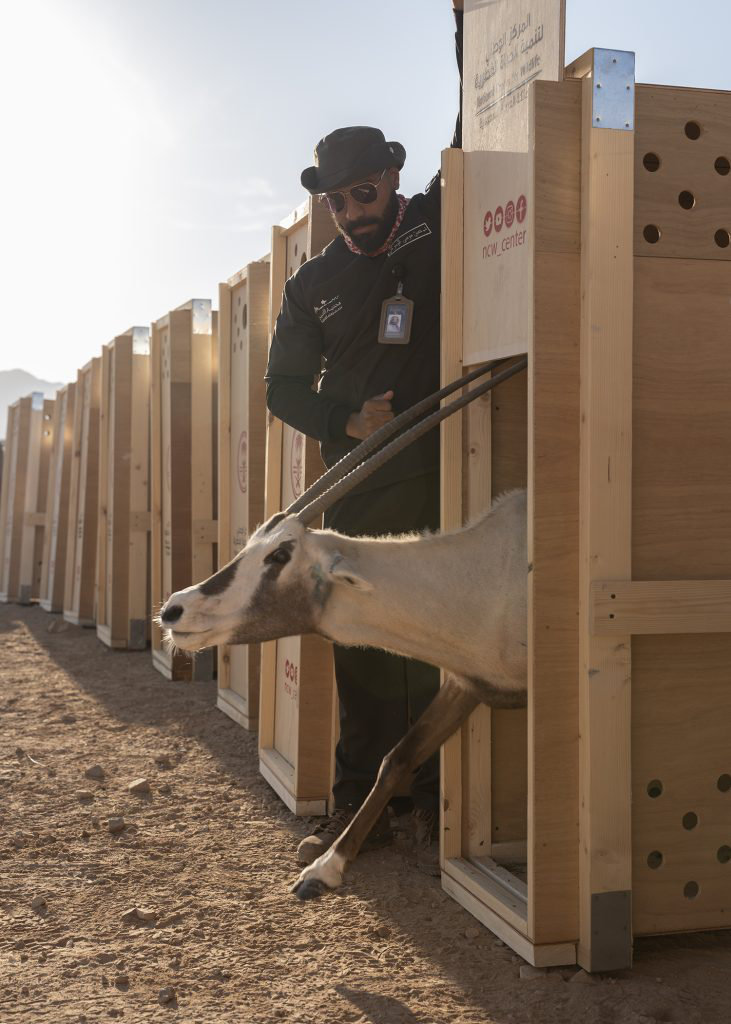
The Reserve's veterinarian oversees the reintroduction of the Arabian oryx as part of the conservation program. (PMSRR photo)
So far, the Prince Mohammed bin Salman Royal Reserve has successfully reintroduced 11 of its 23 native species, including sand gazelle, mountain gazelle, onager and pharaoh eagle owl.
“Genetic testing is key to ensure the correct subspecies are brought back,” Zaloumis said.
“One of the reserve’s conservation successes recognized globally is the return of the Persian onager after a 126-year absence. There are less than 600 left in the wild globally.
“The big-picture strategy is to create an open ecological area where historically occurring species can roam freely as they once did more than a century ago.”
The strategy is already bearing fruit. In December, the reserve celebrated the birth of its 15th Arabian oryx calf since launching its rewilding program in 2022.
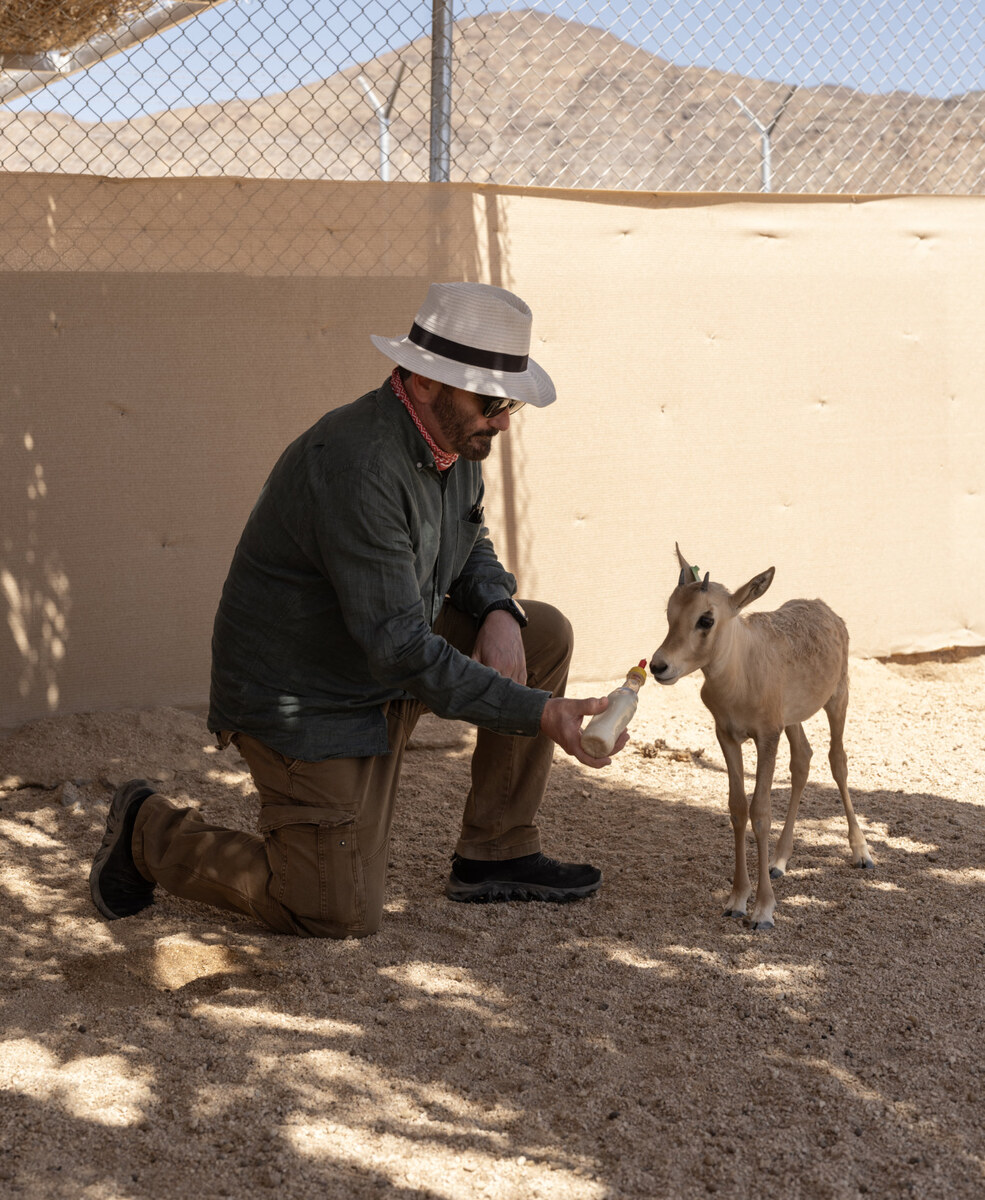
Andrew Zaloumis, CEO of the Prince Mohammed bin Salman Royal Reserve, bottle-feeding an orphaned oryx at the Reserve. (PMSRR photo)
The rewilding program is part of the reserve’s Integrated Development Management Plan, which aims to protect, conserve and restore its natural and cultural assets, promote eco-tourism, and provide socioeconomic benefits to local communities.
Beyond conservation, the reserve also highlights historical landmarks from both the Islamic and pre-Islamic periods, including sites built by the Nabataeans.
Zaloumis said that achieving UNESCO World Heritage status is no simple feat, as a site must meet strict international criteria.
“To be a World Heritage site, you have to be globally exceptional — one of a kind,” he said. “Less than 1 percent of the world’s 262,000-odd reserves have the outstanding universal values that could get it recognized by UNESCO as a World Heritage site.”
Opinion
This section contains relevant reference points, placed in (Opinion field)
Currently, the reserve is part of two cultural and two natural sites on UNESCO’s World Heritage Tentative List, placing it among a select few globally with this distinction.
The reserve has also made a significant social impact through its community development initiatives.
Zaloumis said that the reserve’s greatest asset is its people. With 85 percent of its staff drawn from nearby areas, community development remains essential to ensuring locals benefit from conservation efforts.
A key initiative has been the establishment of a ranger force — including an all-women unit, the first of its kind in the Middle East.
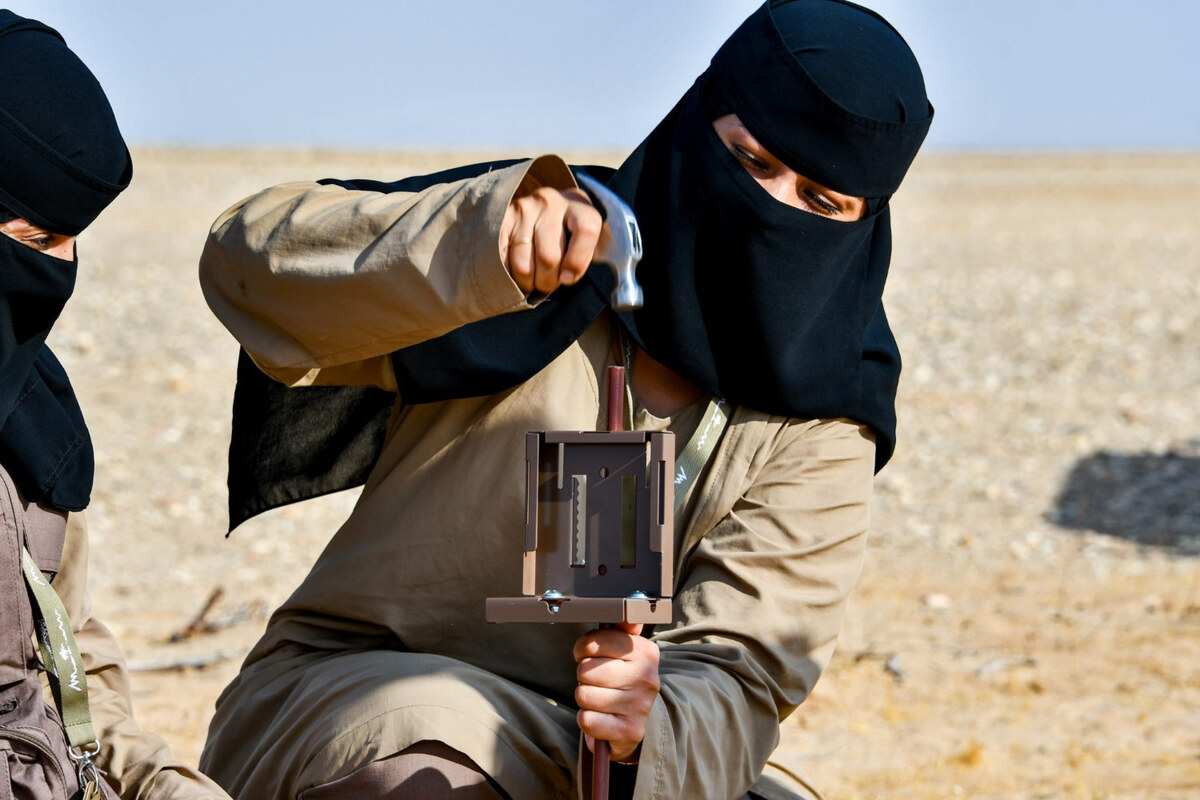
Prince Mohammed bin Salman Royal Reserve rangers install a camera trap. Managing and protecting such a large area of diverse terrain is a challenge, but camera traps are changing how the reserve's scientists study wildlife in the remote areas. (PMSRR photo)
“We have established a highly effective 250-strong ranger force from scratch, drawn from the towns and villages in the reserve,” Zaloumis said.
“Thirty-four percent of our rangers are women compared to a global average of 11 percent.”
He added: “These are the first women ranger units in the Middle East. Women globally have an important role to play in conservation — they give you different perspectives and are able to access different stakeholders. We wanted to make sure we started that way in the reserve.
“Our ability to develop conservation careers for Saudi men and women to excel in is important because, again, that is the future of conservation — it’s the sustainability of conservation in the Kingdom.”
Looking ahead, Zaloumis is focused on equipping the next generation with the skills needed to lead conservation efforts in Saudi Arabia.

Students from local schools take part in coastal environmental cleanup exercises as part of the awareness campaign emphasizing collective responsibility in protecting the marine environment. (PMSRR photo)
“Our goal is to build a new generation of conservationists to take the reserve forward and contribute to the Kingdom’s green agenda,” he said.
He believes that the key lies in empowering people to take control of their own future and communities.
“What we are doing is equipping the next generation of conservationists with the tool set necessary, not only to conserve the reserve but to contribute to Saudi Arabia’s broader conservation efforts, both in terms of protecting wildscapes and wildlife species.”


