

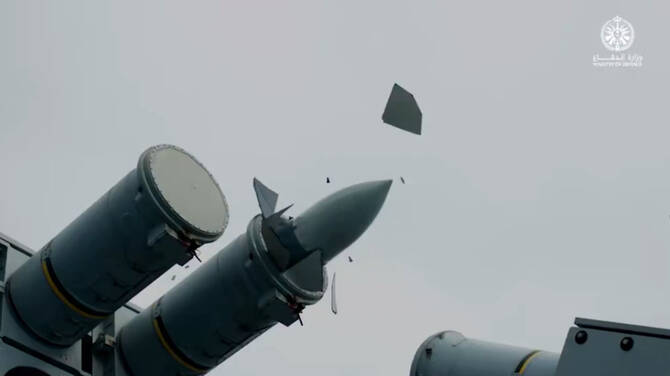

RIYADH: Saudi Arabia has intercepted at least 438 hostile drones and 36 ballistic and cruise missiles since Iran began retaliatory strikes against Gulf states following the US-Israeli attack on Tehran on Feb. 28, according to a tally of announcements by the Saudi Defense Ministry.
The figures, compiled from official Saudi military statements and reports by the Saudi Press Agency, underline the scale and intensity of Iran’s aerial campaign against the region’s largest economy and its most critical energy infrastructure.
The interceptions span multiple waves of attacks that have kept Saudi air defenses on near-constant alert for nearly three weeks.
Around 278 of the drones were launched toward the Eastern Province, home to many of the Kingdom’s oil refineries, followed by Shaybah, a major oilfield located in the Empty Quarter. Most of the missiles were launched at Al-Kharj, 80 km southeast of Riyadh, where the Prince Sultan Air Base is located.
Across the Gulf, Iran has launched hundreds of additional projectiles at neighboring states.
The UAE has faced the heaviest bombardment. As of March 17, the UAE Ministry of Defense reported that its air defenses have engaged a cumulative total of 1,672 UAVs or drones, 314 ballistic missiles and 15 cruise missiles, launched from Iran since the start of the conflict.
Kuwait, Qatar and Bahrain have also come under repeated fire.
Oman, which has historically maintained back-channel ties with Tehran, has not been entirely spared, with Iranian drones striking its port of Duqm.
Iran has denied deliberately targeting Gulf civilian and economic infrastructure, insisting its operations are aimed at US military assets and Israeli-linked facilities in the region. Gulf governments have rejected the claims, with several summoning Iranian ambassadors and lodging formal protests.
The escalating aerial campaign forms the backdrop to an emergency meeting of Arab and Islamic foreign ministers convened in Riyadh on Wednesday.
In a statement, the Saudi Ministry of Foreign Affairs said the meeting aims to deepen consultation and coordination among member states on how best to support peace and stability across the region.
With no ceasefire in sight and air defenses across the Gulf under sustained pressure, analysts warn the window for diplomatic de-escalation is narrowing rapidly.


