

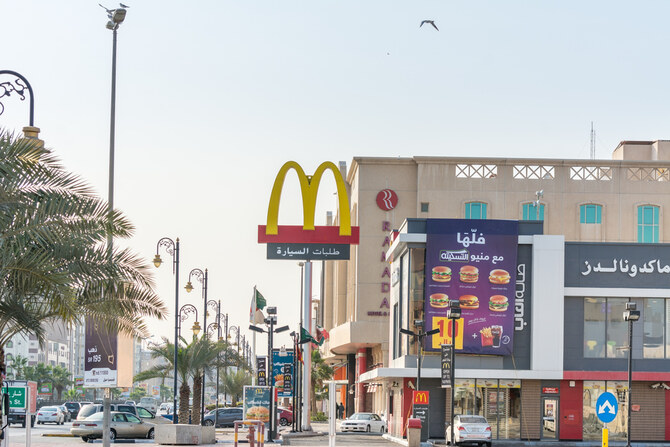

JEDDAH: Franchises are proving increasingly vital to Saudi Arabia’s economic development, driving employment, government revenue, and cultural transformation in a youthful nation.
Economic experts have told Arab News that the introduction of a law in 2019, followed by expansion of regulations the following year, helped open the Kingdom up to international businesses, as well as strengthened the relationship between franchisors and franchisees.
These moves, together with the economic expansion of Saudi Arabia as part of the Vision 2030 initiative, means the Kingdom now accounts for nearly half of the $30 billion franchise market in the Middle East and Africa, according to Yaseen Ghulam, associate professor of economics at Riyadh-based Al-Yamamah University.
He told Arab News there is consensus among researchers and industry observers that franchise businesses are expected to grow by more than 20 percent per annum for the coming five years and beyond.
“This presents an exceptional opportunity for international brands to enter the Kingdom through franchising, given the fact that European and North American consumer markets are struggling due to economic uncertainty, unemployment, and higher cost of living,” Ghulam said.
He added that franchise registrations in the Kingdom stood at 1,788 by the end of the third quarter of 2024, up from just 185 three years earlier.
With 1,232 entries, the accommodation and food services sector — which includes lodging facilities, dining establishments, and enterprises associated with tourism — led the registrations, the associate professor said.

Yaseen Ghulam, associate professor of economics and director of research at the Riyadh-based Al-Yamamah University. Supplied
He added that the wholesale and retail division came in second with 689, and the transport and storage sector with 257. An important element of this development, he noted, is more widespread activity, covering almost all major cities, rather than clustered around one particular region or sector.
“With 647 franchise registrations, Riyadh has led the field, followed by Makkah with 363, and the Eastern Province with 225. According to some estimates, over 1,200 brands are available for franchising, and the franchising sector in Saudi Arabia is offering over 10,000 business opportunities.”
Ghulam noted that more than 600 international and 380 local franchise brands are present in the Kingdom, according to the Small and Medium Enterprises General Authority, known as Monsha’at.
Abdullah Al-Maghlouth, a member of the Saudi Economic Association, told Arab News that government support for SMEs through streamlined processes and a business-friendly environment has helped drive the franchise sector.
He added that the 2019 law bolstered the Kingdom’s business ecosystem, attracting local and international investments through a clear legal framework.
“The 2020 executive regulations complement this by providing a comprehensive legal environment that facilitates franchise operations and ensures guarantees for all parties involved. This enhances transparency between franchisors and franchisees, making the Saudi market increasingly appealing to investors,” Al-Maghlouth said.
Reflecting on the key factors driving growth in the sector in the Kingdom, Ghulam said Monsha’at’s Franchise Center is “aggressively advancing entrepreneurship” through different programs, such as Tomoh.
He added that trademarks are now fully protected thanks to the Kingdom’s recent successful implementation of an intellectual property rights plan, with online portals making trademark registration and protection simple and accessible.
Financial guarantees provided by the Kafalah program are also proving to be a factor in sourcing finance from local investors, Ghulam said, and he noted that the Social Development Bank has played a significant role in advancing franchising in the Kingdom.
The institution provides financing solutions ranging from SR150,000 ($40,000) to SR4 million with a maximum financing length of 8 years as part of its program to assist new franchise developments and expansion.
“Another significant step in bolstering the franchise community is the founding of the Saudi Franchise Association, the Kingdom’s first specialized association. It has worked to promote the idea and culture of business excellence since its foundation. Additionally, it has organized numerous seminars and workshops and signed various partnerships with colleges and chambers of commerce,” said Ghulam.
Arrangements are also in place in Saudi Arabia to support franchise business and provide consulting. For both domestic and international businesses, Arab Franchise Marketing Corporation provides media platforms, administrative and legal services, and new franchise opportunities. “Through useful solutions, they work with a profit system to grow the franchise market in the MENA area, especially in Saudi Arabia,” said the associate professor.
Highlighting how Saudi Vision 2030 has influenced the development of the franchise market, Ghulam said that the objectives of Saudi Arabia’s Vision 2030 are to invest in globally competitive industries, diversify the country’s economy, boost the private sector, and create jobs.
“Following this, one important economic area that is highlighted in Vision 2030 is franchising. For the success of the Vision, a comprehensive legal, regulatory, financial, and economic set up was needed and has been established for the promotion of the private sector to diversify the economy and reduce dependence on the oil sector,” he said.
The development, he added, of the basic and changed framework has indeed helped the private sector grow in the last few years.
Ghulam said that the franchising industry has greatly benefited from Vision 2030, with support mechanisms, new institutions, and financial aid serving as key enablers.
He added that investment in mega projects, sports events, and facilities has created youth employment, raised real wages, and driven demand for sectors like education, health, dining, beauty, and fitness.
This has attracted international franchisors and local investors, fueling significant growth in the sector.
Ghulam emphasized that Vision 2030 has also shifted the mindset of Saudi youth, encouraging private sector roles and self-employment through franchising, offering substantial returns on investment.
He advised foreign brands seeking to expand into the Saudi franchise market that there is significant potential in sectors such as food, retail, and education, as well as health, fitness, and sports.
“More specifically, customers are quite fond of education franchises, including both domestic and international franchises that focus on training, early childhood care, development centers, and tutoring,” Ghulam said.
He continued that Saudi Arabia’s focus on health-related industries has driven high demand for gyms, nutritious food franchises, and medical services, adding that loosened social regulations, particularly for women, and government support for regional designers have boosted the retail sector, particularly fashion.
Al-Maghlouth agreed that beyond traditional sectors like tourism, hospitality, and food, the Saudi franchise market will continue to expand into emerging fields such as technology, education, and healthcare.
“The supportive legal framework will continue to enhance market transparency and drive growth in economic activities, fostering a sustainable investment environment. This will not only benefit all stakeholders but also solidify Saudi Arabia’s position as a leading investment destination in the region.” he said.


