GUHARZE: Iraqi Kurdish villagers, displaced by fighting between Turkish forces and Kurdish militants that has played out for years in northern Iraq, are finally allowing themselves to hope they will soon be able to go home.
Their hopes were raised after the Kurdistan Workers’ Party, or PKK, on Saturday declared a ceasefire in the 40-year insurgency against the Turkish government, answering a call to disarm from earlier in the week by the group’s leader, Abdullah Ocalan, imprisoned in Turkiye since 1999.
The truce — if implemented — could not only be a turning point in neighboring Turkiye but could also bring much needed stability to the volatile region spanning the border between the two countries.
In northern Iraq, Turkish forces have repeatedly launched blistering offensives over the past years, pummeling PKK fighters who have been hiding out in sanctuaries in Iraq’s northern semi-autonomous Kurdish region, and have set up bases in the area. Scores of villages have been completely emptied of their residents.
A home left decades ago
Adil Tahir Qadir fled his village of Barchi, on Mount Matin in 1988, when Iraqi dictator Saddam Hussein launched a brutal campaign against the area’s Kurdish population.
He now lives in a newly built village — also named Barchi, after the old one that was abandoned — about 2 kilometers (1.2 miles) away, south of the mountain.
He used to go back to the old village every now and then to farm his land. But that stopped in 2015 when Turkish forces moved in and set up camp there in the fight against PKK, hitting the group with wave after wave of airstrikes.
Iraqi Kurdish farmers and their lands became collateral damage. The Turkish airstrikes and ground incursions targeting PKK positions displaced thousands of Iraqi Kurdish civilians, cutting off many from their land.
“Because of Turkish bombing, all of our farmlands and trees were burned,” Qadir said.
If peace comes, he will go back right away, he says. “We wish it will work so we can return.”
Fighting emptied out villages in Iraq
In the border area of Amedi in Iraq’s Dohuk province — once a thriving agricultural community — around 200 villages had been emptied of their residents by the fighting, according to a 2020 study by the regional Iraqi Kurdish government.
Small havens remained safe, like the new Barchi, with only about 150 houses and where villagers rely on sesame, walnuts and rice farming. But as the fighting dragged on, the conflict grew ever closer.
“There are many Turkish bases around this area,” said Salih Shino, who was also displaced to the new Barchi from Mount Matin.
“The bombings start every afternoon and intensify through the night,” he said. ”The bombs fall very close ... we can’t walk around at all.”
Airstrikes have hit Barchi’s water well and bombs have fallen near the village school, he said.
Najib Khalid Rashid, from the nearby village of Belava, says he also lives in fear. There are near-daily salvos of bombings, sometimes 40-50 times, that strike in surrounding areas.
“We can’t even take our sheep to graze or farm our lands in peace,” he said.
Ties to Kurdish brethren in Turkiye
Iraqi Kurdish villagers avoid talking about their views on the Kurdish insurgency in Turkiye and specifically the PKK, which has deep roots in the area. Turkiye and its Western allies, including the United States, consider the PKK a terrorist organization.
Still, Rashid went so far as to call for all Kurdish factions to put aside their differences and come together in the peace process.
“If there’s no unity, we will not achieve any results,” he said.
Ahmad Saadullah, in the village of Guharze, recalled a time when the region was economically self-sufficient.
“We used to live off our farming, livestock, and agriculture,” he said. “Back in the 1970s, all the hills on this mountain were full of vines and fig farms. We grew wheat, sesame, and rice. We ate everything from our farms.”
Over the past years, cut off from their farmland, the locals have been dependent on government aid and “unstable, seasonal jobs,” he said. “Today, we live with warplanes, drones, and bombings.”
Farooq Safar, another Guharze resident, recalled a drone strike that hit in his back yard a few months ago.
“It was late afternoon, we were having dinner, and suddenly all our windows exploded,” he said. “The whole village shook. We were lucky to survive.”
Like others, Safar’s hopes are sprinkled with skepticism — ceasefire attempts have failed in the past, he says, remembering similar peace pushes in 1993 and 2015.
“We hope this time will be different,” he said.


![]()
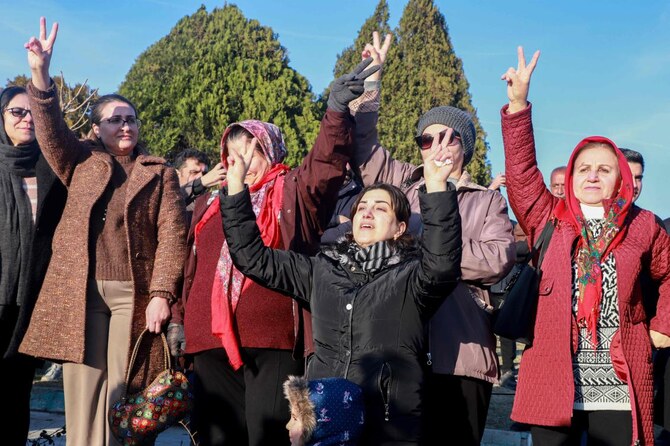
Iraq’s displaced Kurds hope to return home after Turkiye’s Kurdish militants declare a ceasefire

Short Url
https://arab.news/jt6dt
Iraq’s displaced Kurds hope to return home after Turkiye’s Kurdish militants declare a ceasefire
- Hopes were raised after the Kurdistan Workers’ Party, or PKK, on Saturday declared a ceasefire in the 40-year insurgency against the Turkish government


Latest updates



Recommended


© 2026 SAUDI RESEARCH & PUBLISHING COMPANY, All Rights Reserved And subject to Terms of Use Agreement.