Pakistani journalists rally against law regulating social media

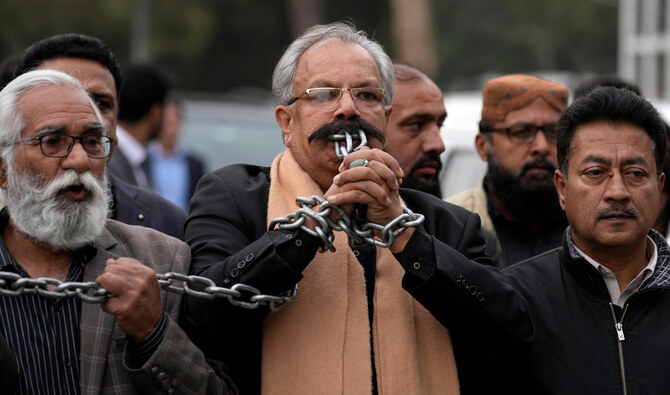
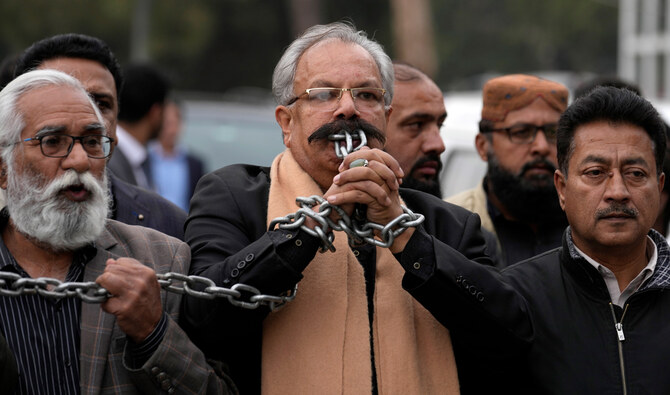
Pakistani journalists take part in a protest rally in Islamabad on January 28, 2025, to condemn a controversial ‘Prevention of Electronic Crimes Act’ bill passed by parliament that critics argue is designed to suppress freedom of speech. (AP)
Short Url
Updated 28 January 2025
Follow

Pakistani journalists rally against law regulating social media

  • Proposed law contains three-year prison sentence, $7,200 fine for sharing fake news
  • Pakistan Federal Union of Journalists say law is a “direct attack” on freedom of the press

ISLAMABAD: Hundreds of Pakistani journalists rallied on Tuesday against a proposed law to regulate social media content that they say is aimed at curbing press freedom and controlling the digital landscape.
The law would establish a regulatory authority that would have its own investigation agency and tribunals. Those found to have disseminated false or fake information face prison sentences of up to three years and fines of 2 million rupees ($7,200).
The Pakistan Federal Union of Journalists led rallies in cities including Islamabad, Karachi and Lahore, to demand the government withdraws the bill, which has been passed by parliament but has yet to be signed into law by the president.
“It is a direct attack on press freedom,” PFUJ President Afzal Butt said at the rally in Islamabad, before police blocked him and other protesters from marching toward the Red Zone, which houses the prime minister’s secretariat, parliament and diplomatic offices.
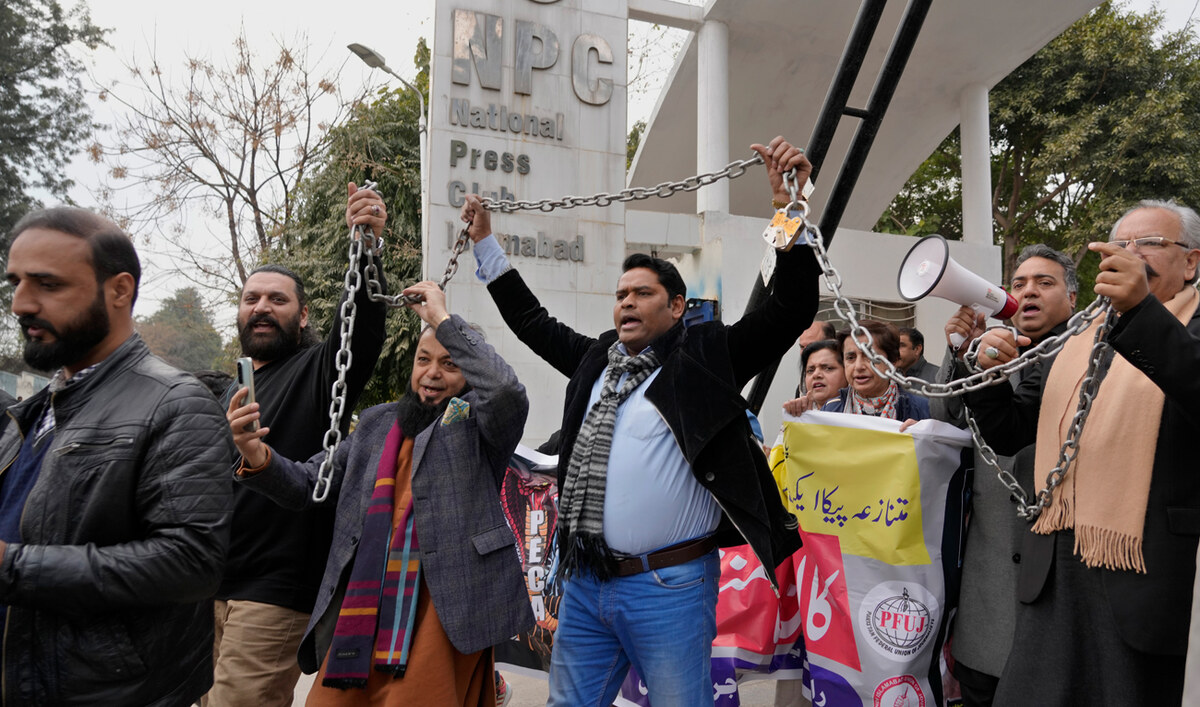


Pakistani journalists take part in a protest rally in Islamabad on January 28, 2025, to condemn a controversial ‘Prevention of Electronic Crimes Act’ bill passed by parliament that critics argue is designed to suppress freedom of speech. (AP)

“Our movement will continue until the law is revoked.”
Digital media in Pakistan has already been muffled with measures by telecom authorities to slow down Internet speeds, and social media platform X has been blocked for more than a year.
Reporters Without Borders, an organization that defends press freedom, ranked Pakistan at number 152 out of 180 on its 2024 world Press Freedom Index. The group also says Pakistan is one of the most dangerous places for journalists to work.
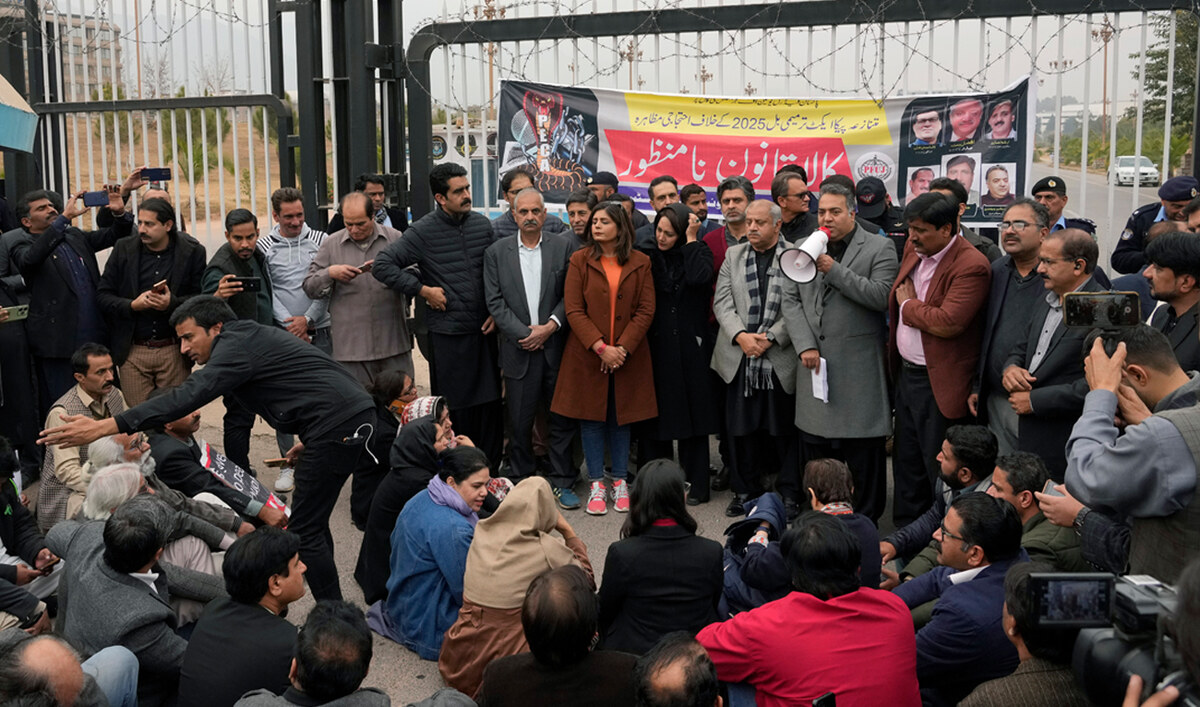


Pakistani journalists take part in a protest rally in Islamabad on January 28, 2025, to condemn a controversial ‘Prevention of Electronic Crimes Act’ bill passed by parliament that critics argue is designed to suppress freedom of speech. (AP)

Parliament passed the amendments to the law known as Pakistan Electronic Crimes Act last week.
The government has defended the new regulations, saying the law is being introduced to block fake and false news.


Pakistan, Iraq agree on tighter coordination over pilgrims under new regulated travel system

Updated 4 sec ago
Follow

Pakistan, Iraq agree on tighter coordination over pilgrims under new regulated travel system

  • New system requires all Iraq-Iran pilgrimages to be organized by licensed groups under state oversight
  • Long-running “Salar” model relied on informal caravan leaders, leading to overstays and missing pilgrims

ISLAMABAD: Pakistan and Iraq this week agreed to closely coordinate on the management and security of Pakistani pilgrims, as Islamabad rolls out a new, tightly regulated travel system aimed at preventing overstays, undocumented migration and security breaches during religious visits to Iraq and Iran.

The understanding was reached during a meeting between Pakistan’s Interior and Narcotics Control Minister Mohsin Naqvi and Iraq’s Interior Minister General Abdul Amir Al-Shammari on Thursday evening, where both sides discussed measures to facilitate pilgrims while strengthening oversight, Pakistan’s interior ministry said.

The agreement comes as Pakistan dismantles its decades-old pilgrim travel model and replaces it with a centralized, licensed system after authorities confirmed that tens of thousands of Pakistani pilgrims had overstayed or gone missing abroad over the past decade, triggering concerns from host governments.

“You have, for the first time during your tenure, taken effective measures to organize pilgrim groups, which are commendable,” Al-Shammari told Naqvi, according to Pakistan’s interior ministry.

“All pilgrims included in the list provided by Pakistan’s Ministry of Interior will be allowed to enter Iraq,” he added, making clear that only travelers cleared under the new system would be permitted.

Naqvi said Pakistan would strictly enforce return timelines under the revised framework.

“Pilgrims traveling to Iraq will not be allowed to stay beyond the designated period,” he said, adding that relevant authorities in both countries would remain in close coordination.

Both interior ministers also agreed to strengthen information-sharing and joint mechanisms on security cooperation, counterterrorism and the prevention of human smuggling, officials said.

“The safety, dignity, and facilitation of Pakistani pilgrims is the top priority of the Government of Pakistan,” Naqvi said.

Al-Shammari said he would visit Pakistan soon to finalize a joint roadmap to further improve pilgrim facilitation, security coordination and broader bilateral cooperation, according to the interior ministry.

Pakistan’s government has overhauled its pilgrim travel regime this year, abolishing the long-running “Salar” system under which informal caravan leaders managed pilgrimages. The move followed official confirmation that around 40,000 Pakistani pilgrims had overstayed or disappeared in Iran, Iraq and Syria over the past ten years.

Under the new Ziyarat Management Policy, only licensed Ziyarat Group Organizers (ZGOs) are allowed to arrange pilgrimages, with companies held directly responsible for ensuring pilgrims return on time. Authorities have completed security clearance for 585 companies seeking registration, while scrutiny of applications remains ongoing.

Islamabad has also barred overland travel for major pilgrimages, including Arbaeen, citing security risks in Pakistan’s southwestern Balochistan province, meaning all travel to Iraq and Iran is now restricted to regulated air routes.

Tens of thousands of Pakistani pilgrims travel each year to Iraq and Iran to visit some of the most revered shrines in Shia Islam, including the mausoleums of Imam Ali in Najaf and Imam Hussain in Karbala in Iraq, and major religious sites in Mashhad and Qom in Iran. Pilgrimages peak during religious occasions such as Arbaeen, when millions of worshippers converge on Karbala from across the region. The scale of travel, often involving long stays and cross-border movements, has long posed logistical, security and migration-management challenges for Pakistani authorities and host governments alike.