
RIYADH: As Saudi Arabia redefines its economy and aspirations under Vision 2030, the Kingdom is placing a tremendous focus on its most valuable asset — its youth.
Through a dynamic blend of public-private partnerships, targeted training, and groundbreaking programs, Saudi Arabia is setting the stage for a new generation of skilled professionals who will not only fuel growth but also transform the economic landscape.
Figures from the General Authority for Statistics released in 2023 show that 63 percent of the Kingdom’s population is under 30 years old, and the government and private sector are working hand-in-hand to shape the coming era.
“Digital literacy is essential, as technological advancements require the younger generation to not only be proficient in the latest advancements but also drive innovation in areas like AI and data analytics,” Riyadh Al-Najjar, PwC Middle East chairman and Saudi Arabia country senior partner, told Arab News
He added: “An entrepreneurial mindset is equally important, as the success of Vision 2030 relies on growing the private sector. Young people need to be able to spot opportunities, think critically, and solve problems that add value to the economy.”
On a similar perspective, Zehar Filemban, executive director in talent development at Red Sea Global, noted the essential skills Saudi Arabia is focusing on to prepare its youth for roles in an evolving economy.
In emerging fields like technology, tourism, and renewable energy, digital literacy is crucial, enabling young Saudis to work with advanced technologies, while problem-solving equips them to tackle complex challenges and project management ensures efficient handling of tasks and responsibilities.
“By nurturing these skills, we aim to empower the next generation to contribute effectively to the Kingdom’s evolving economy,” Filemban told Arab News.
Alongside these technical skills, critical thinking, adaptability, and leadership are equally important.
Critical thinking allows young professionals to approach problems analytically, adaptability helps them respond effectively to rapid changes, and leadership empowers them to drive projects and inspire teams.
By cultivating both technical and soft skills, Saudi Arabia aims to equip the next generation to lead in a competitive job market, fostering innovation and supporting the country’s ambitious economic transformation under Vision 2030.
“An entrepreneurial mindset is equally important, as the success of Vision 2030 relies on growing the private sector,” Al-Najjar said, underscoring that the future workforce must not only navigate established pathways but also create their own.
Robust youth engagement
PwC's Middle East Youth Outlook 2024 report underscores the importance of local talent development for the Kingdom’s future, indicating that a large portion of Saudi youth are highly motivated to contribute to the nation's progress.
The report reveals that 76 percent of young Saudis view the government as a positive change-driver, reflecting trust in the Vision 2030 agenda and a desire to align with national goals.
It also emphasizes that Saudi youth are keenly interested in career pathways that not only offer upward mobility but also provide opportunities to build skills in fields critical to the Kingdom’s sustainable future, like technology, healthcare, renewable energy, and tourism.
Filling the skills gap via private-public partnerships
Private companies in Saudi Arabia are working alongside government initiatives to improve youth employment and skill development.
"We actively partner with various ministries and educational institutions to offer tailored training programs that address industry-specific needs,” Filemban said.
He continued: “These collaborations, such as the RSG Elite Graduate Program, RSG Scholarship Program, Red Sea Vocational Training Program, and partnerships with local educational institutions, ensure that Saudi youth gain practical, hands-on experience while building a strong foundation for their careers, ultimately aligning with the goals of Vision 2030 and beyond.”
The alignment of private companies with government initiatives has been essential to the Kingdom’s approach, creating job readiness programs that meet the demands of the local labor market.
PwC, along with other private-sector giants like Aramco, NEOM, and Red Sea Global, are deeply committed to skill development and Saudization, reducing dependency on expatriate labor by equipping local talent with the expertise necessary to fill high-demand roles.
The firm’s Hemam program provides Saudi youth with training in consulting and technology, coupled with mentorship to bridge the gap between education and employment.
“It is also important for the private sector and educational institutions to continue working closely together, as it plays a pivotal role in preparing young Saudis for their careers,” Al-Najjar said.
He added: “Universities and academic institutions are increasingly working alongside businesses to ensure that curricula and training programmes are aligned with the specific needs of in demand sectors.”
Al-Najjar went on to say: “This alignment ensures that graduates possess the needed skills and are well-equipped to transition from education to employment seamlessly.”

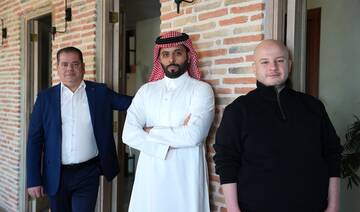
Riyadh Al-Najjar, PwC Middle East chairman and Saudi Arabia country senior partner. Supplied
Encouraging entrepreneurship
Saudi Arabia’s burgeoning entrepreneurial ecosystem is also playing a significant role in economic diversification.
The government, along with private-sector incubators such as The Garage and Flat6Labs, offers young business minds vital resources, including funding, mentorship, and technical support.
According to Al-Najjar, the private-sector incubators across the Kingdom play a significant role by providing entrepreneurs with access to technical expertise, strategic advice, and an extensive network of investors.
This guidance is helping young Saudis transform innovative concepts into viable businesses, fostering a generation of self-starters who contribute to job creation and economic growth.
Programs like these underscore the rise in entrepreneurial interest among Saudi youth, who are increasingly drawn to fields such as technology, renewable energy, and gaming.
Building a sustainable workforce: Saudization and beyond
Saudi Arabia’s shift towards a sustainable, homegrown workforce involves not only training but also the transfer of knowledge from foreign experts to Saudi nationals.
Companies are focused on workforce localization and training, with entities like Red Sea Global launching initiatives to empower Saudi talent to take on roles in fields such as tourism and renewable energy.
Filemban described RSG’s Global Leader Program as a targeted leadership initiative aimed at building capacity within Saudi nationals.
“This approach creates a sustainable workforce and also fosters a culture of ownership and innovation, empowering Saudis to take on roles across key sectors. We are also investing in a range of leadership initiatives, including the RSG Global Leader Program,” he said.
Filemban added: “Young Saudis are showing particular interest in sectors like tourism, technology, and renewable energy, areas that align closely with the goals of Vision 2030.”
He further explained that by connecting them with industry experts and providing resources, they enable them to transform their innovative concepts into sustainable businesses that contribute to the Kingdom’s economic growth.
Looking ahead to what’s next
When asked about further steps that Saudi Arabia should take to retain and attract talent in fields crucial to Vision 2030, Filemban noted that the Kingdom must continue to develop a robust talent ecosystem that not only attracts skilled professionals but also retains them in essential fields
“This can be achieved by expanding partnerships with global educational institutions, investing in lifelong learning programs, and enhancing incentives for skill development,” he said.
Filemban continued: “At Red Sea Global, we are committed to developing comprehensive career pathways, creating opportunities for continuous professional growth, and fostering an environment where top talent is valued and nurtured.”
On his side, Al-Najjar emphasized the importance of Saudi Arabia taking active steps to attract and retain talent in fields critical to the country’s future, even beyond Vision 2030.
“A key priority will be creating flexible, purpose-driven workplaces that connect back to the demand of today’s workforce. As highlighted in our Hopes and Fears Survey, 57 percent of workers value work-life balance and job security,” he said.
Al-Najjar continued: “This makes it essential for businesses to expand initiatives such as remote working policies, wellness programmes, and inclusive environments.
He added that this involves expanding public-private partnerships for advanced training, enhancing the appeal of fields like cybersecurity, artificial intelligence, and clean energy, and offering incentives and career growth opportunities for young professionals.
“By focusing on these areas, Saudi will have created a dynamic ecosystem that not only attracts global professionals but also nurtures and retains local talent who will drive the Kingdom’s economic transformation,” Al-Najjar said.
The Middle East Youth Outlook 2024 report recommends that Saudi Arabia continue to invest in scholarships, internships, and public-private collaborations to attract young professionals to emerging industries.
In doing so, the Kingdom is not only positioning itself as a talent hub but also fostering an environment where local youth can thrive and innovate.
Overcoming the challenges
Despite these extensive efforts, challenges remain. As Filemban pointed out: “One of the core challenges is bridging the gap between the skills young Saudis acquire in educational institutions and the rapidly evolving needs of the job market.”
The rapid pace of technological advancement, combined with the evolving demands of industries like AI and data analytics, requires continuous upskilling.
Initiatives such as Vision 2030’s Human Capability Development Program aim to address this by aligning education with industry requirements, preparing youth for careers in key sectors through practical skills and soft skills training.
In response, companies like Red Sea Global and PwC are working closely with universities and vocational training centers to develop curricula and training programs that meet industry standards.
This alignment between academia and industry is crucial to ensuring that young Saudis are equipped with relevant, market-driven skills, enabling them to transition smoothly into the workforce.