
RIYADH: Capital continued to flow across the Middle East this week as startups spanning fintech, health tech, and data infrastructure secured fresh funding and strategic backing, underscoring sustained investor appetite for early- and growth-stage companies in the region.
Saudi-based enterprise data governance and management startup Governata raised $4 million in seed funding to scale its artificial intelligence-ready data governance platform across the Kingdom and wider MENA region.
The round included participation from Joa Capital, abtal.vc, and Sanabil Accelerator by 500 Global, as well as Sadu Capital, Plus VC, and Hyperscope Ventures.
A-Typical Ventures and Plug and Play were also involved.
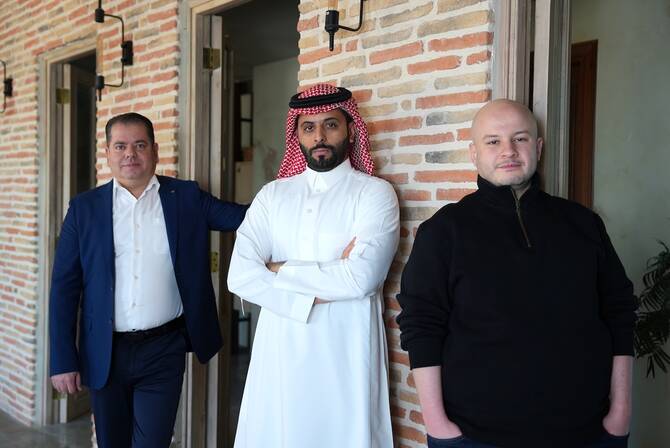
Founded in 2025 by Khalid Al-Mudayfir, Jehad Senan, and Djamel Mohand, the company supports organizations in building compliant and trustworthy data foundations for enterprise AI and generative AI adoption.
The funding will be used to advance product development, strengthen AI-driven decision-making capabilities, and support regional expansion with a focus on responsible data infrastructure.
Islamic digital bank Mal secures $230m
AI-driven Islamic digital bank Mal has secured a $230 million strategic investment led by BlueFive Capital, with participation from strategic investors and family offices.
Founded by fintech entrepreneur Abdallah Abu-Sheikh, Mal is a mobile-first digital banking platform currently under development and scheduled to launch in 2026.
Based in Abu Dhabi, the company plans to begin operations in the UAE before expanding into markets across the Middle East and Asia, targeting underbanked communities globally.
The capital will be used to accelerate product development, advance licensing and regulatory processes, and support its go-to-market strategy. Mal is currently in a pre-launch phase and does not yet hold banking or financial services licenses.
Health tech Madeed raises $400k
Saudi-based health tech startup Madeed has raised $400,000 in a pre-seed funding round led by Vision Ventures, with participation from angel investors Mashhoor Al-Dubayan, Mazen Al-Darrab, and Abdulla Nadeem Elyas.
Founded in 2025 by Adam Bataineh, Madeed is developing a preventive health platform focused on early disease risk detection through advanced biomarkers and laboratory testing.
The funding will support product development, the expansion of clinical and laboratory partnerships, and the launch of the company’s first member cohort in Saudi Arabia as it moves into early commercialization.
Flooss secures $22m credit facility
Bahrain-based Shariah-compliant fintech Flooss has secured a $22 million credit facility structured by Shorooq, marking the Kingdom’s first private asset-backed financing structure.
Founded in 2022 by Fawaz Ghazal, Flooss provides Shariah-compliant digital financing solutions and operates under the regulation of the Central Bank of Bahrain.
The facility will be used to scale the company’s core cash financing products, support portfolio growth, and drive regional expansion while continuing to operate under regulatory supervision.
Neom selects five studios gaming accelerator funding
Neom has announced the five game studios selected to receive funding as part of the latest cycle of its flagship gaming accelerator, Level Up, making it the program’s largest cohort to date.
The accelerator, driven by Neom Gaming and aligned with Saudi Vision 2030, supports early-stage game studios through funding, mentorship, and access to global publishing partners.
The five Saudi studios selected — Aiqona Productions, Fourcast Studio, Makera, OFF BOX Studios, and Phys — will receive funding, seven months of mentorship totalling 600 hours per studio, and access to Neom’s publisher partner network, which includes Kwalee and Tamatem Games.
Khosouf Studio raises $600k
UAE-based game development company Khosouf Studio has raised $600,000 in seed funding from Merak Capital through its $81 million Gaming Fund, launched in 2024.
Founded in 2020 by Ahmad Al-Natsheh, Khosouf Studio develops narrative-driven games and immersive virtual reality experiences.
The investment will support the company’s growth as it relocates operations to Saudi Arabia, contributing to the Kingdom’s gaming ecosystem and its ambition to become a global hub for interactive entertainment under Vision 2030.
EMushrif raises $7.5m
Oman-based Internet-of-Things school management solution provider eMushrif has raised $7.5 million in a funding round led by Jasoor Ventures, with participation from Phaze Ventures and other private investors.
Founded in 2017 by Adnan Al-Shuaili, Issa Al-Shuaili, and Awadh Al-Shukaili, eMushrif offers AI- and IoT-enabled school transportation solutions and currently serves more than 120,000 students across Oman and Kuwait.
The new capital will support regional expansion, with a focus on Saudi Arabia and the UAE, while continuing investment in product development and operational capabilities.
Flat6Labs marks 6th Riyadh Seed Program demo day
Flat6Labs has hosted the sixth Demo Day of its Riyadh Seed Program, marking the completion of six accelerator cycles since the program’s launch in 2023.
Backed by F6 Ventures and supported by the National Technology Development Program, the initiative has accelerated more than 60 startups, deployed $17 million in seed funding, and unlocked $38 million in follow-on capital.
The latest cohort spans sectors including AI, fintech, health tech, enterprise software, and industrial Artificial Intelligence of Things, highlighting the breadth of early-stage innovation emerging from Saudi Arabia.
Outliers Venture Capital launches fellowship program
Outliers Venture Capital has announced the launch of the Outliers Fellowship Program 2026 in partnership with the Saudi Venture Capital Co.
The program aims to develop the next generation of founders, operators, and venture leaders across Saudi Arabia and the wider MENA region. Building on its inaugural cohort, the fellowship will deliver a structured experience in Riyadh, featuring curated sessions with founders, operators, and investors, and providing participants with exposure to high-growth technology companies.
UAE’s first live open finance payment experience launched
Financial infrastructure provider Lean Technologies and UAE payments platform Ziina have launched the country’s first live customer-initiated Open Finance payment experience under the Central Bank of the UAE’s Open Finance framework.
The launch enables Ziina users to complete instant account-to-account bank payments through regulated Open Finance APIs, marking the transition of open finance in the UAE from technical readiness to live deployment.
Lean provides the regulated infrastructure underpinning the payments, while Ziina delivers the consumer-facing experience, demonstrating the viability of production-grade open finance payments in the UAE.
MENA startup funding slows in December
Startup investment across the Middle East and North Africa softened in December, with 44 startups raising a combined $171.5 million.
The figure represents a 38 percent year-on-year decline and a 24 percent drop compared to November, reflecting a typical year-end slowdown in venture activity.
However, the headline contraction masked a shift in funding composition rather than a complete pullback in investor engagement.
Excluding debt financing from both months, December marginally outperformed November, driven by a reduced reliance on debt-led transactions.
Debt accounted for just 12.5 percent of total funding in December, signalling a return to more equity-driven dealmaking as the year drew to a close.
Saudi Arabia remained the region’s most funded market in December, with startups in the Kingdom raising $115 million across 17 rounds, accounting for 67 percent of all capital deployed during the month.
Egypt ranked second, with six startups raising $27.3 million, closing a year marked by continued funding pressure. The UAE placed third, raising $21.4 million across 15 transactions, pointing to sustained deal flow but smaller average cheque sizes.
Outside the top three markets, Algeria, Morocco, Kuwait, and Bahrain collectively attracted $7.5 million, underlining the limited volume of capital flowing into smaller ecosystems at year-end.
Sector data showed a notable cooling in fintech, which fell outside the top five funded verticals in December.
The sector ranked seventh, raising just $3.9 million across six deals. Cybersecurity led all sectors, attracting $63.4 million invested in four startups, followed by Software-as-a-Service companies, where 10 startups raised $47.9 million.
Deeptech ranked third, securing $23 million across two transactions, indicating sustained investor appetite for specialized and defensible technologies despite the broader slowdown.
By deal count, December activity was dominated by early-stage rounds. Thirty-five early-stage startups raised $35.9 million, reflecting continued investor focus on company formation and validation.
In contrast, three late-stage startups raised a combined $66.5 million, once again highlighting how a small number of large rounds can disproportionately shape monthly funding totals. A further six startups did not disclose their funding stage.
Business-to-business startups continued to attract the bulk of investment. B2B companies raised $154.7 million across 33 rounds, reinforcing investor preference for enterprise-focused revenue models.
Consumer-facing startups raised $6.3 million across five deals, while six startups operating hybrid B2B and B2C models accounted for the remaining capital.
Gender disparities in venture funding remained pronounced in the final month of the year. Female-founded startups raised just $116,000 across two deals, while mixed-gender founding teams secured $5 million through four rounds.