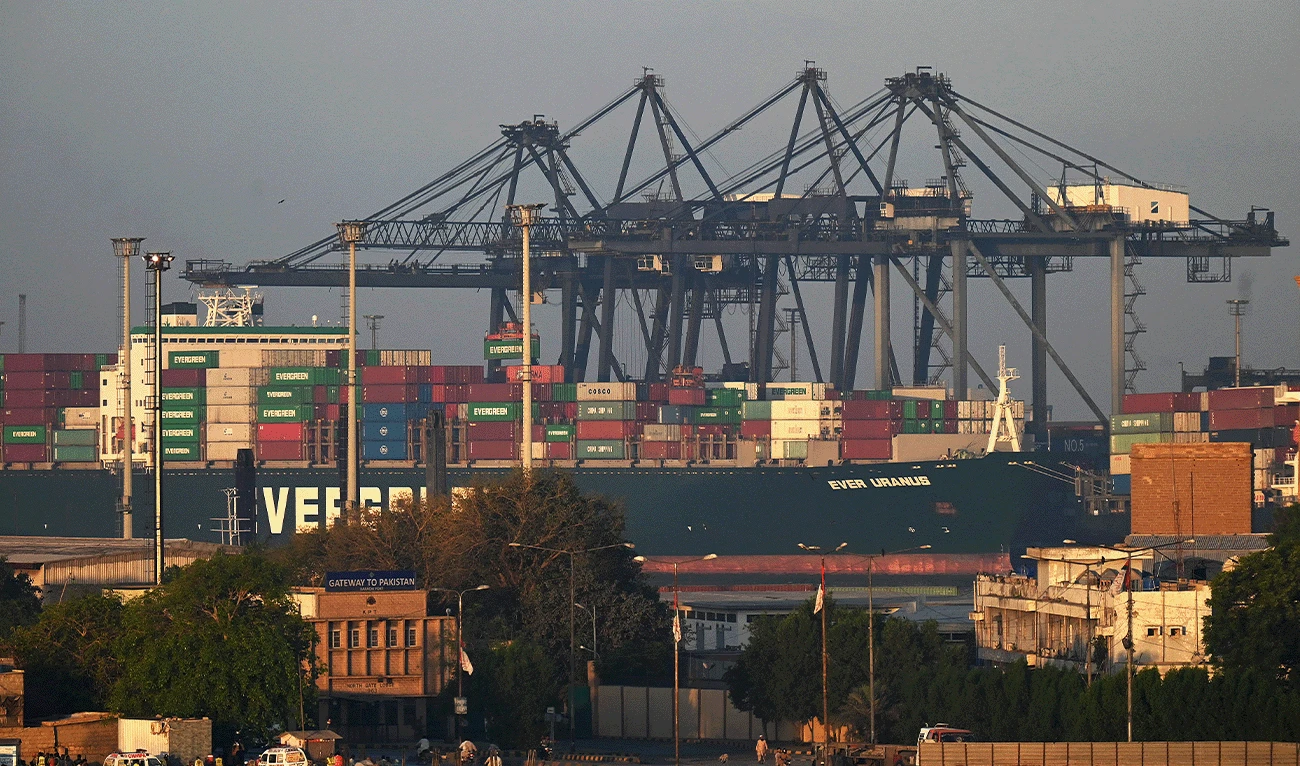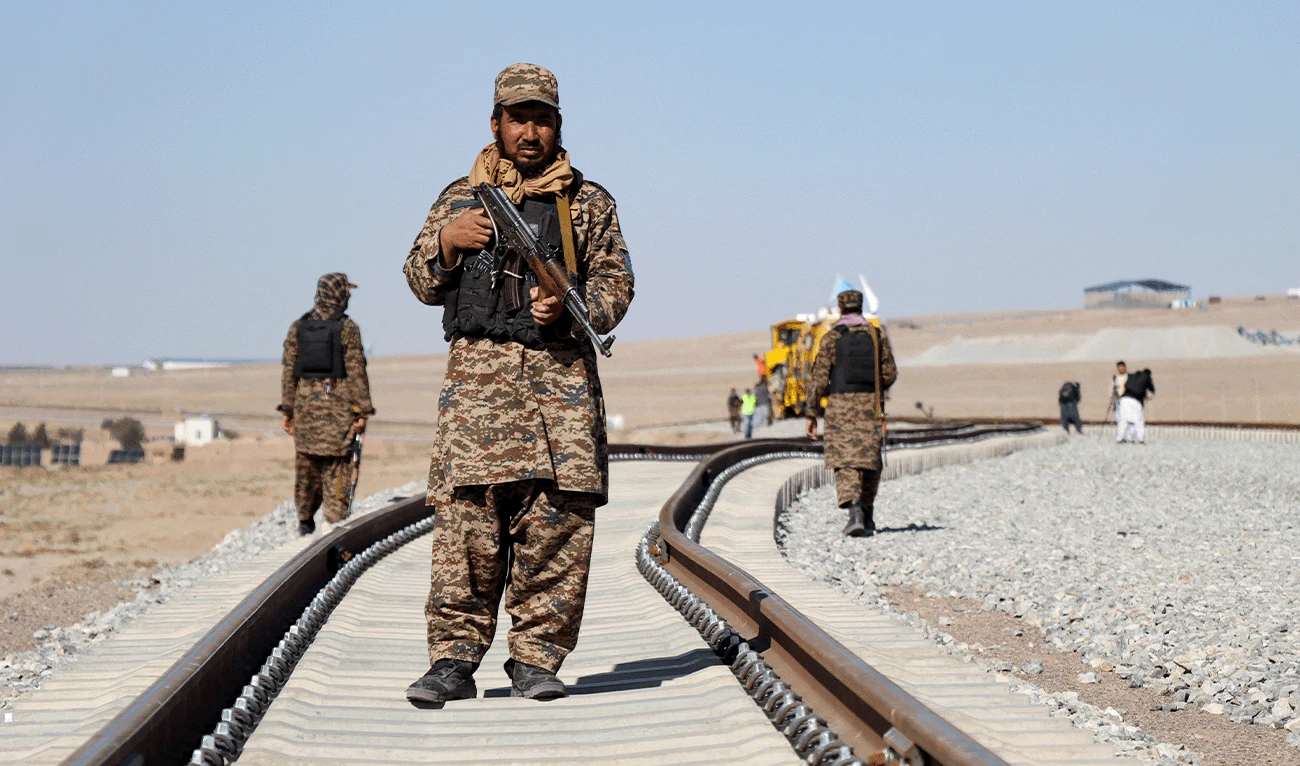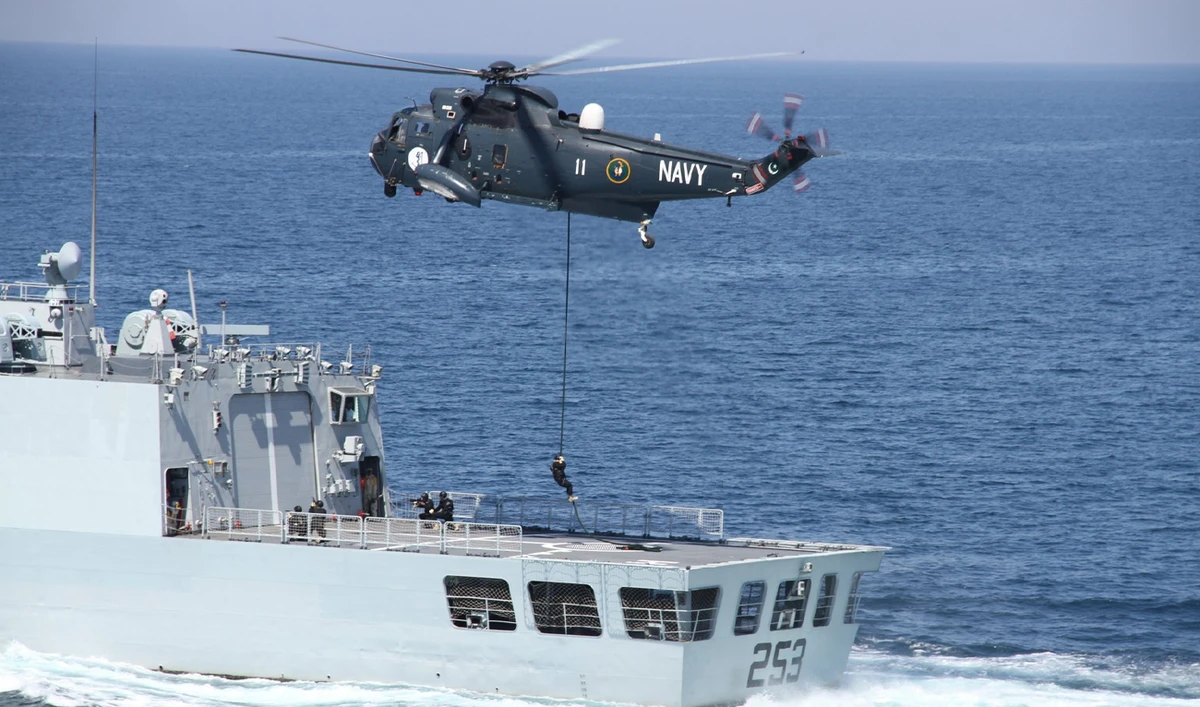
- This multinational exercise in Karachi is aimed at promoting peace, enhancing cooperation among regional and global navies
- The exercise is scheduled to take place from Feb. 7 to Feb. 11 to present a united front against terrorism and maritime crimes
JEDDAH: Saudi Arabia and Pakistan are united in their commitment to safeguard regional and global waters, using decades of naval collaboration to confront threats and foster stability.
This enduring partnership will take center stage at AMAN-2025, a multinational exercise in Karachi aimed at promoting peace and enhancing cooperation among regional and global navies.
With the participation of Saudi Arabia, the event is scheduled to take place from Feb. 7 to 11 in the capital of Sindh province on the Arabian Sea coast with the aim to also present a united front against terrorism and maritime crimes.
Speaking to Arab News, Pakistan’s Chief of the Naval Staff Adm. Naveed Ashraf highlighted the strong bond between the Royal Saudi Naval Forces and the Pakistan Navy, describing it as an “enduring maritime brotherhood.”
“The two navies have several forums for mutual interaction on issues ranging from training to information sharing and logistics. We regularly conduct exercises at sea — foremost being the Naseem Al-Bahr — seminars and training of personnel to enhance the RSNF’s potential to remain a formidable force in the Arabian Gulf and beyond,” Ashraf said.
The admiral underscored the evolution of the AMAN series since its inception in 2007, noting the exponential growth in the level and number of participants, which makes the upcoming edition distinct.
“In the last edition of 2023, Pakistan hosted 50 nations, and this time we expect even more participation from navies across the globe,” he said, adding that the former International Maritime Conference, previously an adjunct to AMAN, has now evolved into the AMAN Dialogue to allow more pragmatic, practitioner-focused discussions between naval leaders from regional and extra-regional navies on maritime security issues.
Ashraf explained how the Pakistan Navy aligns naval strategies and operational practices during such exercises, especially with increasing international participation.
“One of AMAN’s key objectives is to improve interoperability with regional and global navies. For that, we use an operational language that all participants can understand,” he said. “Collective understanding of naval strategies and operational practices is developed during planning phases and conferences held prior to the exercise.”
Emphasizing the role of AMAN-25 in fostering maritime security and stability in the Indian Ocean, he said: “Key objectives of AMAN are to foster regional and extra-regional cooperation to maintain good order at sea, enhance interoperability, act as a bridge between regions, share experiences, understand each other, and exhibit united resolve against terrorism and maritime crimes.”
Ashraf said that the understanding developed during these exercises helps organize collaborative efforts to ensure maritime security.
“In my plain view, AMAN offers a platform to showcase one’s concerns, capabilities, and willingness to cooperate,” he said.
Commenting on the effectiveness of AMAN in addressing piracy, terrorism, and other maritime crimes, Ashraf said that the AMAN Dialogue provides a forum for sharing awareness, experiences, and strategies to counter such threats.
“A significant number of harbor and sea exercises provide opportunities to improve the capacity of participating nations’ teams to combat maritime crimes effectively,” he said.
Discussing the inaugural AMAN Dialogue and its anticipated outcomes, Ashraf noted that the event has evolved from the International Maritime Conference into a practitioner-focused exchange of views.
“The dialogue seeks to promote shared understanding of maritime security issues, challenges confronting the region, and their linkages to the blue economy. It also deliberates on the efficacy of existing mechanisms for maritime cooperation and the need for innovative solutions to address evolving challenges at sea,” he said.
With maritime threats continuing to evolve, the Pakistan Navy employs technological advances to enhance interoperability with regional and extra-regional navies. Ashraf highlighted the transformative effect of technological innovation on naval warfare.
“We are paying focused attention to leveraging technology to achieve better combat readiness. That is the only way to remain effective against evolving threats. Regarding interoperability, we maintain operational linkages and information-sharing mechanisms with many countries through bilateral and multilateral arrangements, such as the Joint Maritime Information Coordination Center,” he said.
Addressing concerns about maritime pollution and climate change, the admiral said that AMAN-25 would prioritize sustainable practices at sea.
“Climate change and maritime pollution are areas of critical concern. These two issues will receive focused attention during AMAN Dialogue discussions,” he said.
On Pakistan Navy’s bilateral and multilateral agreements beyond the exercise, Ashraf said the force has a long history of cooperation with countries worldwide, even before AMAN’s inception in 2007.
“We have bilateral engagements with many navies through expert-level staff talks, training from basic to advanced levels, and exchange visits of key leadership. We became part of the Combined Maritime Forces in 2004 and have significantly contributed to collaborative security at sea,” he said.
Speaking of his vision for future maritime security amid emerging challenges such as cyber threats and artificial intelligence in warfare, Ashraf warned of the risks posed by disruptive technologies falling into the hands of non-state actors.
“I assess that threats at sea will range from ‘low-cost, high-impact’ technology to conventional weapons coupled with significant cyberattacks. That is why I say that future maritime security will greatly depend on collaborative efforts, where early warning will become a decisive factor,” he said.
Ashraf reiterated the Pakistan Navy’s commitment to maintaining deterrent capabilities against traditional and non-traditional threats. “Pakistan Navy, envisioned as a technologically adaptive military, will maintain its deterrent capability while also participating in regional and international efforts to maintain stability at sea.”
Highlighting AMAN-25’s focus on securing sea lines of communication, Ashraf emphasized the critical role of the Pakistan Navy in safeguarding these economic lifelines. Recognizing the Indian Ocean as a vital artery for global trade, including energy shipments, he said AMAN provides a platform for practical exercises, professional exchanges, and intellectual discourse on maritime security challenges in the region.
“The significance of sea lines of communication is part of the discussions during AMAN, as we alone depend 95 percent on the sea for our commerce. Regional maritime security patrols and participation in CMF’s task forces signify our role in safeguarding these economic lifelines,” he concluded.
Under the theme “Secure Seas — Prosperous Future,” this year’s AMAN Dialogue will address security challenges in the Indian Ocean, including strategic competition, regional conflicts, and piracy, as well as narco-trafficking, and the use of force by non-state actors.
The exploitation of ocean resources, climate change, and emerging technologies such as AI and unmanned systems are transforming the security landscape, posing risks to global trade and economic development.
The dialogue will focus on key themes such as maritime security in the Indian Ocean, perspectives on maritime security and cooperation, the blue economy, as well as the challenges and opportunities presented by emerging technologies.
These discussions will emphasize the need for collaboration to ensure a stable and prosperous maritime future.