

Saudi Arabia’s Tabuk targets development with over $67m investment deals 

The agreements, finalized during a visit by Minister of Municipalities and Housing Majid Al-Hogail, are expected to stimulate the local economy while generating both direct and indirect employment opportunities, the Saudi Press Agency reported. 
Short Url
Updated 19 November 2024
Follow

Saudi Arabia’s Tabuk targets development with over $67m investment deals 

JEDDAH: Investment contracts worth SR252 million ($67.2 million) have been signed to boost Saudi Arabia’s Tabuk region, focusing on healthcare, logistics, housing, entertainment, and education to spur economic growth. 

The agreements, finalized during a visit by Minister of Municipalities and Housing Majid Al-Hogail, are expected to stimulate the local economy while generating both direct and indirect employment opportunities, the Saudi Press Agency reported. 

During his tour to the region, Al-Hogail held discussions with regional investors and business leaders, focusing on expanding opportunities in municipal and housing development.  

The minister underscored the government’s commitment to fostering investments that align with the aspirations of Tabuk’s residents and contribute to Vision 2030’s broader economic goals. 

The inspection visit included reviews of key infrastructure projects, including road upgrades, traffic system enhancements, and housing developments.   

Al-Hogail emphasized the importance of ensuring high-quality services for residents and visitors, stressing that these initiatives are integral to achieving the ministry’s strategic objectives.  

He also witnessed the delivery of 533 new housing units to beneficiaries of the Development Housing Program, a key initiative supporting low-income families in Saudi Arabia.   

This latest distribution brings the total number of housing units delivered under the program to 2,479, highlighting the government’s commitment to addressing housing needs.

At the start of his tour, Al-Hogail met with municipal leaders and heads of municipalities to discuss progress on ongoing projects, emphasizing the need for continuous improvements in service delivery. 

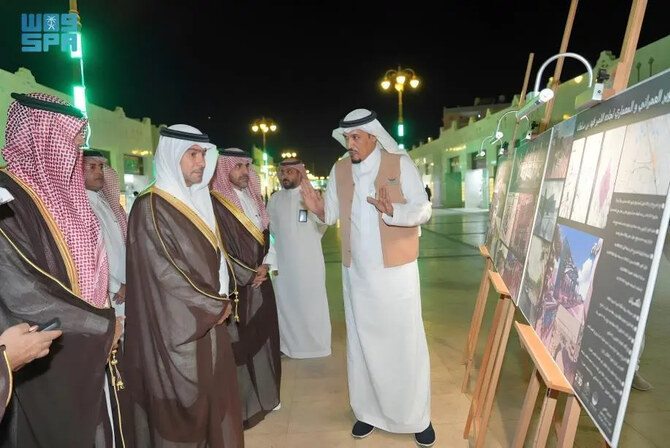
He also visited the Prince Fahd bin Sultan Promenade, where redesigned storefronts inspired by Tabuk’s heritage have transformed the area into a vibrant destination for locals and tourists.  

Al-Hogail inaugurated a branch of the Real Estate Developer Services Center, Etmam, which streamlines government services for beneficiaries in one location. He engaged with citizens to gather feedback and suggestions for further enhancing municipal services in the region.  

The visit coincided with the announcement by the Ministry of Municipalities and Housing’s investment arm, the National Housing Co., of 11 new residential projects in Khuzam, north of Riyadh. These developments, featuring over 10,000 modern-designed units, are aimed at achieving the Kingdom’s homeownership goals. 

This visit is part of a series of inspections the minister is conducting across Saudi Arabia to oversee municipal and housing sector initiatives, review ongoing projects, and ensure their progress aligns with Vision 2030’s transformative goals. 


First EU–Saudi roundtable on critical raw materials reflects shared policy commitment

Updated 16 January 2026
Follow

First EU–Saudi roundtable on critical raw materials reflects shared policy commitment

RIYADH: The EU–Saudi Arabia Business and Investment Dialogue on Advancing Critical Raw Materials Value Chains, held in Riyadh as part of the Future Minerals Forum, brought together senior policymakers, industry leaders, and investors to advance strategic cooperation across critical raw materials value chains.

Organized under a Team Europe approach by the EU–GCC Cooperation on Green Transition Project, in coordination with the EU Delegation to Saudi Arabia, the European Chamber of Commerce in the Kingdom and in close cooperation with FMF, the dialogue provided a high-level platform to explore European actions under the EU Critical Raw Materials Act and ResourceEU alongside the Kingdom’s aspirations for minerals, industrial, and investment priorities.

This is in line with Saudi Vision 2030 and broader regional ambitions across the GCC, MENA, and Africa.

ResourceEU is the EU’s new strategic action plan, launched in late 2025, to secure a reliable supply of critical raw materials like lithium, rare earths, and cobalt, reducing dependency on single suppliers, such as China, by boosting domestic extraction, processing, recycling, stockpiling, and strategic partnerships with resource-rich nations.

The first ever EU–Saudi roundtable on critical raw materials was opened by the bloc’s Ambassador to the Kingdom, Christophe Farnaud, together with Saudi Deputy Minister for Mining Development Turki Al-Babtain, turning policy alignment into concrete cooperation.

Farnaud underlined the central role of international cooperation in the implementation of the EU’s critical raw materials policy framework.

“As the European Union advances the implementation of its Critical Raw Materials policy, international cooperation is indispensable to building secure, diversified, and sustainable value chains. Saudi Arabia is a key partner in this effort. This dialogue reflects our shared commitment to translate policy alignment into concrete business and investment cooperation that supports the green and digital transitions,” said the ambassador.

Discussions focused on strengthening resilient, diversified, and responsible CRM supply chains that are essential to the green and digital transitions.

Participants explored concrete opportunities for EU–Saudi cooperation across the full value chain, including exploration, mining, and processing and refining, as well as recycling, downstream manufacturing, and the mobilization of private investment and sustainable finance, underpinned by high environmental, social, and governance standards.

From the Saudi side, the dialogue was framed as a key contribution to the Kingdom’s industrial transformation and long-term economic diversification agenda under Vision 2030, with a strong focus on responsible resource development and global market integration.

“Developing globally competitive mineral hubs and sustainable value chains is a central pillar of Saudi Vision 2030 and the Kingdom’s industrial transformation. Our engagement with the European Union through this dialogue to strengthen upstream and downstream integration, attract high-quality investment, and advance responsible mining and processing. Enhanced cooperation with the EU, capitalizing on the demand dynamics of the EU Critical Raw Materials Act, will be key to delivering long-term value for both sides,” said Al-Babtain.

Valere Moutarlier, deputy director-general for European industry decarbonization, and directorate-general for the internal market, industry, entrepreneurship and SMEs at European Commission, said the EU Critical Raw Materials Act and ResourceEU provided a clear framework to strengthen Europe’s resilience while deepening its cooperation with international partners.

“Cooperation with Saudi Arabia is essential to advancing secure, sustainable, and diversified critical raw materials value chains. Dialogues such as this play a key role in translating policy ambitions into concrete industrial and investment cooperation,” she added.