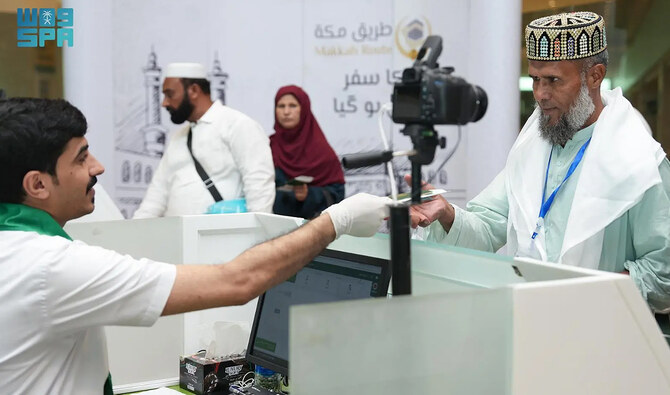
ISLAMABAD: Around 15 designated Pakistani banks have started receiving applications for the upcoming annual Hajj pilgrimage, Pakistan’s Religious Affairs Ministry said on Monday, with the process set to continue till Dec. 3.
Pakistan’s religious affairs minister last week announced the country’s Hajj 2025 policy, according to which pilgrims can pay fees for the annual Islamic pilgrimage in installments for the first time.
The first installment of Hajj dues, amounting to Rs200,000 ($717), must be deposited along with the Hajj application under the government scheme, while the second installment of Rs400,000 ($1,435) must be deposited within ten days of the balloting. The remaining amount must be deposited by February 10 next year.
“Fifteen designated banks in the country have started receiving Hajj applications from today, Nov. 18, and the process will continue till Dec.3,” Muhammad Umer Butt, a spokesperson of the religion ministry, told Arab News.
Next year’s Hajj under the government scheme is expected to range between Rs1,075,000 ($3,858) to Rs1,175,000 ($4,217), while an additional cost for the sacrifice will be Rs55,000 ($197.43).
“This year, the government’s Hajj scheme has been allocated a quota of 89,605 seats, with 5,000 reserved for the sponsorship scheme for overseas Pakistanis while the remaining seats will be allocated to the private Hajj scheme,” Butt confirmed.
The Hajj sponsorship scheme was introduced by the government last year, allowing overseas Pakistanis to apply for Hajj or sponsor someone in Pakistan for the journey by paying in US dollars. In return, the applicants would not have to participate in the balloting process for the pilgrimage.
Butt said the total amount for the sponsorship scheme’s basic package is $4,225, adding that if a pilgrim opts for a sacrificial animal, an additional $200 will be charged. The spokesperson said the performance of hundreds of bank branches will be directly monitored by the religion ministry’s dashboard to ensure convenience for intending pilgrims.
“Women pilgrims will be able to depart without Muharram with a reliable group with the permission of their guardian,” he said. “People with serious or complicated illnesses will not be allowed to perform Hajj and advanced-stage pregnant women, as well as children under 12 years of age, will also not be permitted to travel for Hajj.”
He said the government’s Hajj package includes airfare, accommodation, food, training, transportation and vaccinations for pilgrims, adding that applicants will be guided regarding the Hajj process through the Hajj helpline, website, mobile app and government’s official social media accounts.
Saudi Arabia has allotted Pakistan a total quota of 179,210 pilgrims for the upcoming Hajj. While announcing the Hajj 2025 policy last week, Pakistan’s Religious Affairs Minister Chaudhry Salik Hussain said preference would be given to those going for the pilgrimage for the first time while under the new policy.
“The traditional long package for the official Hajj scheme will cover 38 to 42 days and the short package will cover 20 to 25 days,” Hussain had said.
Under the new Hajj policy, the government’s quota will be allocated through computerized balloting, with 1,000 seats reserved for hardship cases and 300 for laborers or low-income employees registered with the Workers Welfare Fund or the Employees Old-Age Benefits Institution.


![]()

Pakistani banks start receiving Hajj 2025 applications
Short Url
https://arab.news/pnz92
Pakistani banks start receiving Hajj 2025 applications
- Process to receive Hajj applications to continue till Dec. 3, says religion ministry
- Pakistani pilgrims can pay fees in installments, as per the country’s new Hajj policy
Latest updates


© 2026 SAUDI RESEARCH & PUBLISHING COMPANY, All Rights Reserved And subject to Terms of Use Agreement.