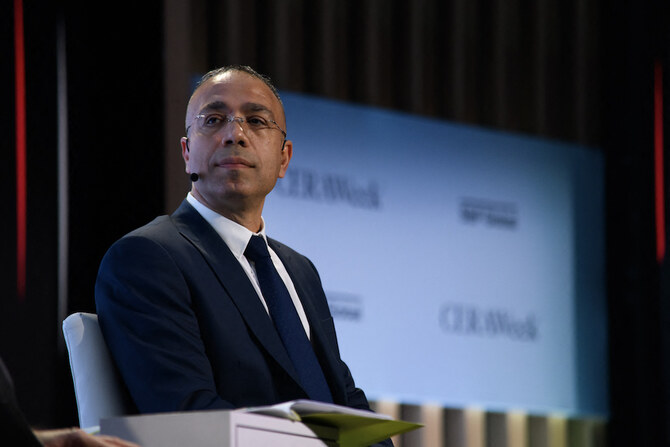

BAKU: Countries from around the world must come together in a “collective effort” to fight climate change, COP29 CEO Elnur Soltanov told Arab News.
“When we say, ‘in solidarity for a greener world,’ we mean that climate action must be a collective effort. Unless it is collective, it won’t work, and we risk losing everything,” said Soltanov.
He pointed out the moral imperative of international solidarity, particularly for nations that contribute minimally to global warming yet suffer the most from its effects, such as African countries and small island nations.
“African countries, contribute less than 4 percent to global warming, but the majority of climate-vulnerable countries are in the African continent,” he said.
For example, as of last year, extreme heatwaves during summer have critically affected the northern parts of Africa, such as Tunisia. The temperature in Tunis reached 49°C, whereas Agadir in Morocco, recorded 50.4°C, according to the World Meteorological Organization.
One of the major components of this solidarity is climate finance, which Soltanov believes is essential for creating a fair balance of responsibilities among nations.
“Different countries have different responsibilities, in terms of what is happening in the world today. There are beneficiaries, there are not so many beneficiaries, so this balance and fairness between them could only be provided in case we are moving collectively, and to move collectively, we believe we should deliver on climate finance this year,” he said, stressing that climate finance is critical for enabling of collective action.
Soltanov acknowledged that the outcomes of such gatherings are frequently scrutinized.
“The crisis we are facing is real, it is significant and therefore whenever it is helped, whatever the outcomes are, there will be criticism. It is not about Azerbaijan, it is not about Saudi Arabia, it is not about any country,” he said.
Despite the criticism, the CEO prefers to be heavily focused on achieving tangible results and delivering meaningful climate action instead of focusing on who to blame for this global environmental problem.
“We are ready to listen to constructive arguments,” he said. “What would I tell everybody is, if you want to serve that national interest of Azerbaijan, you need to serve the global interest, which is about producing outcomes and deliverables in terms of tackling the climate crisis.”
He added: “Our focus is on delivering action, climate action, that is really consequential.”
Soltanov noted that developed countries have special responsibilities to assist others, highlighting the need for a cooperative approach to ensure that nobody is left behind.
“We don’t see the difference between oil producing or oil consuming country because oil transactions, gas transactions and coal transactions happen in a free market. Nobody is forced to buy from anybody.”
He added: “Therefore, all the countries are oil countries and all the countries are gas countries because the entire global development models are based on hydrocarbons, and we are trying to figure out these alternative models of development so that development and energy security, development and poverty are not things we choose from, they happen at the same time.”
Azerbaijan and Saudi Arabia, for example, can share their capabilities, experience, and partnerships to bring more to the table.
“We believe that, the way we look at, if there is anything Saudi Arabia, a country like Azerbaijan, could do for us, they are valuable in terms of experience and technology they acquire because they are at the forefront of the other forms of energy developments.”