- Platform will accelerate emission reduction efforts and strengthen the Kingdom’s role in the carbon credit market by 2030
BAKU: A new carbon exchange platform has been launched at the COP29 conference in Baku, aimed at channeling significant funding into global climate projects.
Developed by Saudi Arabia’s Regional Voluntary Carbon Market Co., the platform will accelerate emission reduction efforts and strengthen the Kingdom’s role in the carbon credit market by 2030.
Speaking to Arab News, Riham El-Gizy, CEO of RVCMC, underscored the platform’s potential to drive lasting change in global climate finance. She noted that such high-profile launches serve not only to attract more buyers but also to enhance market awareness.
“Auction after auction, awareness grows, and it’s not just about the event itself,” El-Gizy said. “We are launching advisory services to help buyers on their decarbonization journeys, supporting their climate sustainability and carbon neutrality goals,” she added.
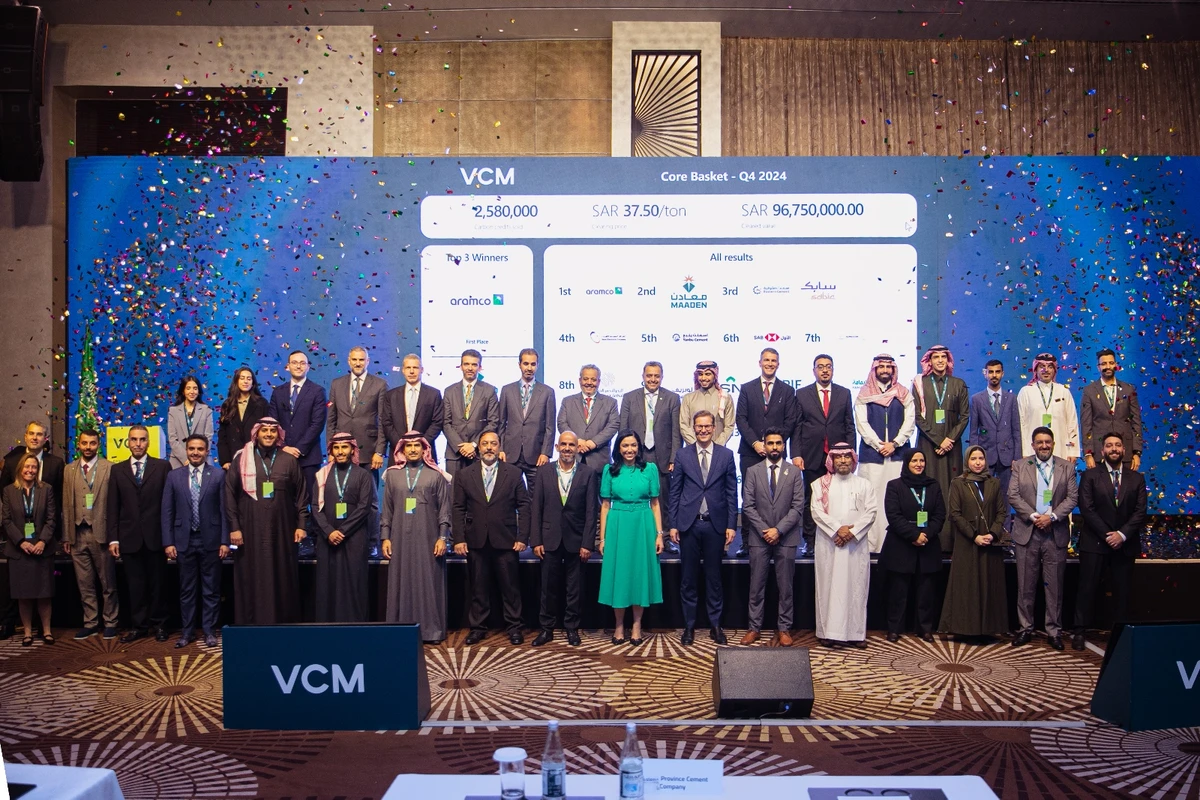
The launch brought together 22 Saudi and international firms, signaling strong market interest and a commitment to sustainable development initiatives. The platform’s inaugural auctions aim to direct significant funding toward high-quality climate projects, particularly in the Global South.
A Voluntary Carbon Market is a forum where organizations and individuals can purchase credits to offset their emissions by funding projects that reduce or capture greenhouse gases, such as reforestation or renewable energy.
Unlike regulated markets, participation in VCMs is optional, allowing companies to support climate goals and compensate for emissions they cannot directly eliminate. VCMs are crucial for directing finance to environmental projects, especially in developing regions, and are considered a key tool in achieving global net-zero targets.
El-Gizy highlighted the Saudi market’s unique advantage through Islamic finance mechanisms. “We’ve worked with the Islamic Corporation for the Development of the Private Sector to issue the first-ever fatwa allowing carbon credits as Shariah-compliant commodities,” she said.
“Imagine if mortgages were backed by carbon credits rather than traditional commodities like rice or gold. This would funnel more capital into projects benefiting humanity and the environment.”
The Islamic finance sector in Saudi Arabia, valued at $500 billion, offers immense potential to drive liquidity into the carbon market.
The platform launched by RVCMC will offer auction and block trade functionalities, with plans to expand into spot markets by 2025.
By providing a robust marketplace for carbon credits, RVCMC aims to bridge critical financing gaps in climate action, especially in regions most affected by climate change.
This transparency is built on digitized infrastructure, employing tools like satellite imagery and AI for verification, ensuring that carbon offsets deliver real environmental impact.
The inaugural auction will see over 2.5 million tonnes of high-quality carbon credits traded, with participating companies including industry leaders such as Aramco Trading Co., Ma’aden, and Gulf International Bank.
These transactions will fund a diverse portfolio of projects focused on emissions reduction and environmental preservation. Notable projects include methane capture in waste management, forest reforestation in Ethiopia, and carbon storage technology in construction in the US.
El-Gizy elaborated on their strict standards, saying: “We maintain rigorous due diligence. Only 10 percent of the projects submitted are accepted, ensuring high quality and impact.”
A significant portion of the auction’s credits will focus on removal projects, enhancing their durability and environmental impact.
RVCMC was established by Saudi Arabia’s Public Investment Fund and the Saudi Tadawul Group to foster a thriving voluntary carbon market within the Kingdom and the wider Middle East and North Africa region.
Since its inception in 2022, the company has facilitated record-breaking auctions, underscoring the region’s growing role in global climate finance.
Reflecting on the broader significance of COP29, El-Gizy emphasized the essential role of voluntary carbon markets in climate finance, particularly in reaching underserved communities.
“Conventional finance often fails to reach rural areas in Africa and Saudi Arabia,” she said, adding: “The voluntary carbon market fills this gap, channeling much-needed resources where they are most needed.”
This latest launch reinforces Saudi Arabia’s commitment to becoming a central player in the voluntary carbon market, leveraging its resources and infrastructure to address global emissions challenges in line with COP29 goals.