


ANKARA: Turkiye is expanding its reach into Africa, banking on its defense projects and widespread trade network, its prospects enhanced by the lack of colonial history weighing on Europe, diplomatic sources say.
Speaking ahead of a ministerial meeting at the weekend in Djibouti, a diplomatic source in Ankara said Turkiye was a “sought-after partner” in Africa thanks to its “non-colonial” past.
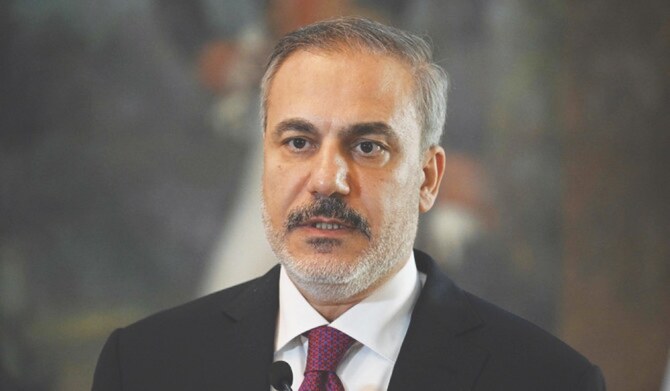
Top diplomat Hakan Fidan will be in the tiny Horn of Africa nation on Nov. 2 and 3 for the meeting between Turkiye and 14 African nations in a body that was set up in 2008.
“Turkiye’s biggest advantage is its non-colonial past. When anti-imperialist leaders are looking for new partners, they think first and foremost of us,” the source said.
Although the Ottoman Empire ruled over many territories in Africa, it lost control of them in the 19th and early 20th centuries before the Turkish Republic emerged from the ashes of its collapse in 1923.
As a sign of its growing influence, Ankara has since taken on the role of mediator in talks between Ethiopia and Somalia, who have been locked in a feud over access to the ocean since June.
And with a significant level of regional mistrust toward “both major powers,” Turkiye was “best-suited” to lead such negotiations as “no other actor had the confidence of both parties,” the source said.
Despite difficulties, talks between Ethiopia and Somalia were moving forward “at their own pace.”
Such confidence was born of a well-established Turkish foothold in Somalia for the past two decades, where it has invested in agriculture and built the airport in Mogadishu, a military training center, schools, and a hospital.
Last week, the Turkish exploration vessel the Oruc Reis arrived in the Somali capital to start searching for oil and natural gas under an agreement that allows it to drill in three areas, each measuring roughly 5,000 sq. km.
Similar exploration agreements for oil and gas, as well as mining, were also signed between Turkiye and Niger in July and October.
FASTFACT
Foreign Minister Hakan Fidan will be in the tiny Horn of Africa nation on Nov. 2 and 3 for the meeting between Turkiye and 14 African nations in a body set up in 2008.
Turkish mining company MTA has three gold mines in the Sahel, also rich in uranium.
“There is also the potential for oil and natural gas,” said Turkish Energy Minister Alparslan Bayraktar this summer.
The Niger military protects the mines, and Turkiye is widely regarded as a “security partner” by many countries in the region.
Over the years, Ankara has signed military cooperation agreements with more than 25 African countries, supplying them with weapons, including drones.
And its hostile stance toward sanctions on the regimes of Niger, Burkina Faso, and Mali has also helped its ties with these nations.
Turkiye is also the fourth largest arms supplier to sub-Saharan Africa, according to a March study published by the Stockholm International Peace Research Institute.
According to Turkish diplomatic sources, Ankara is involved in training the armed forces in many African countries.
The sources stressed the need to “simultaneously invest in economic development,” particularly in the Sahel.
“West Africa is a region dominated by security problems,” said Senegalese President Bassirou Diomaye Faye on meeting his Turkish counterpart Recep Tayyip Erdogan in Ankara, saying it was “necessary to strengthen defense cooperation.”
Turkish construction companies, which are heavily involved in infrastructure projects like developing a $6.5 billion railway network in Tanzania, are also helping strengthen their nation’s reputation.
Trade between Turkiye and African countries in 2022 is set to exceed $40 billion.
And Turkish Airlines operates flights to some 50 destinations across the continent.


