

Saudi Arabia’s PIF signs MoU with Brookfield to launch $2bn investment platform

The MoU was finalized during the Future Investment Initiative summit currently underway in Riyadh. Photo/Supplied
Short Url
Updated 30 October 2024
Follow

Saudi Arabia’s PIF signs MoU with Brookfield to launch $2bn investment platform

RIYADH: Saudi Arabia’s Public Investment Fund and Brookfield Asset Management Ltd. have signed a non-binding memorandum of understanding for the wealth fund to become a strategic anchor investor in Brookfield Middle East Partners.

According to a press release, this new platform, BMEP, will serve as Brookfield’s private equity vehicle for investments in Saudi Arabia and the broader region.

The MoU was finalized during the Future Investment Initiative summit currently underway in Riyadh.

BMEP aims to raise $2 billion from various investors, focusing on buyouts, structured solutions, and other investment opportunities across key sectors, including industrials, business and consumer services, technology, and healthcare.


Saudi Arabia is hosting the eighth edition of the Future Investment Initiative summit in Riyadh. AN/Abdulrahman bin Shalhuob

At least 50 percent of the capital will be directed toward investments in Saudi Arabia, as well as into leading international companies looking to expand in the local market, facilitating foreign direct investment into the Kingdom.

This partnership seeks to combine the strengths of PIF and Brookfield to enhance local private equity investment opportunities and promote economic development in Saudi Arabia, further supporting the country’s vision of becoming a leading hub for global investment and economic growth.

Yazeed A. Al-Humied, deputy governor and head of MENA investments at PIF, stated: “PIF’s collaboration with Brookfield demonstrates our continued efforts to foster international partnerships that enhance local markets.”

He added: “This MoU represents a step toward achieving PIF’s vision of attracting global capital and expertise to the region while facilitating knowledge transfer and capacity-building within Saudi Arabia.”

PIF has been actively promoting Saudi Arabia’s economic transformation and diversification, driving local growth and impacting global industries. Since 2017, PIF has launched 95 new companies within the Kingdom and has generated over 1.1 million direct and indirect jobs globally.
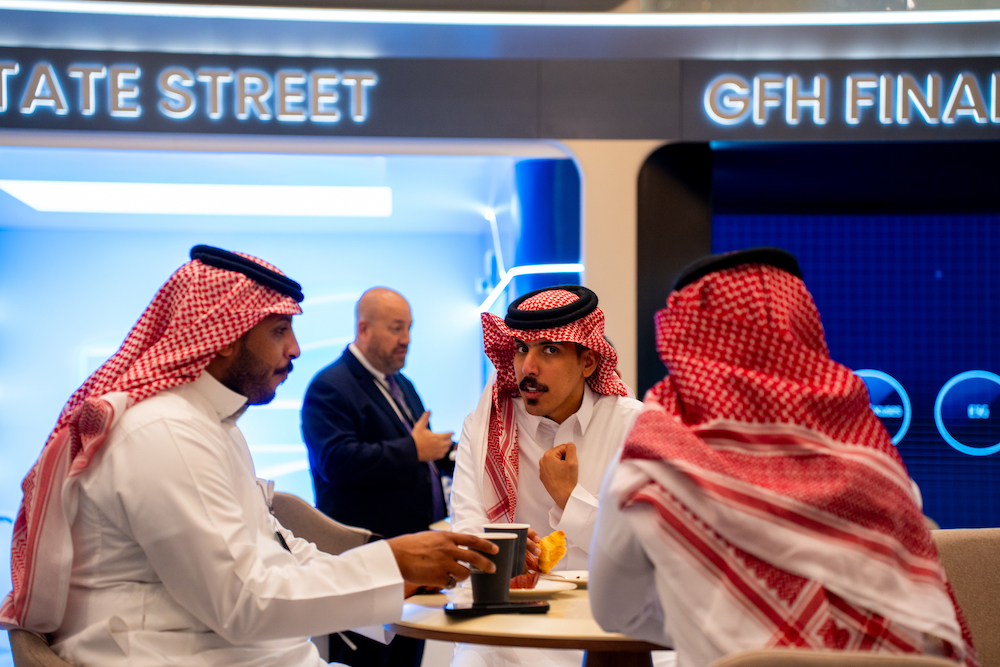


Saudi Arabia is hosting the eighth edition of the Future Investment Initiative summit in Riyadh. AN/Abdulrahman bin Shalhuob

Expressing enthusiasm over the partnership, Brookfield Asset Management CEO Bruce Flatt said: “We are honored to partner with PIF on this landmark private equity fund. Saudi Arabia is core to the region’s economic transformation, and we look forward to contributing to its growth by investing at scale in market-leading companies that will benefit from our deep operating capabilities.”

He added: “With our expanding presence in Riyadh, we are excited to bring our global expertise to participate in the development of the local private markets ecosystem.”

Brookfield, one of the largest foreign investors in the GCC, has been present in the region since 1997, making direct investments since 2015. Its portfolio, valued at $12 billion, encompasses private equity, real estate, and infrastructure. Brookfield’s strategy focuses on fostering long-term partnerships with leading local institutions, which sets it apart in the region.

As part of the MoU, the asset management company will expand its Riyadh office and make Brookfield Academy available locally, enabling skill development for investment professionals and supporting PIF’s commitment to fostering local talent.

This non-binding MoU is subject to obtaining regulatory and internal approvals and is contingent upon the satisfaction of specific conditions, the press release said.


Arab food and beverage sector draws $22bn in foreign investment over 2 decades: Dhaman 

Updated 28 December 2025
Follow

Arab food and beverage sector draws $22bn in foreign investment over 2 decades: Dhaman 

JEDDAH: Foreign investors committed about $22 billion to the Arab region’s food and beverage sector over the past two decades, backing 516 projects that generated roughly 93,000 jobs, according to a new sectoral report. 

In its third food and beverage industry study for 2025, the Arab Investment and Export Credit Guarantee Corp., known as Dhaman, said the bulk of investment flowed to a handful of markets. Egypt, Saudi Arabia, the UAE, Morocco and Qatar attracted 421 projects — about 82 percent of the total — with capital expenditure exceeding $17 billion, or nearly four-fifths of overall investment. 

Projects in those five countries accounted for around 71,000 jobs, representing 76 percent of total employment created by foreign direct investment in the sector over the 2003–2024 period, the report said, according to figures carried by the Kuwait News Agency. 

“The US has been the region's top food and beverage investor over the past 22 years with 74 projects or 14 projects of the total, and Capex of approximately $4 billion or 18 percent of the total, creating more than 14,000 jobs,” KUNA reported. 

Investment was also concentrated among a small group of multinational players. The sector’s top 10 foreign investors accounted for roughly 15 percent of projects, 32 percent of capital expenditure and 29 percent of newly created jobs.  

Swiss food group Nestlé led in project count with 14 initiatives, while Ukrainian agribusiness firm NIBULON topped capital spending and job creation, investing $2 billion and generating around 6,000 jobs. 

At the inter-Arab investment level, the report noted that 12 Arab countries invested in 108 projects, accounting for about 21 percent of total FDI projects in the sector over the past 22 years. These initiatives, carried out by 65 companies, involved $6.5 billion in capital expenditure, representing 30 percent of total FDI, and generated nearly 28,000 jobs. 

The UAE led inter-Arab investments, accounting for 45 percent of total projects and 58 percent of total capital expenditure, the report added, according to KUNA. 

The report also noted that the UAE, Saudi Arabia, Egypt, and Qatar topped the Arab ranking as the most attractive countries for investment in the sector in 2024, followed by Oman, Bahrain, Algeria, Morocco, and Kuwait. 

Looking ahead, Dhaman expects consumer demand to continue rising. Food and non-alcoholic beverage sales across 16 Arab countries are projected to increase 8.6 percent to more than $430 billion by the end of 2025, equivalent to 4.2 percent of global sales, before exceeding $560 billion by 2029. 

Sales are expected to remain highly concentrated geographically, with Egypt, Saudi Arabia, Algeria, the UAE and Iraq accounting for about 77 percent of the regional total. By product category, meat and poultry are forecast to lead with sales of about $106 billion, followed by cereals, pasta and baked goods at roughly $63 billion. 

Average annual per capita spending on food and non-alcoholic beverages in the region is projected to rise 7.2 percent to more than $1,845 by the end of 2025, approaching the global average, and to reach about $2,255 by 2029. Household spending on these products is expected to represent 25.8 percent of total expenditure in 13 Arab countries, above the global average of 24.2 percent. 

Arab external trade in food and beverages grew more than 15 percent in 2024 to $195 billion, with exports rising 18 percent to $56 billion and imports increasing 14 percent to $139 billion. Brazil was the largest foreign supplier to the region, exporting $16.5 billion worth of products, while Saudi Arabia ranked as the top Arab exporter at $6.6 billion.