BRUSSELS: A Belgian court jailed dozens of people Tuesday in one of the country’s biggest ever drug trials, with the ringleaders sentenced to up to 17 years behind bars.
More than 120 defendants from Belgium, Albania, Colombia and North Africa were accused of having participated in a multinational cocaine and cannabis trafficking enterprise after investigators cracked encrypted messaging apps.
The case shone a spotlight on Belgium’s role as Europe’s gateway for drugs.
About two dozen defendants were led in handcuffs into a courtroom in the former headquarters of military alliance NATO in Brussels.
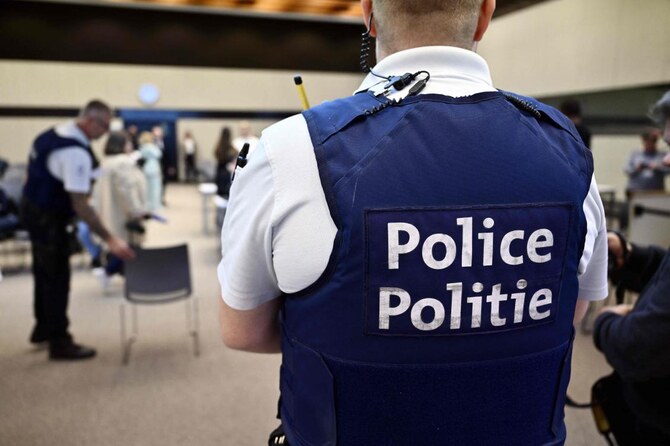
They sat in the dock faced by a line of police officers as judges read out the long list of verdicts. Other accused who had been bailed pending the trial, sat in court to await their fate.
Among the first group to be sentenced was Algerian Abdelwahab Guerni, one of the alleged ringleaders, who was jailed for 17 years.
Albanian citizen Eridan Munoz Guerrero, another suspected leader, received a 14-year term.
Accused of running several cocaine laboratories in Belgium, Munoz Guerrero had admitted his guilt at the start of the trial telling the court: “Your honor, I played, I lost.”
The trafficking ring — active from 2017 to late 2022 — involved numerous criminal gangs and was dismantled following raids by police in Belgium, Germany and Italy.
Prosecutors had asked for jail terms of up to 20 years for some of the accused.
They said drugs were transported in containers from South America and Morocco and smuggled through ports in Belgium, notably the giant port of Antwerp, as well as the Netherlands, Germany and France before being sold across Europe.
The case was in part based on evidence uncovered after investigators cracked the covert Sky ECC and EncroChat apps, which the gangs used to communicate.
By breaking into the messaging tools, police said they were able to peer into the unguarded planning and carrying out of drug smuggling operations.
Belgian authorities have portrayed the trial as the latest blow delivered to drug smuggling gangs.
But some defense lawyers decried it as a “publicity stunt” accusing prosecutors of having bundled together disconnected cases into one eye-catching trial.
“People were artificially linked to each other when they had no connection,” Guerni’s lawyer Gilles Vanderbeck said before the verdicts were pronounced.
Prosecutors insist there was a “structure and hierarchy” between the various criminal groups involved and clear illegal commercial links.
Some suspects were acquitted, while dozens of others received prison terms ranging from a few months to more than 10 years.
The judgment was initially expected on September 2 but was postponed after an objection by one of the defendants.


![]()

Dozens jailed in Belgium drug smuggling mega-trial
Short Url
https://arab.news/ch62m
Dozens jailed in Belgium drug smuggling mega-trial
- More than 120 defendants accused of having participated in a multinational trafficking enterprise after investigators cracked encrypted messaging apps
- Among the first group to be sentenced was Algerian Abdelwahab Guerni, one of the alleged ringleaders, who was jailed for 17 years


Latest updates


Recommended


© 2026 SAUDI RESEARCH & PUBLISHING COMPANY, All Rights Reserved And subject to Terms of Use Agreement.