Cybersecurity is not just about securing data, Schneider Electric official says 

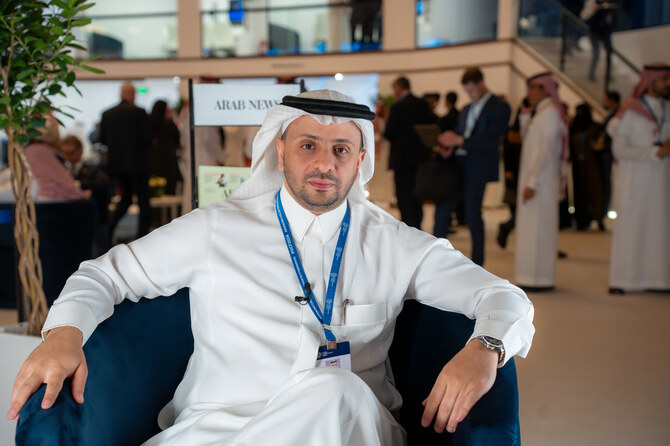
Abdulrahman Al-Musfir, regional head of Schneider Electric’s cyber safety unit in the Middle East and Africa. AN
Short Url
Updated 02 October 2024
Follow

Cybersecurity is not just about securing data, Schneider Electric official says 

RIYADH: The notion that cybersecurity is limited to securing information technology has been labeled a misconception, according to a top official from Schneider Electric. 

In an interview with Arab News during the Global Cybersecurity Forum in Riyadh, Abdulrahman Al-Musfir, regional head of the French multinational corporation’s cyber safety unit in the Middle East and Africa, emphasized that including operational technology is crucial for comprehensive cybersecurity. 

“When we speak about cybersecurity, we need to differentiate between IT cybersecurity and OT cybersecurity. So, for IT security, we are protecting information, data. However, in the OT security, we are protecting the process. Whether it’s a power plant, whether it’s an oil and gas plant, whether it’s a manufacturing production line. All these are considered as operational technology or industrial control systems,” Al-Musfir said.

“At Schneider Electric, we manufacture and we conduct maintenance and services for these systems and solutions. And it is part of our duty as a digital company for producing these solutions to make sure that they are secure by design and secure by operations,” he added. 

Al-Musfir explained that understanding securing systems and operation processes is critical when it comes to infrastructure and energy sectors. 

“The theme of this forum is advancing collective action. And when we speak mainly about the critical infrastructure sector, including oil and gas, electricity, and water, for nations, this is one of the most sensitive sectors or industries that we have for any nation,” he said. 

He highlighted that such sectors impact human safety and national economies. “For this critical infrastructure, we need to secure the full supply chain related to any systems, solutions for any automation that is part of this critical infrastructure,” he added.

According to Al-Musfir, establishing strong cybersecurity resilience requires full alignment between the producers of technology and its participants, such as end users in petrochemical companies, oil firms, and government entities. 

He emphasized that government regulations must be implemented to enable the industry and secure it effectively. 

“There must be a balance between innovation and security restrictions and control, and it is our role as a collective action to ensure that we put all these cybersecurity risk mitigations across the full value chain for this kind of industry or sector,” he said. 

The GCF is scheduled to take place from Oct. 2-3 under the theme “Advancing Collective Action in Cyberspace,” with the goal of enhancing multi-stakeholder engagement and driving joint initiatives on key strategic priorities. 


‘The future is renewables,’ Indian energy minister tells World Economic Forum

Updated 6 sec ago
Follow

‘The future is renewables,’ Indian energy minister tells World Economic Forum

  • ‘In India, I can very confidently say, affordability (of renewables) is better than fossil fuel energy,’ says Pralhad Venkatesh Joshi during panel discussion
  • Renewables are an increasingly important part of the energy mix and the technology is evolving rapidly, another expert says at session titled ‘Unstoppable March of Renewables?’

BEIRUT: “The future is renewables,” India’s minister of new and renewable energy told the World Economic Forum in Davos on Wednesday.
“In India, I can very confidently say, affordability (of renewables) is better than fossil fuel energy,” Pralhad Venkatesh Joshi said during a panel discussion titled “Unstoppable March of Renewables?”
The cost of solar power has has fallen steeply in recent years compared with fossil fuels, Joshi said, adding: “The unstoppable march of renewables is perfectly right, and the future is renewables.”
Indian authorities have launched a major initiative to install rooftop solar panels on 10 million homes, he said. As a result, people are not only saving money on their electricity bills, “they are also selling (electricity) and earning money.”
He said that this represents a “success story” in India in terms of affordability and “that is what we planned.”
He acknowledged that more work needs to be done to improve reliability and consistency of supplies, and plans were being made to address this, including improved storage.
The other panelists in the discussion, which was moderated by Godfrey Mutizwa, the chief editor of CNBC Africa, included Marco Arcelli, CEO of ACWA Power; Catherine MacGregor, CEO of electricity company ENGIE Group; and Pan Jian, co-chair of lithium-ion battery manufacturer Contemporary Amperex Technology.
Asked by the moderator whether she believes “renewables are unstoppable,” MacGregor said: “Yes. I think some of the numbers that we are now facing are just proof points in terms of their magnitude.
“In 2024, I think it was 600 gigawatts that were installed across the globe … in Europe, close to 50 percent of the energy was produced from renewables in 2024. That has tripled since 2004.”
Renewables are an increasingly important and prominent part of the energy mix, she added, and the technology is evolving rapidly.
“It’s not small projects; it’s the magnitude of projects that strikes me the most, the scale-up that we are able to deliver,” MacGregor said.
“We are just starting construction in the UAE, for example. In terms of solar size it’s 1.5 gigawatts, just pure solar technology. So when I see in the Middle East a round-the-clock project with just solar and battery, it’s coming within reach.
“The technology advance, the cost, the competitiveness, the size, the R&D, the technology behind it and the pace is very impressive, which makes me, indeed, really say (renewables) is real. It plays a key role in, obviously, the energy demand that we see growing in most of the countries.
“You know, we talk a lot about energy transition, but for a lot of regions now it is more about energy additions. And renewables are indeed the fastest to come to market, and also in terms of scale are really impressive.”
Mutizwa asked Pan: “Are we there yet, in terms of beginning to declare mission accomplished? Are renewables here to stay?”
“I think we are on the road but (its is) very promising,” Pan replied. There is “great potential for future growth,” he added, and “the technology is ready, despite the fact that there are still a lot of challenges to overcome … it is all engineering questions. And from our perspective, we have been putting in a lot of resources and we are confident all these engineering challenges will be tackled along the way.”
Responding to the same question, Arcelli said: “Yes, I think we are beyond there on power, but on other sectors we are way behind … I would argue today that the technology you install by default is renewables.
“Is it a universal truth nowadays that renewables are the cheapest?” asked Mutizwa.
“It’s the cheapest everywhere,” Arcelli said.