How NEOM Green Hydrogen Company is championing Saudi Arabia’s clean energy transition

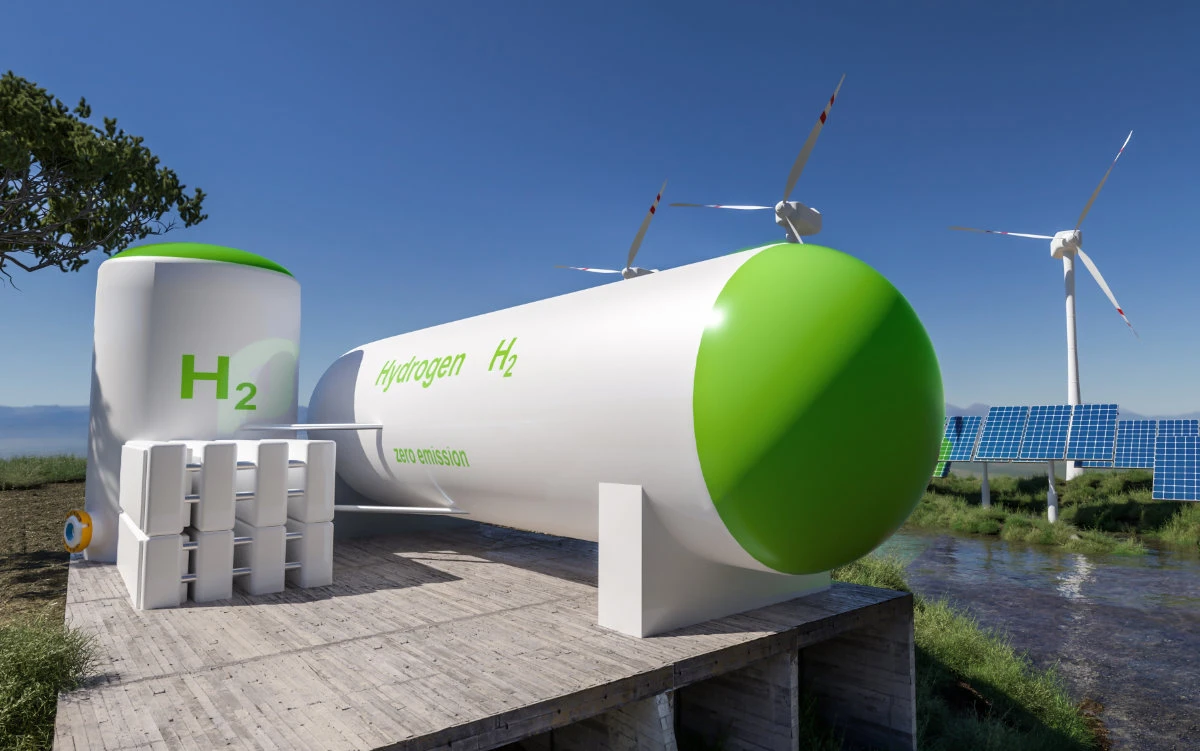
Hydrogen production from renewable energy sources. (Shutterstock)
Short Url
Updated 01 October 2024
Follow

How NEOM Green Hydrogen Company is championing Saudi Arabia’s clean energy transition

  • NEOM is leading Saudi Arabia’s mission to become a top manufacturer and exporter of clean energy
  • The project aligns with Saudi Vision 2030, diversifying the Kingdom’s economy while cutting carbon emissions

RIYADH: As global efforts to combat climate change intensify, Saudi Arabia is making bold strides in green hydrogen production, positioning itself as a world leader in the manufacture and export of sustainable energy.

At the heart of this transformation is the NEOM Green Hydrogen Company, a key component of Vision 2030, the Kingdom’s blueprint for diversifying its economy away from oil and achieving sustainability.

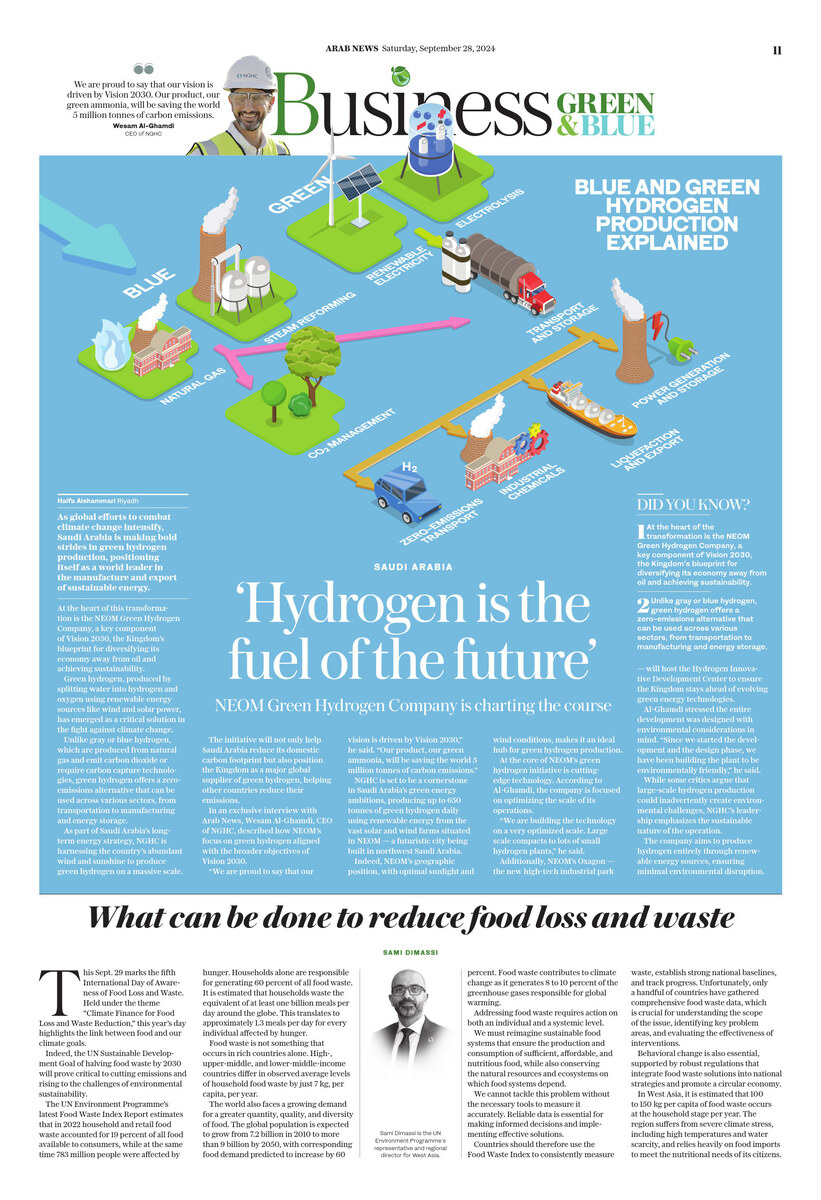
Green hydrogen, produced by splitting water into hydrogen and oxygen using renewable energy sources like wind and solar power, has emerged as a critical solution in the fight against climate change.
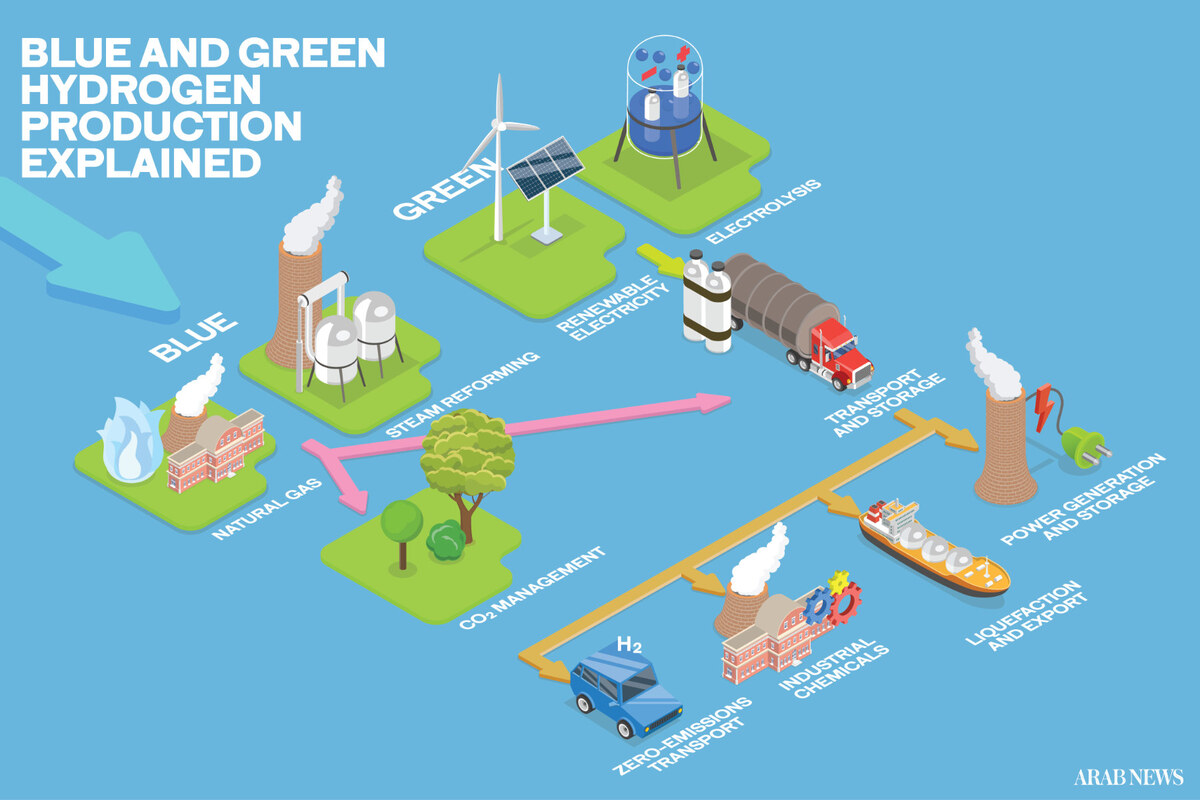
Unlike gray or blue hydrogen, which are produced from natural gas and emit carbon dioxide or require carbon capture technologies, green hydrogen offers a zero-emissions alternative that can be used across various sectors, from transportation to manufacturing and energy storage.

As part of Saudi Arabia’s long-term energy strategy, NGHC is harnessing the country’s abundant wind and sunshine to produce green hydrogen on a massive scale.

The initiative will not only help Saudi Arabia reduce its domestic carbon footprint but also position the Kingdom as a major global supplier of green hydrogen, helping other countries reduce their emissions.
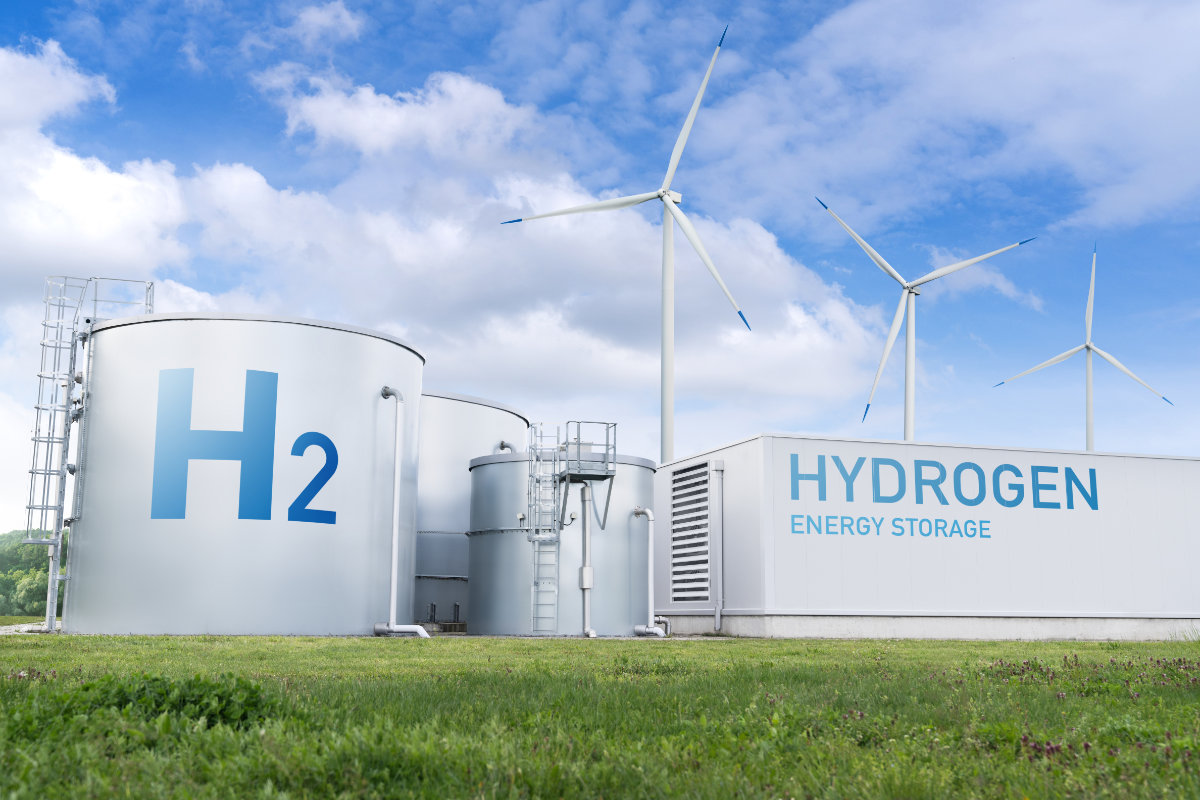


To ensure that its green hydrogen plant is carbon-free, NGHC produces hydrogen only from solar and wind, said CEO Wesam Al-Ghamdi. (Shutterstock photo)

In an exclusive interview with Arab News, Wesam Al-Ghamdi, CEO of NGHC, described how NGHC’s and the project’s focus on green hydrogen is aligned with the broader objectives of Vision 2030.

“We are proud to say that our vision is driven by Vision 2030,” he said. “Our product, our green ammonia, will be saving the world 5 million tonnes of carbon emissions.”

NGHC is set to be a cornerstone in Saudi Arabia’s green energy ambitions, producing up to 600 tonnes of green hydrogen daily using renewable energy from the vast solar and wind farms situated in NEOM — a futuristic city being built in northwest Saudi Arabia. 
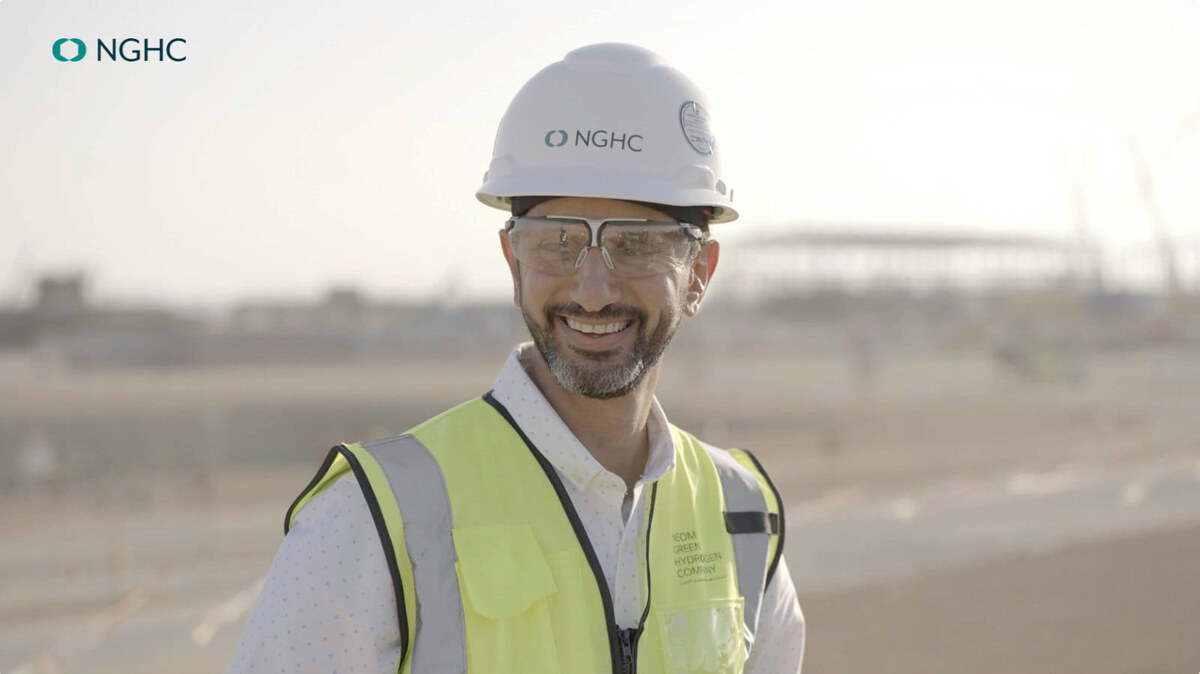


Wesam Al-Ghamdi, CEO of NEOM Green Hydrogen Company. (Supplied)

Indeed, NEOM’s geographic position, with optimal sunlight and wind conditions, makes it an ideal hub for green hydrogen production.

At the core of NGHC is its cutting-edge technology. 

According to Al-Ghamdi, this will enable us to scale production at the plant to effectively support global decarbonization efforts, even within traditionally hard-to-abate sectors.
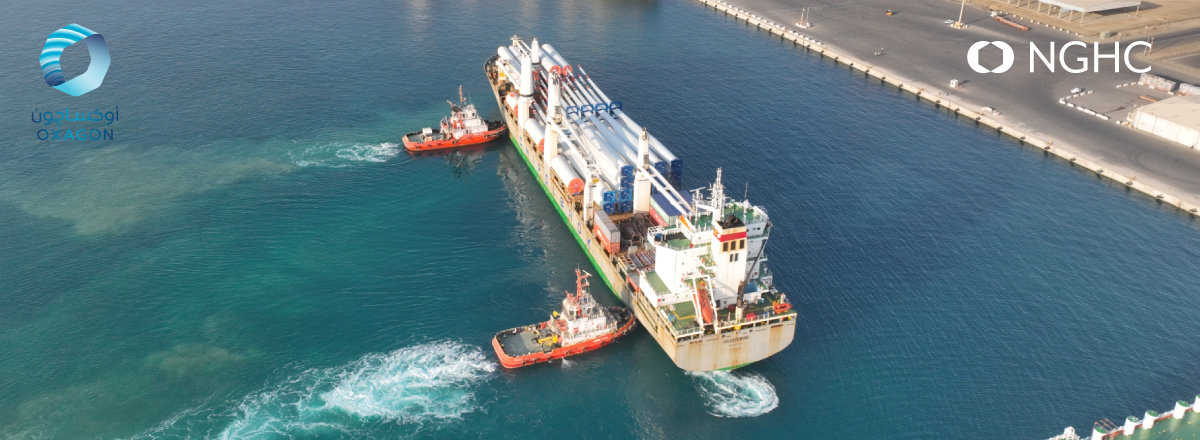


Late last year, NEOM started receiving wind turbines to power its green hydrogen plant in Oxagon, a floating industrial city under development on the coast of the Red Sea. (NEOM photo)

Additionally, ENOWA’s Hydrogen Innovation and Development Center (HIDC), located at Oxagon features a project by NGHC and will focus on R&D, training and development and will ensure the Kingdom stays ahead of evolving green energy technologies.

Al-Ghamdi stressed the entire development was designed with environmental considerations in mind. “Since we started the development and the design phase, we have been building the plant to be environmentally friendly,” he said.

While some critics argue that large-scale hydrogen production could inadvertently create environmental challenges, NGHC’s leadership emphasizes the sustainable nature of the operation

Opinion

This section contains relevant reference points, placed in (Opinion field)

The company aims to produce hydrogen entirely through renewable energy sources, ensuring minimal environmental disruption.

“We are building the plant to be carbon-free. We are only producing hydrogen from solar and wind,” said Al-Ghamdi.

He further highlighted that environmental policies and procedures would remain central to the project as it evolved.
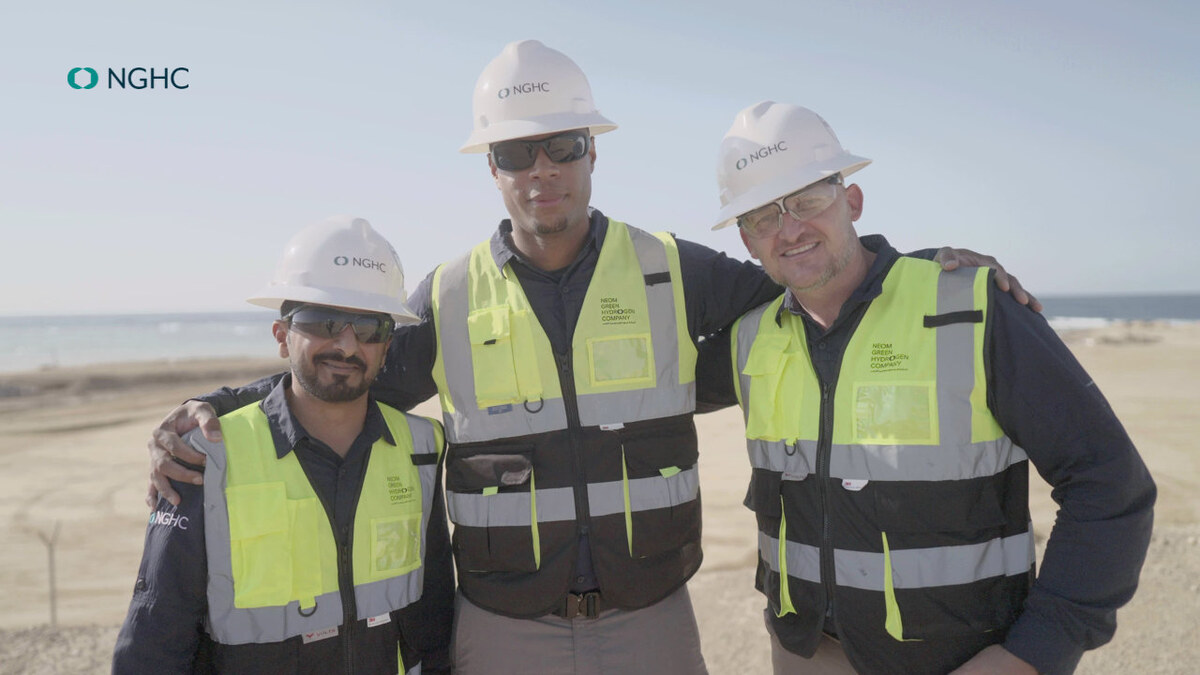


NEOM Green Hydrogen Company leaders on field visit. (Supplied)

“For the future, the keyword is reinforcement,” he said. “We build our policy, procedures and framework around starting the operations and continuing the operations to be environmentally friendly.”

NGHC’s ambitions extend far beyond the borders of Saudi Arabia. The project aims to position the Kingdom as a global leader in hydrogen production, while also creating thousands of new jobs and stimulating local economies.

These efforts reflect a broader global shift toward sustainable energy, offering a glimpse into the future of the hydrogen economy.

DID YOUKNOW?

• Green hydrogen releases zero carbon dioxide and its only byproduct is water, making it the cleanest hydrogen fuel.

• By 2030, half of Saudi Arabia’s power will come from renewable sources, including green hydrogen.

• Saudi Arabia plans to invest more than $200 billion in renewable energy by 2030, boosting green hydrogen initiatives.

International collaboration is seen as a key factor in the project’s success. By working closely with leading global industry partners, ACWA Power, Air Products, and NEOM, NGHC is ensuring it remains at the forefront of green hydrogen production.

Such partnerships are crucial for knowledge-sharing and innovation in the hydrogen sector. 

“ACWA Power and their experience, deep knowledge, and renewable power continues to be a source for us,” said Al-Ghamdi.
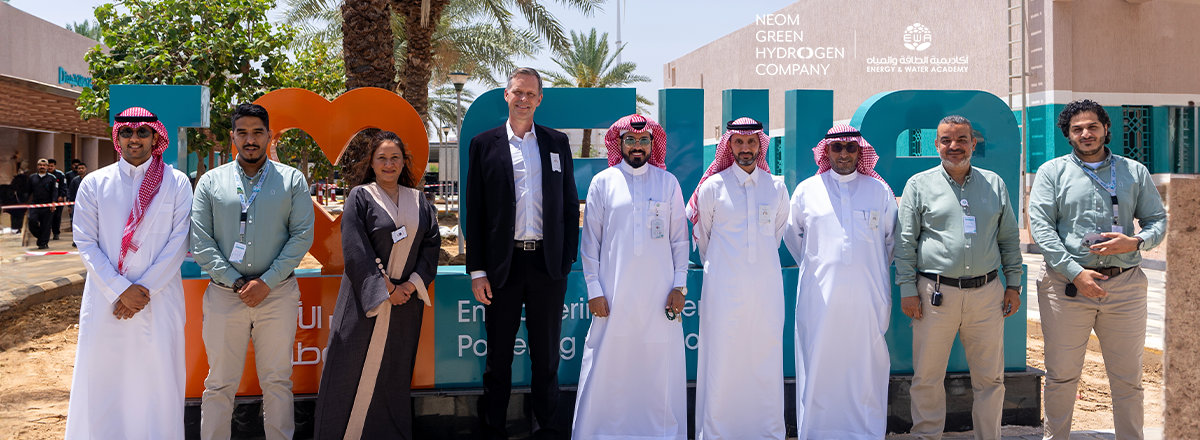


NEOM Green Hydrogen Company recently partnered with the Energy & Water Academy to train Saudi Arabia’s future green energy workforce. (NEOM photo)

For Saudi Arabia, green hydrogen is more than just a tool for reducing emissions — it is a critical element of its Vision 2030 strategy to diversify the economy and reduce its dependence on fossil fuels.

“Saudi Arabia especially, the major countries of the G20, the decarbonizing and net-zero targets, are telling us that there is nowhere to go but to decarbonize,” said Al-Ghamdi.

“No one doubts that hydrogen is the fuel of the future.”


Saudi Arabia plans Riyadh-Jeddah railway by 2034

Updated 5 sec ago
Follow

Saudi Arabia plans Riyadh-Jeddah railway by 2034

  • Saudi Railway Co. CEO speaks to media on future transport plans

JEDDAH: Saudi Railway Co. CEO Bashar Al-Malik announced that a new railway linking Riyadh and Jeddah is planned to be completed in phases by 2034.

In an interview with Rotana Khalejia broadcaster Abdullah Al-Mudaifer, Al-Malik discussed the Kingdom’s rail network, its history, and major current and future projects. 

He confirmed that the Riyadh-Jeddah line forms part of the Saudi Landbridge project, one of the most ambitious transport initiatives in the Kingdom.

Minister of Transport and Logistics Saleh Al-Jasser had said in an interview in 2022 that the Landbridge is being developed with an international consortium led by a Chinese company. He estimated the project could be completed within five to seven years.

According to Al-Jasser, the route, cost, and seven logistics hubs have already been identified. The railway will extend from Yanbu to King Abdullah Economic City, then to Jeddah and Riyadh, before linking with the Eastern Railway and the Northern Railway. 

The project includes upgrading the existing Riyadh–Eastern Province line to meet modern technical standards. The total cost could reach SR100 billion ($26.67 billion), making it a transformative project for the Kingdom’s logistics sector.

Al-Malik said contracts have not yet been signed, emphasizing that the railway company will proceed only once an agreement is reached that fully meets Saudi Arabia’s needs and ambitions. A ministerial committee has been formed to oversee the project, which is scheduled for completion by 2034.

The railway project connecting Riyadh and Jeddah will be implemented in phases and is expected to be completed before 2034. (X/@almodifer)

Al-Malik also highlighted the proposed Riyadh-Doha railway, describing it as the region’s first high-speed rail link between two neighboring countries. 

The 785 km network will serve Riyadh, Hofuf, Dammam, and Doha, with five stations in total, including two in the Qatari capital. Trains are expected to operate at speeds of at least 300 kph.

He added that Saudi Arabia aims to increase rail’s share of transport to 30 percent following completion of the Landbridge and future GCC-wide rail connections. 

Under the National Transport and Logistics Strategy, railways are receiving the largest share of investment through 2030.

After a long pause in railway development after the opening of the Riyadh-Dammam line in 1950, the Kingdom now operates about 4,000 km of railways and plans to add at least 2,000 km more.

Currently, SAR trains serve ports in Dammam, Ras Al-Khair, Jubail (commercial and industrial), and the Riyadh Dry Port. Future plans include extending rail connections to Jeddah Islamic Port, King Abdullah Economic City Port, and Yanbu Port. 

Al-Malik said up to 10 additional trains could be added to the Northern Railway, which currently operates six trains and is considered among the world’s most advanced rail routes. The tender is expected in the third quarter of this year. 

Discussing the Haramain High-Speed Railway, Al-Malik described it as “a unique, passenger-only system” connecting Islam’s two holiest cities. 

The service operates at speeds of up to 300 kph, making it one of the world’s 10 fastest trains. It runs 35 trains and links Makkah with stations in Jeddah, King Abdulaziz International Airport, King Abdullah Economic City, and Madinah.

Responding to user feedback, Al-Malik said the railway company will launch a new unified mobile application before the end of the year, providing a single platform for all intercity train services in the Kingdom.

He also highlighted training programs for high-speed train drivers, noting strong participation from Saudi women — a rare trend globally — and praising their outstanding performance.