



RIYADH: Private equity investments in the Middle East and North Africa reached $5.9 billion across 49 deals in the first half of 2024, despite challenging market conditions, according to a new report.
The figures reflect a slowdown in deal activity compared to 2023, when $15.4 billion was deployed across 159 deals for the entire year, raising concerns about whether activity will rebound in the second half of 2024, according to the latest report by PitchBook.
Private equity refers to investment funds that acquire ownership in mature companies, typically through buyouts, aiming to improve performance, restructure operations, or expand before eventually selling for profit.
The data highlights the impact of what it describes as the “worst market conditions in the past two years” on private equity dealmaking in the region.
In comparison with the last decade, where deal values surpassed $10 billion in five out of 10 years, the first half of 2024 represents a significant drop.
Historically, MENA private equity activity has often been driven by a few large, multibillion-dollar deals, and a similar pattern would be required in the second half of the year to match 2023’s performance.
The report revealed that Saudi Arabia’s Public Investment Fund was the most active investor since 2018, reportedly investing in 36 deals.
The Emirate’s Abu Dhabi Developmental Holding Co., also known as ADQ, came in second with 20 deals, followed by Jordan’s Al Arabi Investment Group with 19 transactions.
Market conditions this year have been heavily impacted by a combination of geopolitical conflicts, fluctuating oil prices, and the threat of trade sanctions.
The ongoing conflict between Israel and Gaza has not only caused immense humanitarian suffering but has also destabilized economies across the region.
“The risk of escalation or a lengthy conflict creates difficult circumstances for economies. Alongside the humanitarian impacts, conflicts lead to substantial economic losses with potential spillovers to neighboring countries,” the report stated.
Compounding these challenges are disruptions in trade and oil production. Earlier this year, attacks on ships in the Red Sea prompted shifts in trade routes and contributed to a reduction in oil output, amplifying volatility in oil prices — a key factor for MENA economies
As energy exports represent a significant portion of revenue for many countries in the region, any reduction in oil production heightens fiscal pressures and affects broader economic stability, the report explained.
These market headwinds are making it increasingly difficult for private equity investments to gain traction, as businesses navigate both operational risks and broader economic uncertainty.
Saudi Arabia’s sovereign wealth fund has been an active investor in across the MENA region. File
PE digest
A significant private equity deal in the first half of 2024 was CVC Capital Partners’ $3.3 billion sale of GEMS Education to Brookfield.
GEMS Education, a Dubai-based private school provider with over 60 years of operation, is expected to welcome more than 140,000 students across 46 schools in the UAE and Qatar by September.
“Education has been a key consideration in MENA, and attempts to improve it have been a priority. Initiatives including strengthening education funds, revamping programs, focusing on STEM (science, technology, engineering, and mathematics) skills, and the implementation of virtual education due to the COVID-19 pandemic have been part of the plans,” the report said.
The healthcare sector in the MENA region is poised for significant growth in the coming years, driven by increasing demand and substantial investments.
A major deal this year was Gulf Islamic Investments’ $164.6 million investment in Saudi-based health care provider Abeer Group.
As part of its Vision 2030, the Kingdom plans to invest over $65 billion in healthcare infrastructure, with projects including 20,000 new hospital beds and 224 health care centers valued at $12.8 billion.
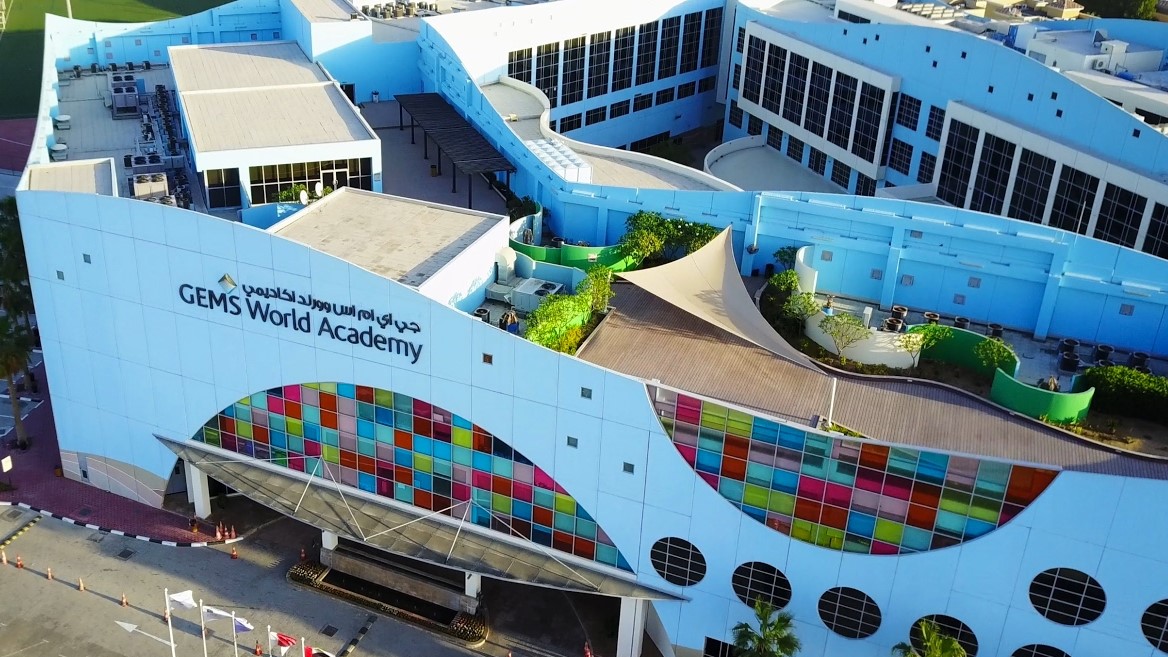
GEMS Education is a Dubai-based private school provider with over 60 years of operation. Supplied
The UAE is also advancing healthcare development, with approximately 700 projects worth a combined $60.9 billion, largely driven by the private sector. Public-private partnerships are expected to play a key role in the sector’s growth.
Qatar has introduced a PPP law to encourage international investment, while Oman has initiated its first medical city through the same arrangement.
Additionally, mandatory health insurance policies are becoming increasingly common across the Gulf Cooperation Council, leading to higher patient numbers.
“Strong demand for healthcare fueled by increasing and aging populations in the MENA region is anticipated to drive up government and private investor spending in the sector. A large pipeline of projects as well as new technologies will create opportunities for startups, portfolio companies, and investors,” the report added.
MENA exits
Private equity and venture capital-backed exit activity saw a sharp decline in the first half of 2024, with only $1.6 billion generated from 25 exits.
This marks a significant drop compared to the previous four years, where annual exit values consistently surpassed $10 billion.
The report stated that the current figures underscore a notable slowdown in exit activity within the MENA region, reflecting broader global trends in 2024.
Investors and management teams have been hesitant to pursue exits amid market volatility, influenced by fluctuations in public markets, inflationary pressures, and rising interest rates, which have dampened growth prospects.
With interest rate hikes largely on pause and potential rate cuts expected in Europe and the US later this year, there is cautious optimism for a recovery in the second half of the year.
The easing of monetary policy could help stabilize market conditions and create more favorable opportunities for exits.
VC’s role in PE
The MENA venture capital ecosystem experienced weaker capital deployment in the first half of the year, mirroring global trends.
A total of $1.3 billion was invested across 321 VC rounds, putting the region on track to fall short of 2023 levels by year-end.
This follows a decline in 2023, when activity in the sector dropped from a peak of $5.5 billion across 894 deals in 2022.
“The MENA region has been earmarked for high growth and untapped opportunities, but it has not been insulated from the broader slump in activity felt by more mature ecosystems,” the report said.
Sluggish economic growth, geopolitical tensions, and inflationary pressures have dampened market confidence, contributing to the overall slowdown in VC activity.


