

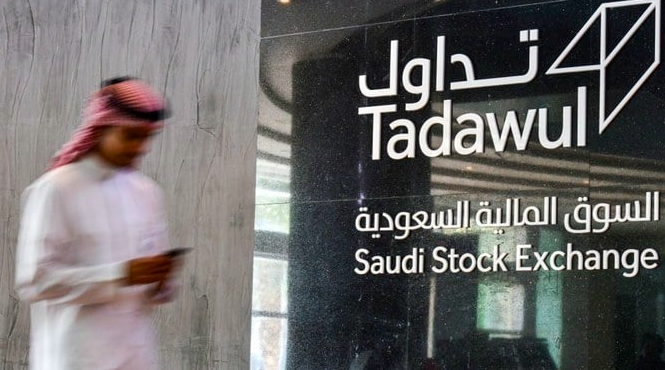

RIYADH: Global mining companies should raise funds through the Saudi stock exchange in order to fuel investment in the Kingdom, according to a leading private equity figure.
Speaking at the Future Minerals Forum in Riyadh, Ross Bhappu, partner and head of private equity at Resource Capital Funds, praised Saudi Arabia for creating a dependable environment for investors looking to become involved in the Kingdom’s mining sector.
He added that in order for the industry to really develop, more reform was needed to attract even greater investments.
“I would like to see the expansion of the Saudi stock exchange to where it is supportive of a general mining sector, I would like to see general mining companies come here and be able to raise money on the Saudi Stock Exchange and pump that money into an exploration within the country, within the Kingdom,” Bhappu said.
Bhappu praised the Kingdom’s commitment to the mining industry, and said: “The greatest risk and reason we wouldn’t invest in a place has to do with fiscal uncertainty, fiscal uncertainty is a killer of investment.
“When I look at what Saudi Arabia is doing it provides certainty for an investor.”
Bhappu’s comments came during a discussion on the current obstacles to securing exploration rights and mining licenses in order to properly operate within the Kingdom.
Ali Seed AlQahtani, the chief operating officer of Central Mining Holding, suggested ways to reduce the time between initial submission for a mining license and it being awarded.
He talked up the efficiency and speed of the government’s Absher platform, which allows Saudi citizens to access more than 350 services through a digital, and said an equivalent of this should be rolled out across the mining sector.
“We have more than nine government agencies that are involved during the licensing process, so have them in a portal and see where it's forbidden to not do any exploration and do it as fast as Absher is doing it because it is a fight (against) competition and bureaucracy,” he added.
Abdullah Al Shamrani, CEO of Saudi Geological Survey, used his remarks in the discussion to argue the sector should learn from the oil and gas industries and invest in two things: “Technology and human capital”.
“Technology will help us in order to reduce the money spent and time,” he added.
His focus on human capital was echoed by Saleh Al Maghlouth, executive vice president of exploration and resource development Ma’aden, who highlighted the importance of training and guiding the next generation of professionals in the Saudi mining sector.
“If anything, what I really want to do and expedite as much as possible is building the local talent here and expertise,” he said.


