
UNITED NATIONS: Every September world leaders travel to New York to address the start of the annual United Nations General Assembly session.
The six days of speeches to mark the beginning of the 79th session will start on Sept. 24.
WHO SPEAKS WHEN?
When the United Nations was formed in 1945 following World War Two, there were originally 51 members. That has since grown to 193 members. Leaders of two non-member observer states — known at the UN as the Holy See and the State of Palestine — and an observer member, the European Union, can also speak.
It is tradition for Brazil to always be the first member state to speak. This is because in the early years of the world body Brazil stepped up to speak first when other countries were reluctant to do so, say UN officials.
As host to the UN headquarters in New York, the United States is the second country to address the General Assembly.
From there the list is then based on hierarchy and generally a first come, first served basis. Heads of state speak first, followed by deputy heads of state and crown princes, heads of government, ministers, and lower-ranked heads of a delegation.
This year some 87 heads of state, three vice presidents, two crown princes, 45 heads of government, eight deputy heads of government, 45 ministers, and four lower-ranked heads of a delegation are currently due to address the General Assembly.
Last year fewer than 12 percent of those to stand at the lectern were women.
HOW LONG WILL THEY SPEAK?
Leaders are asked to stick to a voluntary 15-minute time limit.
According to UN records, one of the longest speeches made during the opening of a General Assembly was by Cuban leader Fidel Castro in 1960 — he spoke for about four and a half hours. More recently, Libyan leader Muammar Qaddafi spoke for more than one and a half hours in 2009.
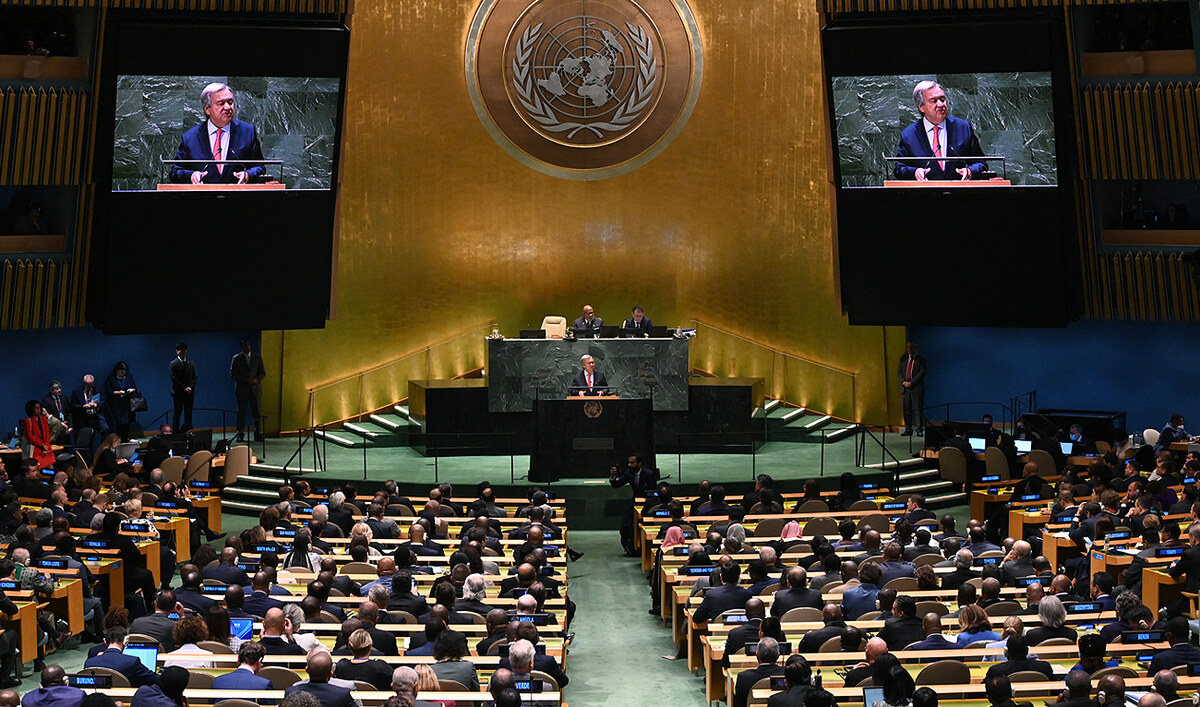
UN Secretary-General Antonio Guterres addresses the 78th United Nations General Assembly at UN headquarters in New York City on September 19, 2023. (Photo courtesy: UN/File)
WHAT WILL THEY TALK ABOUT?
Each high-level gathering to mark the start of the annual General Assembly session has a theme, which leaders tend to briefly reference before moving on to talking about whatever they want.
This year’s theme is: “Leaving no one behind: acting together for the advancement of peace, sustainable development and human dignity for present and future generations.”
Some other topics likely to be spoken about by leaders include:
THE WAR IN GAZA
With the civilian death toll in Gaza ballooning to more than 41,000 people according to local health officials and the humanitarian situation deteriorating, many leaders are expected to call for a ceasefire in the war between Israel and Hamas.
The conflict started nearly a year ago with the deadly Hamas attack on civilians in Israel on Oct. 7 — two weeks after world leaders had finished meeting at the last UN General Assembly.
After Israel began retaliating against Hamas in the Gaza Strip, the General Assembly on Oct. 27 called for an immediate humanitarian truce. It then overwhelming demanded an immediate humanitarian ceasefire in December.
Israeli Prime Minister Benjamin Netanyahu — who has long accused the UN of being anti-Israel — and Palestinian President Mahmoud Abbas are both scheduled to address the General Assembly on Sept. 26.
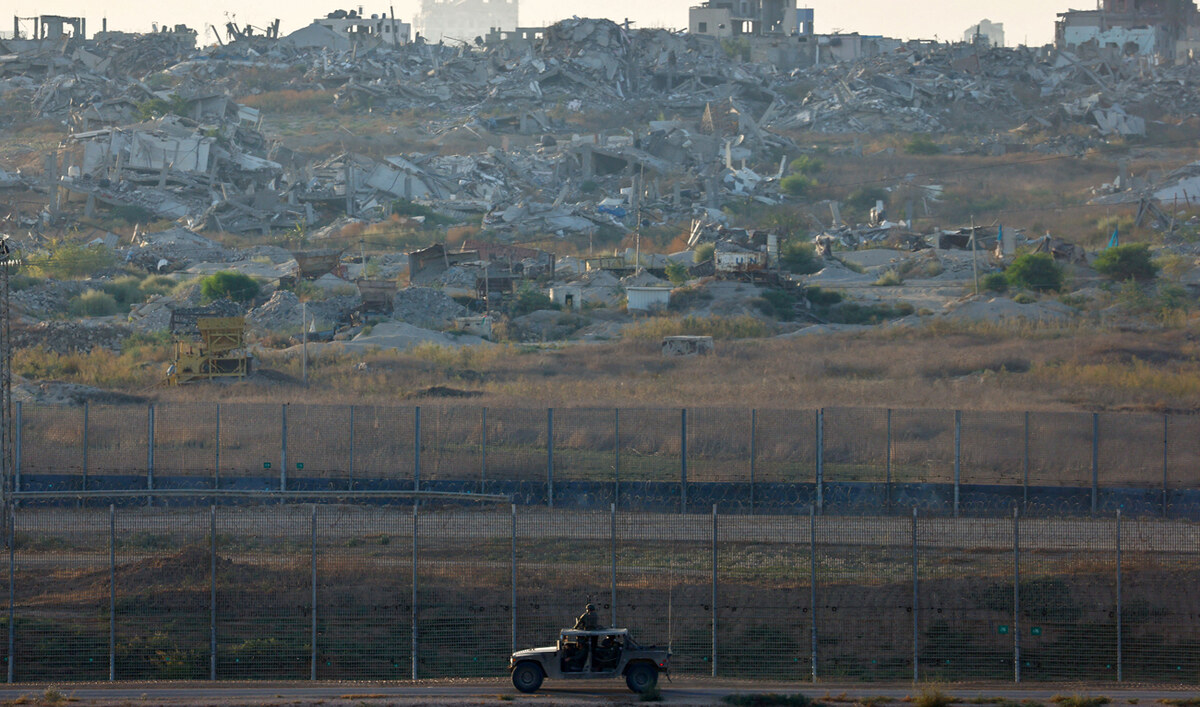
A military jeep patrols the Israeli side of the Israel-Gaza border, amid the Israel-Hamas conflict, in Israel, September 11, 2024. (REUTERS)
UKRAINE
Many world leaders are likely to call for an end to Russia’s roughly two-and-a-half year war in Ukraine.
The General Assembly adopted six resolutions on the conflict in the first year — denouncing Moscow and demanding it withdraw all its troops. A resolution in October 2022 — condemning Russia’s “attempted illegal annexation” of four regions in Ukraine — won the greatest support with 143 states voting yes.
Ukrainian President Volodymyr Zelensky is due to address the General Assembly on Sept. 25.
While Russian President Vladimir Putin virtually addressed the General Assembly in 2020 during the COVID-19 pandemic, he has not physically traveled to New York for the event since 2015. Russian Foreign Minister Sergei Lavrov is instead due to speak to the General Assembly on Sept. 28.
CLIMATE
As the world struggles to hold global warming to 1.5 degrees Celsius, leaders of smaller island nations and other states most affected by climate changes are likely to use their speeches at the General Assembly to again make impassioned pleas for action.
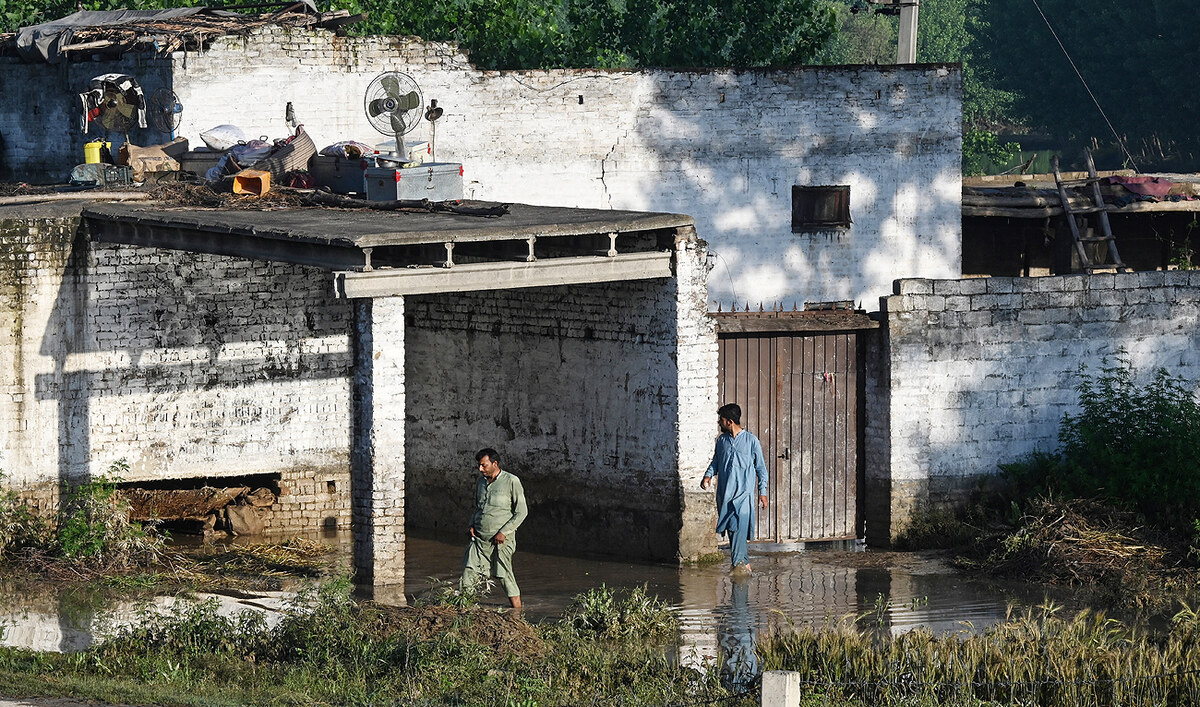
Residents wade through the flooded waters outside their homes following heavy rains in Charsadda district of Khyber Pakhtunkhwa province on April 17, 2024. (AFP/File)
UN SECURITY COUNCIL REFORM
Many world leaders — particularly from Africa and key powers including Brazil, Germany, India, and Japan — are likely to call for reform of the 15-member UN Security Council, which is charged with maintaining international peace and security.
It is an issue that has long been discussed by the General Assembly, but has gathered steam in recent years after Russia invaded Ukraine and then used its Security Council veto to block any action by the body. The United States has also long been criticized for shielding its ally Israel from council action.
Reform ideas include expanding the council’s membership — through adding more permanent veto powers or short-term elected members — to better reflect the world and limiting the veto, currently held by the US, Russia, China, Britain and France.
Any changes to the Security Council membership is done by amending the founding UN Charter. This needs the approval and ratification by two-thirds of the General Assembly, including the Security Council’s current five veto powers.
SUMMIT OF THE FUTURE
Before the leaders begin addressing the General Assembly, a two-day Summit of the Future will be held on Sept. 22-23. UN member states are currently negotiating three documents they hope to adopt on Sept. 22 — a pact for the future, a declaration on future generations and a global digital compact.
Speaking to Reuters on Wednesday, UN Secretary-General Antonio Guterres said it was “absolutely essential” to ambitiously use the summit to come up with “adequate governance for the world of today.”
He argued for reform of the 15-member UN Security Council, the World Bank and the International Monetary Fund and for global governance of artificial intelligence and other emerging challenges.