ISLAMABAD: The government plans to finalize the privatization process of Pakistan International Airlines (PIA) by the end of next month, according to a senior federal minister who shared the information while addressing the National Assembly on Monday.
Pakistan’s Deputy Prime Minister Ishaq Dar took up the issue of PIA flight restoration to the United Kingdom during his five-day visit to Britain, where he met top government officials and described the issue as a “major priority” for his government.
The suspension of PIA flights to the UK and Europe followed a 2020 plane crash in Karachi that killed 97 people. This was compounded by a controversial statement from Ghulam Sarwar Khan, the aviation minister in former Prime Minister Imran Khan’s administration, who asserted that a significant number of Pakistani pilots held fake licenses, leading to the European Union Aviation Safety Agency (EASA) ban on PIA.
The situation also impacted the privatization process of the airline, though Dar said the government would start receiving the first round of bids on October 1.
“Federal Minister for Defense Khawaja Asif informed the National Assembly on Monday that the privatization process of Pakistan International Airlines will be finalized by the end of October,” the APP reported.
He said PIA was facing a debt burden of Rs800 billion ($2.9 billion), adding its flights would not operate on routes that lack financial viability.
The government initially planned to finalize the airline’s privatization deal on the country’s Independence Day, August 14, but it was delayed following requests from bidders who were waiting for PIA’s latest audited accounts, aircraft lease agreements and clarity on flights to Europe.
There are 88 commercially operated state-owned enterprises in the country, and the government has approved the sale of 24 of them in its five-year privatization plan ending in 2029.
The privatization of loss-making state-owned entities is also important due to the recommendation of the International Monetary Fund (IMF), which has given staff-level approval to a fresh $7 billion loan to Pakistan.


Pakistani minister says government to finalize PIA privatization by end of October

https://arab.news/vgvnw
Pakistani minister says government to finalize PIA privatization by end of October

- Pakistan planned to finalize the privatization deal on Independence Day, August 14, but it was delayed
- Khawaja Asif says PIA is facing a debt burden of $2.9 billion, can’t operate on routes lacking viability
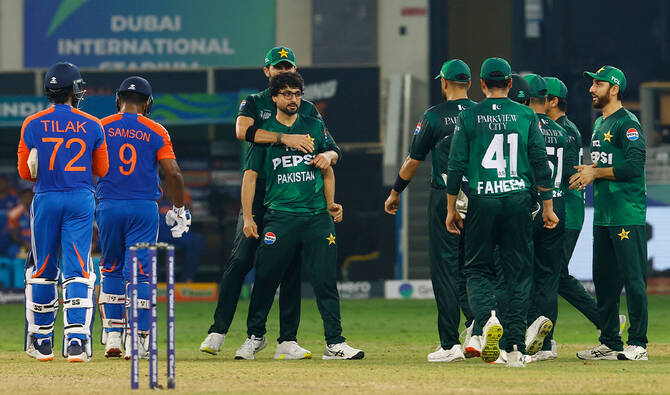
T20 World Cup: Pakistan’s India boycott splits fans as politics overshadows cricket
- The boycott has dealt a blow to the ICC’s marquee event, with India-Pakistan matches the biggest drivers of global viewership, revenue
- On the streets, many Pakistani fans back the boycott as a response to what they see as India’s growing influence over cricket governance
KARACHI: Pakistan’s decision to boycott its Twenty20 World Cup match against India has drawn widespread support from fans and administrators who hailed the move as a long-overdue stand in a rivalry in which sport and geopolitics have collided.
The government on Sunday cleared Pakistan to take part in the tournament beginning February 7 but barred the team from playing India in a February 15 group match in Colombo, a decision the International Cricket Council (ICC) said was not in the interests of the global game.
The boycott deepened a long freeze in bilateral cricket between the nuclear-armed neighbors — who have not played a full series since 2012–13 and now meet largely at neutral venues — and dealt a blow to the ICC’s marquee event, with India-Pakistan matches the biggest drivers of global viewership and revenue.
’ENOUGH IS ENOUGH’
For many in Pakistan, however, the boycott was less about cricketing issues, with Pakistan forfeiting two points by skipping the match, and more about symbolism.
“Enough is enough,” former Pakistan Cricket Board (PCB) chairman Najam Sethi told Reuters, accusing India’s board of politicizing the ICC. “It’s time to challenge this duplicitous approach by exercising PCB’s options in alliance with Bangladesh.”
The Indian government, the Board of Control for Cricket in India (BCCI) and the International Cricket Council did not respond to requests for comment.
The ICC said it was still awaiting an official communication from the Pakistan Cricket Board (PCB) conveying their “position of selective participation.”
“While the ICC respects the roles of governments in matters of national policy, this decision is not in the interest of the global game or the welfare of fans worldwide, including millions in Pakistan,” the Dubai-based body said in a statement on Sunday.
The government has not publicly detailed its reasoning, but Mosharraf Zaidi, a spokesperson for Prime Minister Shehbaz Sharif, linked the move to security tensions with India.
“Nothing is more important than the memory of Pakistani citizens and troops murdered by Indian proxy terrorists over the weekend,” Zaidi said. “With funerals taking place today, this was the least that could be done.”
The remarks followed coordinated attacks by Baloch separatist militants across Pakistan’s southwestern Balochistan province over the weekend that killed nearly 50 people.
India’s foreign ministry rejected Pakistan’s accusations, calling them “baseless” and accusing Islamabad of deflecting attention from its own internal issues.
Pakistan’s World Cup jersey has been branded the “Markhor Edition,” after the national animal, a symbol of resilience also used in military iconography, Geo TV reported.
’LET CRICKET JUST BE A GAME’
On the streets of Pakistan’s major cities, many cricket fans backed the boycott as a response to what they see as India’s growing influence over global cricket governance.
“This arrogance of India should be broken a little,” said Mohammad Asghar, a fan in Karachi. “They should realize someone has come forward to challenge them.”
Others drew parallels with Bangladesh’s earlier withdrawal from the tournament over safety concerns, a move that led to Scotland replacing them, and questioned why Pakistan should be held to a different standard.
“If Bangladesh can boycott for one player’s safety, why can’t Pakistan take a stand?” said Ayaz Ahmed.
The decision also sparked heated debate on social media, with users divided between calls for “self-respect” and warnings that skipping the match could further isolate Pakistan in global cricket.
Former Pakistan captain Shahid Afridi agreed.
“Cricket can open doors when politics closes them,” he wrote on X. “It’s regrettable that Pakistan won’t play India, but this is the moment for the ICC to prove it is impartial.”


