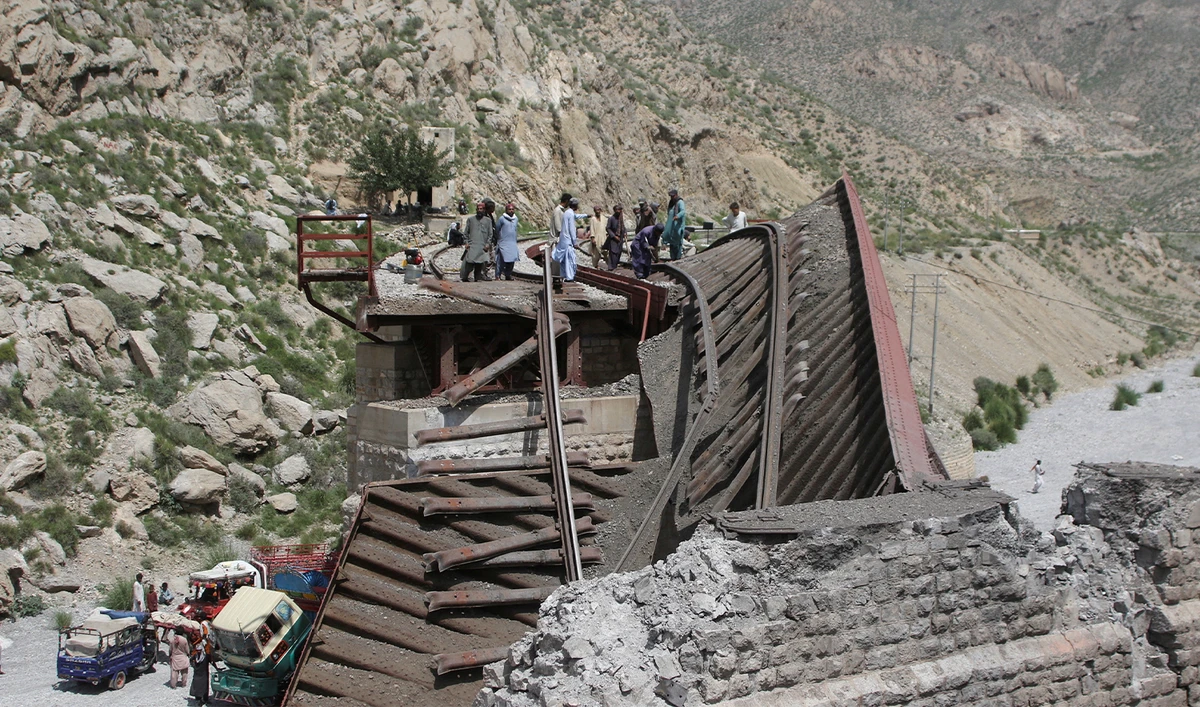
- More than 70 people were killed in the coordinated attacks across Pakistan’s southwestern Balochistan province this week
- Militants seeking the region’s secession have targeted forces, projects under $65-billion China Pakistan Economic Corridor
ISLAMABAD: The start of operations at a Chinese-funded airport in Pakistan’s Balochistan province has been pushed back for a security review after last week’s deadly attacks by separatist militants in the area, government and aviation sources said.
More than 70 people were killed in the coordinated attacks across Balochistan, where militants seeking the resource-rich region’s secession have been targeting government forces and projects being developed as part of the $65-billion China Pakistan Economic Corridor (CPEC).
Part of President Xi Jinping’s Belt and Road Initiative, the program in Pakistan is also developing a deep-water port close to the new $200-million airport in Gwadar, a joint venture between Pakistan, Oman and China that is close to completion.
It will handle domestic and international flights, according to Pakistan’s Civil Aviation Authority (CAA), and will be one of the country’s biggest airports.
The initial plan was for Prime Minister Shehbaz Sharif to inaugurate the airport on Aug. 14 alongside Chinese officials, but that was called off after an ethnic Baloch rights group started a sit-in protest, the officials said.
Following last week’s attacks, the deadliest in years, two officials at the CAA and two others in the Balochistan provincial government told Reuters the start of flights would be delayed as authorities review security in the region.
“The Chinese already had concerns about the security situation, and the recent attacks will definitely cause more delay,” one senior provincial government official said, requesting anonymity because of the sensitivity of the matter.
Asked about the delay and security concerns, China’s Foreign Ministry said: “China is willing to work with the Pakistani side to continue to do a good job in the relevant security work and ensure the safe and smooth progress of the corridor construction.”
A provincial government spokesperson declined to comment and Pakistan’s information minister did not respond to a request for a comment.
Although no Chinese projects were targeted in the latest militant attacks, they have been frequently attacked in the past by the insurgents, who view China as a foreign invader trying to gain control of the region’s resources.
It is not clear whether Beijing has offered Pakistan direct assistance on the security management of Chinese projects.
Special Chinese security teams worked closely with Pakistani security agencies to trace the insurgents behind a suicide bombing which targeted Chinese teachers in the southern city of Karachi in 2022.
The Baloch Liberation Army (BLA), one of several separatist militant groups involved in the low-level insurgency for decades, claimed responsibility for last week’s attacks.
Pakistan’s army said on Friday it had started intelligence-based operations against the militants to respond to the assaults.