Endangered species find new home at Imam Turki bin Abdullah Royal Reserve

1 / 3
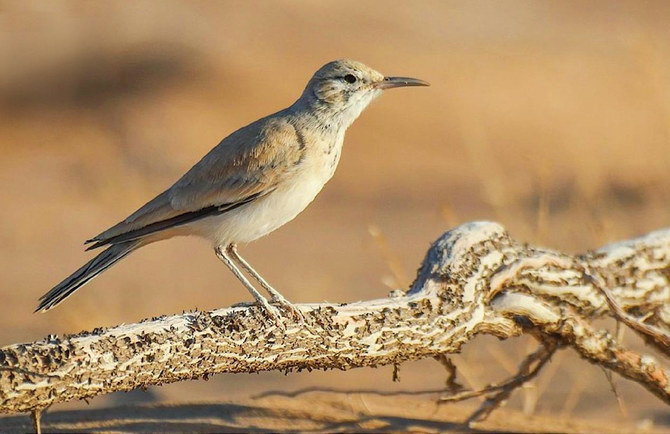
The reserve hosts diverse species, trees, plants and grasses crucial to ecosystem balance. (SPA)
2 / 3
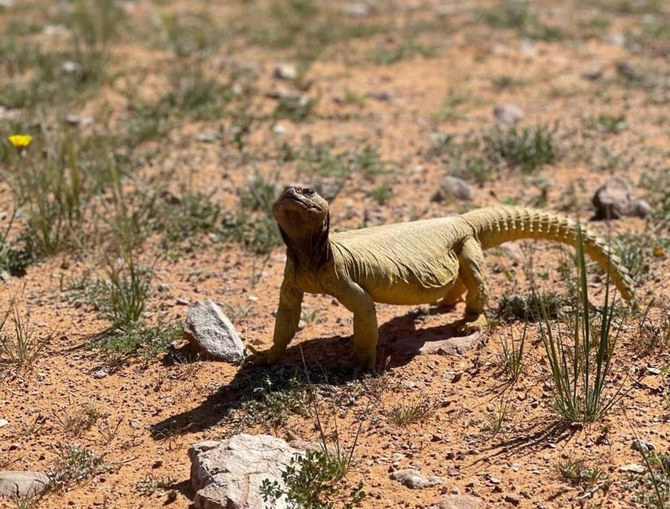
The reserve hosts diverse species, trees, plants and grasses crucial to ecosystem balance. (SPA)
3 / 3
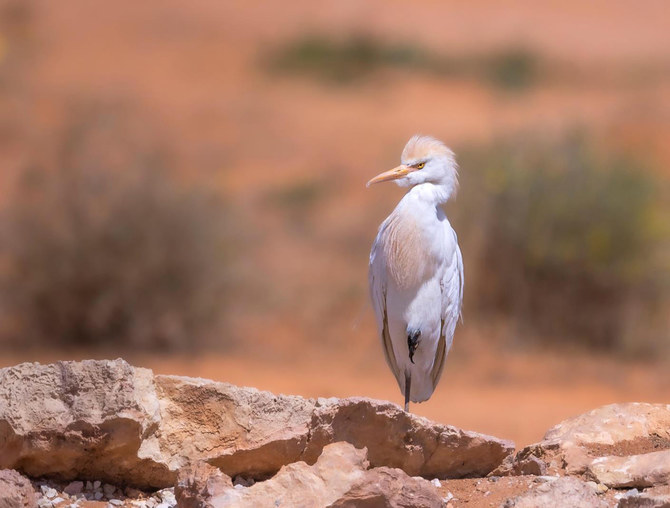
The reserve hosts diverse species, trees, plants and grasses crucial to ecosystem balance. (SPA)
Short Url
Updated 29 July 2024
Follow

Endangered species find new home at Imam Turki bin Abdullah Royal Reserve

  • Efforts to protect endangered animals such as the Arabian oryx, sand gazelle, houbara bustard and red-necked ostrich have led to significant population increases
  • The reserve has more than 179 plant species, including 113 seasonal and 66 perennial varieties

RIYADH: The development department at Imam Turki bin Abdullah Royal Reserve has restored natural wildlife in northeastern Saudi Arabia by resettling, breeding and increasing animal, bird and reptile populations, the Saudi Press Agency reported.

Over the past four years, efforts to protect endangered animals such as the Arabian oryx, sand gazelle, houbara bustard and red-necked ostrich have led to significant population increases after animals were released to thrive, restore their ecological roles and reproduce.

Aligned with Saudi Vision 2030 and the Saudi Green Initiative, which aims to improve quality of life and protect future generations, the reserve’s vegetation cover has also flourished.

Since 2018, vegetation cover has increased from 1.5 percent to 6.7 percent. This growth is the result of three successful desert afforestation projects completed in 2023, with more than 593,700 trees planted, the SPA reported.

Covering 91,500 sq. km, the reserve hosts diverse species, trees, plants and grasses crucial to ecosystem balance. It has more than 179 plant species, including 113 seasonal and 66 perennial varieties.

The vegetation cover has become a haven for a wide range of birds, which are vital to preserving the balance of the ecosystem by controlling insects, small rodents and carrion.

Bird-nesting activity has been observed, alongside a return of sand cats, wild cats, foxes, honey badgers and desert hedgehogs.

The reserve is also experiencing a resurgence of reptiles such as lizards and snakes, alongside a thriving insect population.


Saudi Arabia’s Sharaan and Wadi Nakhlah nature reserves win Dark Sky recognition

Updated 58 min 30 sec ago
Follow

Saudi Arabia’s Sharaan and Wadi Nakhlah nature reserves win Dark Sky recognition

  • The two reserves in AlUla join more than 250 locations worldwide that are protected from light pollution
  • AlUla Manara and AlGharameel Nature Reserve, also both in AlUla, received Dark Sky Park designations last year

ALULA: Two more nature reserves in Saudi Arabia’s AlUla have won recognition as Dark Sky Places, joining more than 250 locations worldwide that are protected from light pollution.

The official accreditation of Sharaan National Park and Wadi Nakhlah reserves from the DarkSky International builds on AlUla’s 2024 achievement, when AlUla Manara and AlGharameel Nature Reserve became the first sites in the Kingdom and the Gulf region to receive Dark Sky Park designations.

The latest recognition further strengthens AlUla’s position as a leading global destination for night sky protection and astronomical tourism, said the Royal Commission for AlUla (RCU) in a statement carried by the Saudi Press Agency (SPA).

Dark Sky International also announced the recognition in an earlier report, noting that the Sharaan and Wadi Nakhlah’s combined area of 6,146 square kilometers reflects the “expanded scope of environmental protection efforts aimed at preserving AlUla’s pristine night skies and reducing light pollution across a vast geographical area.”

DarkSky International works to reduce light pollution in both urban and rural areas and to raise global awareness of the importance of protecting the night sky.

AlUla’s natural isolation from urban light sources, combined with ideal atmospheric conditions, makes it a world-class destination for stargazing, astronomy education, and immersive dark-sky experiences.  (SPA)


AlUla’s protected areas are located in the heart of northwest Arabia, near the ancient oasis city of AlUla in Madinah Province.

“Towering sandstone cliffs, labyrinthine canyons, tranquil basins, and volcanic formations create a dramatic setting where geological diversity, cultural heritage, and thriving biodiversity converge beneath exceptionally dark, open skies,” Dark Sky said.

Scientists have noted that AlUla’s natural isolation from urban light sources, combined with ideal atmospheric conditions, makes it a world-class destination for stargazing, astronomy education, and immersive dark-sky experiences. 

With the phased development of its reserves, AlUla is now ranked 3rd globally in the Dark Sky Park category, solidifying its status as one of the world’s premier destinations for astronomical discovery.

The RCU reaffirmed its commitment to protecting the natural environment, preserving the night sky, and promoting sustainable tourism, further positioning AlUla as a leading global destination for astronomy, scientific research, and advanced environmental experiences, in line with AlUla Vision and the Kingdom’s Vision 2030.