Saudi Arabia’s GACA, SAMI come away from Farnborough Airshow with deals, agreements

1 / 8
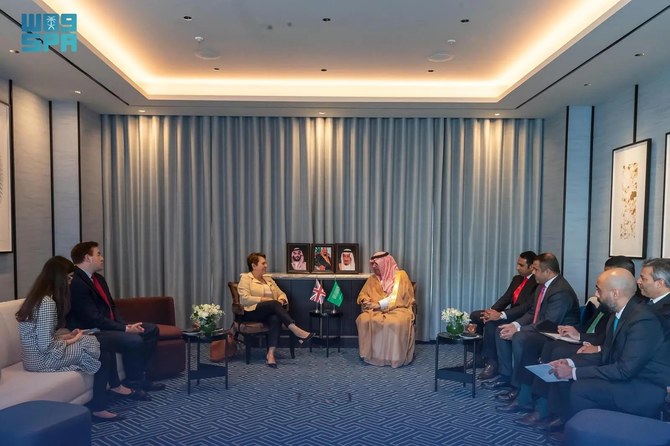
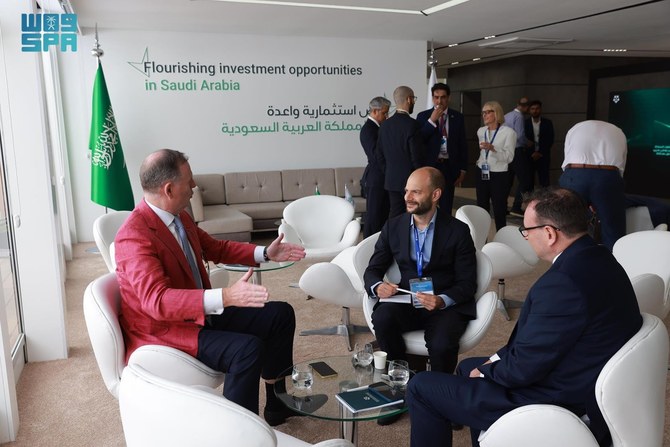
Saudi Arabia's General Authority of Civil Aviation (GACA) have built good investment opportunities with British companies after visiting the Farnborough International Airshow. (SPA)
2 / 8
Saudi Arabia's General Authority of Civil Aviation (GACA) have built good investment opportunities with British companies after visiting the Farnborough International Airshow. (SPA)
3 / 8
Saudi Arabia's General Authority of Civil Aviation (GACA) have built good investment opportunities with British companies after visiting the Farnborough International Airshow. (SPA)
4 / 8
5 / 8
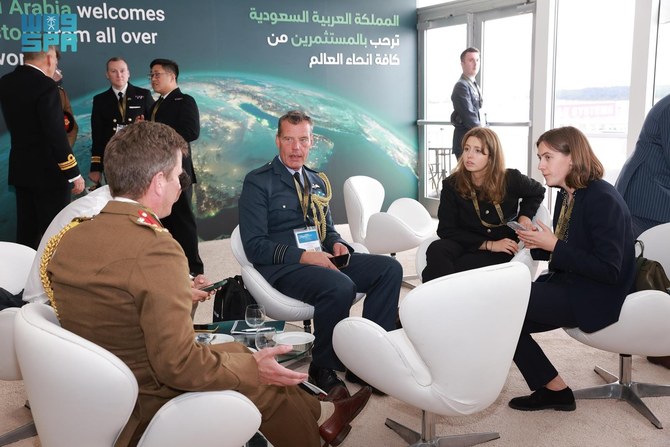
The General Authority for Military Industries (GAMI) was also participating at Farnborough. (SPA)
6 / 8
The General Authority for Military Industries (GAMI) was also participating at Farnborough. (SPA)
7 / 8
The General Authority for Military Industries (GAMI) was also participating at Farnborough. (SPA)
8 / 8
The General Authority for Military Industries (GAMI) was also participating at Farnborough. (SPA)
Short Url
Updated 28 July 2024
Follow

Saudi Arabia’s GACA, SAMI come away from Farnborough Airshow with deals, agreements

  • Delegation briefed on the latest technologies, innovations
  • GACA officials also held a roundtable meeting with Saudi-British Business Council

LONDON: Saudi Arabia’s General Authority of Civil Aviation built good investment opportunities with British companies after visiting the Farnborough International Airshow, which concluded on Friday, its president said on Saturday.

Abdulaziz bin Abdullah Al-Duailej led the GACA delegation at the airshow, where they were briefed on the latest technologies, innovations, and solutions in the aviation industry, including advanced air mobility, space, and sustainability, the Saudi Press Agency reported.

GACA officials also held a roundtable meeting with the Saudi-British Business Council to discuss investment and cooperation opportunities in the civil aviation sector during their visit to the UK.

On the sidelines at Farnborough, GACA signed a memorandum of cooperation with the German company Lilium, a leading manufacturer of vertical take-off and landing aircraft, “with the aim of contributing to the development of the regulatory framework for advanced air mobility in Saudi Arabia,” the SPA reported.

The Saudi Air Navigation Services Company also signed a framework agreement with the British Air Traffic Control Company, also known as NATS, to enhance airport capacity.

The Saudi Academy of Civil Aviation, Prince Sultan University, and Cranfield University also signed an agreement with the goal of developing aviation science research and exchanging expertise between specialists.

Flynas, Saudi Arabia’s leading low-cost airline, also signed an agreement with Airbus to purchase 160 new aircraft, including 30 wide-body A330neo aircraft and 130 single-aisle aircraft of various models from the A320 family, bringing the total volume of its aircraft purchase orders to 280 within seven years.

The General Authority for Military Industries was also participating at Farnborough, and Ahmed bin Abdulaziz Al-Ohali, its governor, witnessed the signing of agreements between Saudi Arabian Military Industries, Airbus Helicopters, and Lockheed Martin.


Bahrain to roll out fiscal reforms to bolster public finances

Updated 30 December 2025
Follow

Bahrain to roll out fiscal reforms to bolster public finances

RIYADH: Bahrain’s government has unveiled a comprehensive package of fiscal reforms aimed at curbing public expenditure, generating new revenue streams, and safeguarding essential subsidies for citizens.

According to a report by the Bahrain News Agency, the measures include increases in fuel prices, higher electricity and water tariffs for certain categories, and greater dividend contributions from state-owned enterprises.

The Cabinet emphasized that electricity and water prices will remain unchanged for the first and second tariff bands for citizens’ primary residences, including homes accommodating extended families.

These reforms are aligned with Bahrain’s Economic Vision 2030, which seeks to reinforce fiscal discipline, diversify revenue sources beyond crude oil, and ensure long-term fiscal sustainability.

“The Cabinet confirmed that electricity and water tariffs for the first and second tariff bands for citizens’ primary residences will remain unchanged, taking into account extended families residing in a single household,” BNA reported.

The Cabinet also agreed to defer any changes to the subsidy mechanisms for electricity and water used in citizens’ primary residences until further studies are completed. At the same time, it approved amendments to electricity and water consumption tariffs for other categories, with implementation scheduled to begin in January 2026.

Under the proposed reforms, a 10 percent corporate income tax will be levied on companies with revenues exceeding 1 million Bahraini dinars ($2.6 million) or annual net profits above 200,000 dinars.

The new corporate tax framework is expected to come into force in 2027, subject to the completion of necessary legislative and regulatory approvals.

In addition, Bahrain plans to increase natural gas prices for businesses and reduce administrative government spending by 20 percent as part of broader cost-cutting efforts.

The government also aims to improve the utilization of undeveloped investment land that already has infrastructure in place by introducing a monthly fee of 100 fils per square meter, with implementation anticipated in January 2027.

The Cabinet further tasked the ministers of labor, legal affairs, and health with reviewing fees related to worker permits and health care services.

According to the report, revised fees will be phased in gradually over a four-year period starting in January 2026, with domestic workers exempt from the changes.

Authorities stressed that the reforms are designed to streamline government procedures that support investment, attract foreign capital, and strengthen the role of the private sector in driving economic growth.