GAZA: The handcuffed bodies of three Palestinian men freed from Israeli custody have been found near Gaza’s border with Israel, and an uncle of one of them and a witness said they had been attacked by Israeli forces shortly after their release.
Abdel Hadi Ghabayen, an uncle of one of the detainees, Kamel Ghabayen, said he set out at 5 a.m. on Sunday looking for his nephew following his arrest by Israeli forces on Saturday.
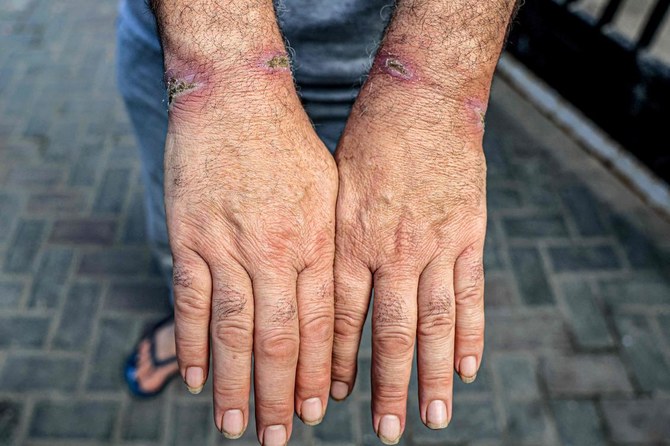
“I found him left on the ground along with the other two martyrs. They were without clothes, and their hands had plastic cuffs put on them by the Israeli army,” Ghabayen said.
The bodies were found near the Israeli border fence on Sunday in the vicinity of the Karam Abu Salem (Kerem Shalom) crossing in southern Gaza, he said.
Reuters could not independently confirm what happened to the three men or the reason for their arrest. In response to Reuters requests for comment, the Israel Defense Forces (IDF) said: “From a review conducted the IDF is unfamiliar with an incident in which the suspects were killed by IDF fire.”
Abdel Hadi Ghabayen said one of the men had lost a leg and his body was “in pieces” after what he said was an attack by Israeli forces carried out shortly after their release.
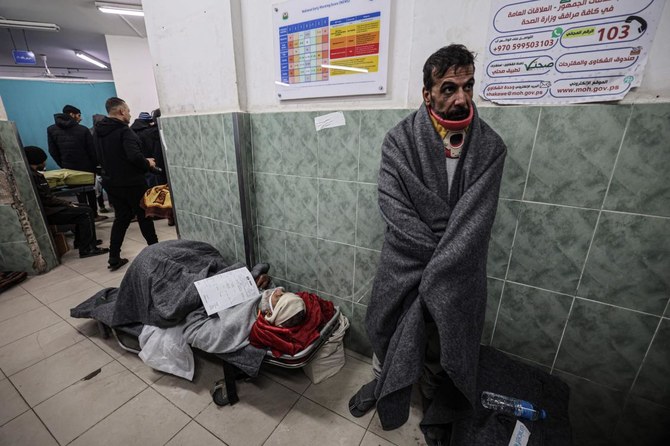
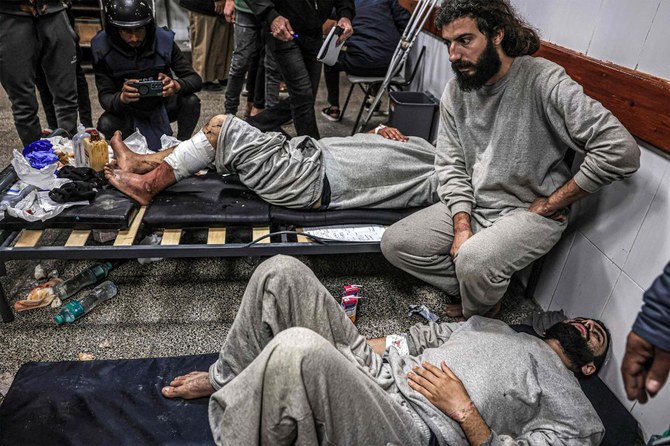
Abdel Hadi Ghabayen said that when he tried to recover the man’s dismembered leg the Israelis “started shooting at me, so I stopped.” He later carried the bodies of the three on his truck to Nasser Hospital in the southern Gaza city of Khan Younis.
The three — Kamel Ghabayen, Mohammed Awad Ramadan Abu Hejazi and Ramadan Awad Ramadan Aby Hejaz — were among several Palestinians detained on Saturday and held for questioning, according to one of the men, Mahmoud Abu Taha.
Abu Taha said they came under fire shortly after their release.
“We reached Karkar Street (in Gaza). After 10 minutes of being there, we found a bomb thrown at the people with me. Thank God I was at the front. The bomb hit 6 or 7 people who were detained with us. Thank God I am alive,” he said.
The war began on Oct. 7 when fighters led by Hamas, which controlled Gaza, attacked southern Israel, killing 1,200 people and taking around 250 hostages, according to Israeli figures. More than 38,000 Palestinians have been killed in the Israeli military offensive since then, according to Gaza health officials.


![]()
![]()
![]()

Three Gazans found dead after release from Israeli custody, relative and witness say
Short Url
https://arab.news/5yvfn
Three Gazans found dead after release from Israeli custody, relative and witness say


Latest updates


© 2026 SAUDI RESEARCH & PUBLISHING COMPANY, All Rights Reserved And subject to Terms of Use Agreement.