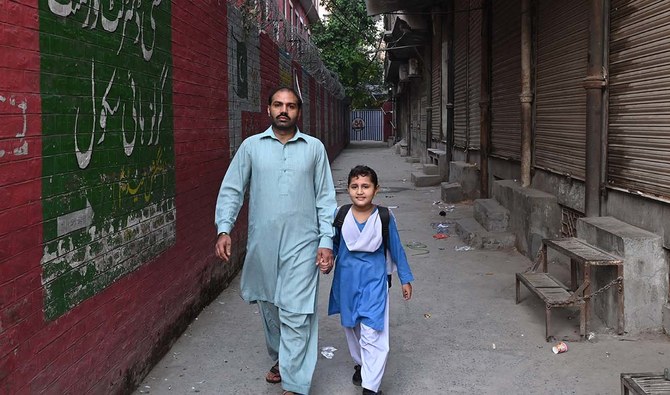
KARACHI: The World Bank’s Board of Executive Directors has approved $150 million for a project to improve primary school outcomes and reduce drop-outs in Pakistan’s most populous Punjab province, the Bank said on Saturday.
Pakistan faced a surge in the number of out-of-school children that exceeded 26 million across the South Asian nation, according to the 2021-22 Pakistan Education Statistics Report. While the number fell from 44 percent in 2016-17 to 39 percent in 2021-22, the actual count had risen from 22.02 million in this timeframe.
The World Bank project, “Getting Results: Access and Delivery of Quality Education Services in Punjab Project (GRADES),” will focus on improving learning outcomes, recovering from learning losses during the COVID-19 pandemic, strengthening the management of schools, and expanding school participation levels.
It will contribute to higher completion rates and increased years of schooling with better learning for both girls and boys, and is expected to directly benefit 5 million children, 7,000 headteachers, 165,000 teachers, and more than 3,000 teacher mentors in public schools as well as Punjab Education Foundation schools.
“Punjab has more than 7 million out-of-school children. GRADES will help the government of Punjab substantially reduce this number and, in parallel, improve foundational learning outcomes for boys and girls who are already in school,” Najy Benhassine, the World Bank country director for Pakistan, said in a statement.
“This will be done through scaling up and strengthening public-private partnerships, improving school preparedness among young children, enhancing the quality and use of teaching and learning materials and assessments, and improving the learning environment in schools.”
Given Pakistan’s vulnerability to climate shocks, the project will also follow a climate-resilient approach with measures to mitigate the impact of natural disasters, including construction of approximately 5,400 additional climate-smart classrooms in primary schools. It will introduce low-cost climate-smart features such as raised plinths and reflective roofs, according to the statement.
The project will prioritize reconstruction of schools damaged during the 2022 floods, especially girls’ schools, overcrowded institutions and those in locations with high numbers of out-of-school children. In addition, measures to strengthen disability inclusion, such as making school infrastructure more accessible and integrating inclusive education principles in teacher coaching is also part of the project’s inclusive design.
“The World Bank and the government of Punjab have a strong history of collaboration on education reform,” said Izza Farrakh, the task team leader for the project.
“GRADES will leverage this partnership for further innovation, such as climate-resilient classrooms and integrating climate change education into the curriculum. Reforms such as these will help ensure a safe and conducive learning environment and at the same time prepare the next generation to be more resilient to climate shocks and natural disasters.”
Pakistan has been a member of the World Bank since 1950 and has since received more than $46 billion in assistance. Its current portfolio includes 55 projects and a total commitment of $14.7 billion.


![]()

World Bank approves $150 million to improve primary education in Pakistan’s Punjab province
Short Url
https://arab.news/predb
World Bank approves $150 million to improve primary education in Pakistan’s Punjab province
- Punjab is Pakistan’s most populous province and has more than 7 million out-of-school children
- The Bank will help reduce this number and improve foundational learning outcomes for students
Latest updates


© 2026 SAUDI RESEARCH & PUBLISHING COMPANY, All Rights Reserved And subject to Terms of Use Agreement.