- Foreign Minister Ishaq Dar dispels rumors at press conference in Washington DC
- Pakistan does not recognize Israel and has no diplomatic relations with the country
ISLAMABAD: Pakistan’s Foreign Minister Ishaq Dar on Friday ruled out joining the Abraham Accords, saying there was no change in Islamabad’s foreign policy until an independent Palestinian state was established on pre-1967 borders with Al-Quds Al-Sharif as its capital.
The development follows US President Donald Trump’s call for several Muslim-majority countries to normalize relations with Israel as prospects for a US-Iran peace deal neared.
The Abraham Accords, brokered during Trump’s first presidency in 2020, established diplomatic relations between Israel and several Arab states, including the United Arab Emirates and Bahrain. Morocco and Sudan later joined the framework, which Washington has promoted as a cornerstone of a broader Middle East normalization process.
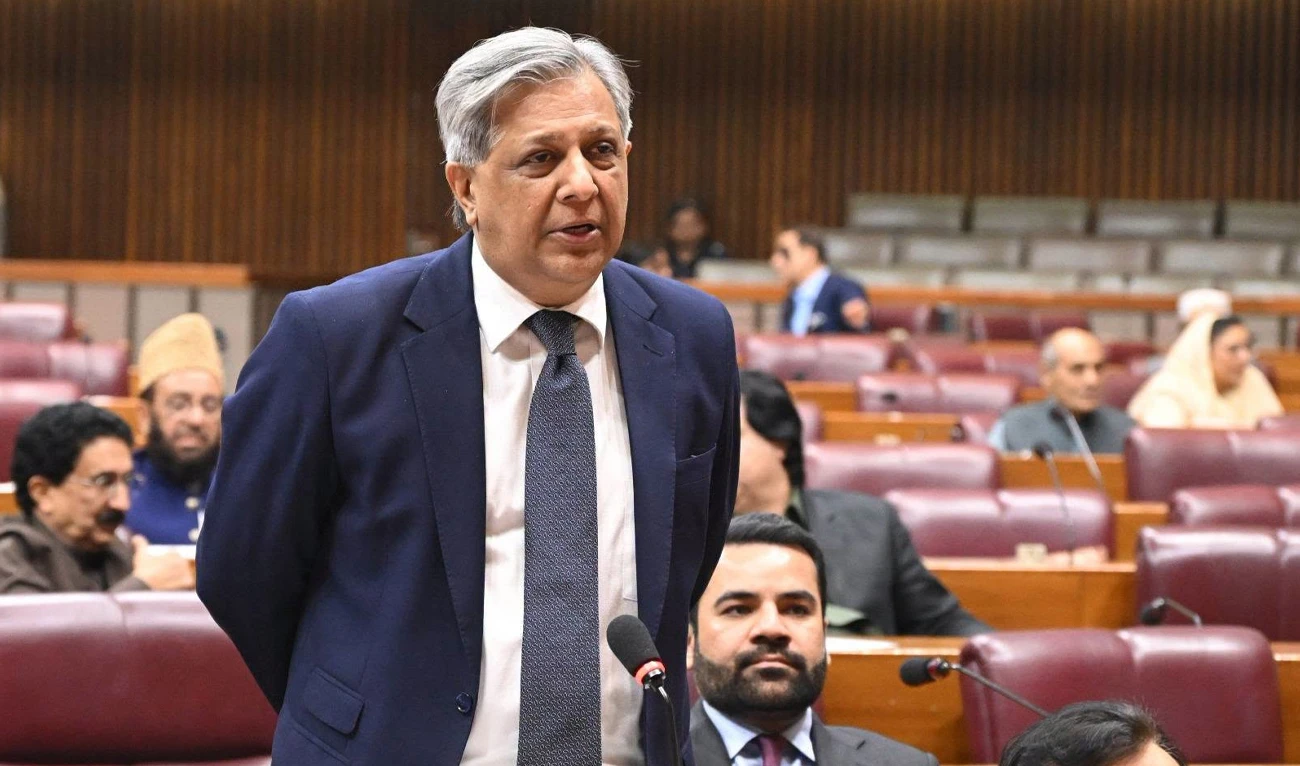
Dar held a press conference in Washington alongside Pakistan’s Ambassador to the US, Rizwan Saeed Sheikh, dismissing reports that Pakistan had been asked to join the Abraham Accords.
“The rumors circulating that Pakistan has been told to join the Abraham Accords, and things like that. So, I am going to make it very clear that Pakistan’s consistent policy is that Pakistan, until Palestine is recognized, and till Palestine is established on its pre-1967 borders with Al-Quds Al-Sharif as its capital,” he said.
“So, this is Pakistan’s stated foreign policy, government after government, year after year— there has been no change in it.”
Pakistan does not recognize Israel and has no diplomatic relations with it. Islamabad has historically supported the establishment of an independent Palestinian state based on pre-1967 borders, with East Jerusalem as its capital. This position enjoys broad political consensus and public support across Pakistan.
The issue resurfaced after Trump said last week that Pakistan, Saudi Arabia, Qatar, Türkiye and several other countries should join an expanded Abraham Accords framework as part of a wider settlement linked to ongoing US-Iran negotiations.
Trump made his remarks in a lengthy post on Truth Social after speaking with several regional leaders, including Pakistan’s army chief Field Marshal Asim Munir, Saudi Crown Prince Mohammed bin Salman, UAE President Mohammed bin Zayed, Turkish President Recep Tayyip Erdoğan and Qatar’s leadership.
The US president said countries involved in discussions surrounding the Iran crisis should “simultaneously” join the Abraham Accords, describing the arrangement as a pathway toward a more unified and economically integrated Middle East.
Islamabad has recently emerged as a key intermediary in efforts linked to the US-Iran crisis, coordinating with Gulf countries, China and Washington as tensions escalated after joint US-Israeli strikes on Iran in February triggered months of confrontation across the Middle East.
Public sentiment in Pakistan remains overwhelmingly sympathetic toward Palestinians, with large demonstrations regularly held against Israeli military operations in Gaza.
Pakistani religious parties and mainstream political groups have long opposed normalization with Israel absent a comprehensive Palestinian settlement.