Saudi artist Nada Halabi explores dreams through artwork

1 / 7
Saudi artist Nada Halabi is exhibiting her Dreams Unveiled collection at Ahlam Gallery in Riyadh from June 4-15. (AN Photo/Rahaf Jambi)
2 / 7
Saudi artist Nada Halabi is exhibiting her Dreams Unveiled collection at Ahlam Gallery in Riyadh from June 4-15. (AN Photo/Rahaf Jambi)
3 / 7
Saudi artist Nada Halabi is exhibiting her Dreams Unveiled collection at Ahlam Gallery in Riyadh from June 4-15. (AN Photo/Rahaf Jambi)
4 / 7
Saudi artist Nada Halabi is exhibiting her Dreams Unveiled collection at Ahlam Gallery in Riyadh from June 4-15. (AN Photo/Rahaf Jambi)
5 / 7
Saudi artist Nada Halabi is exhibiting her Dreams Unveiled collection at Ahlam Gallery in Riyadh from June 4-15. (AN Photo/Rahaf Jambi)
6 / 7
Saudi artist Nada Halabi is exhibiting her Dreams Unveiled collection at Ahlam Gallery in Riyadh from June 4-15. (AN Photo/Rahaf Jambi)
7 / 7
Saudi artist Nada Halabi is exhibiting her Dreams Unveiled collection at Ahlam Gallery in Riyadh from June 4-15. (AN Photo/Rahaf Jambi)
Short Url
Updated 13 June 2024
Follow

Saudi artist Nada Halabi explores dreams through artwork

  • Nada Halabi: I get a lot of inspiration from travel, so when I go to Europe, I love to visit old and contemporary museums to get ideas
  • Halabi: I lose myself while painting, and sometimes I paint something, then paint something over the top of it if I’m not content, until I’m happy with the end result

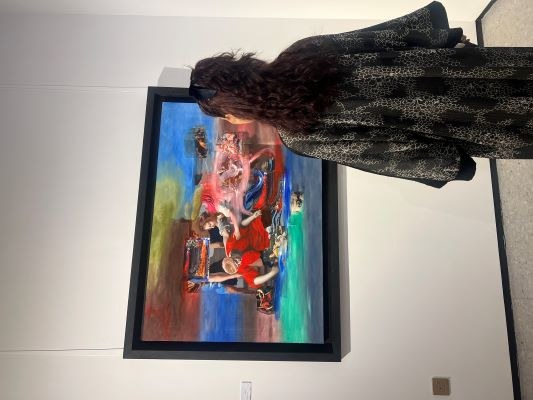
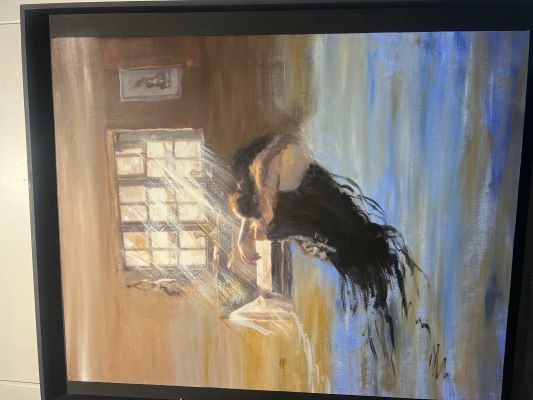
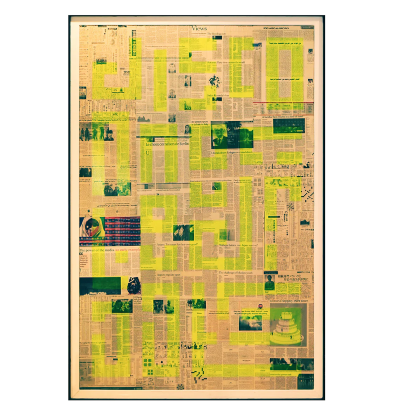
RIYADH: Contemporary Saudi artist, Nada Halabi, is exhibiting her “Dreams Unveiled” collection at Ahlam Gallery in Riyadh from June 4-15.  

“There’s a lot of dreams in these paintings,” Halabi told Arab News. “So, it’s like all the years accumulated with time and all my dreams, like sometimes I wake up at 5:00 a.m. and write down what I see, and when I wake up again, I paint.” 

Some of her works are inspired by the Renaissance era, a period of European cultural, artistic, political and economic “rebirth” after the Middle Ages.  

“I enjoy combining Renaissance art with a contemporary touch of flair, and I chose Renaissance characters because I believe their style at that era was exceptional, and they were the true artists, so I transformed some of them into contemporary art,” said Halabi, who enjoys experimenting with different styles, colors and sizes.  

Many things have influenced Halabi’s work as an artist. She enjoys traveling to different museums and finds inspiration in historic places and things. 

“I get a lot of inspiration from travel, so when I go to Europe, I love to visit old and contemporary museums to get ideas. Then, when I return to Saudi Arabia, I just paint nonstop because everything is so new on my mind,” she said. 

Halabi’s works reflect her time-consuming process.  

“I lose myself while painting, and sometimes I paint something, then paint something over the top of it if I’m not content, until I’m happy with the end result,” she said.  

The artist has clients of all ages. Some of her clients are art collectors, while others own museums.  

She studied fine art at the Academie Libanaise de Beaux Arts in Lebanon before relocating to London and then Los Angeles, where she received more guidance from a well-known American artist. She has trained at schools of art in the UK and the US, and exhibited her work in exhibitions and galleries in the Middle East.

In her current exhibition, there is a section dedicated to Lebanon — featuring newspapers and the neon words “Disconnected Roots.”

Halabi said: “I lived in Saudi Arabia longer than I did in Lebanon, even though I was born and raised there, and this artwork shows how many countries are connected yet at the same time are disconnected due to political conflicts.” 


‘One in a Million’: Syrian refugee tale wows Sundance

Updated 24 January 2026
Follow

‘One in a Million’: Syrian refugee tale wows Sundance

PARK CITY: As a million Syrians fled their country's devastating civil war in 2015, directors Itab Azzam and Jack MacInnes headed to Turkey where they would meet a young girl who encapsulated the contradictions of this enormous migration.

In Ismir, they met Isra'a, a then-11-year-old girl whose family had left Aleppo as bombs rained down on the city, and who would become the subject of their documentary "One In A Million," which premiered at the Sundance Film Festival on Friday.

For the next ten years, they followed her and her family's travels through Europe, towards Germany and a new life, where the opportunities and the challenges would almost tear her family apart.

The film is by directors Itab Azzam and Jack MacInnes. (Supplied)

There was "something about Isra'a that sort of felt to us like it encapsulated everything about what was happening there," MacInnes told an audience at the Sundance Film Festival in Park City, Utah on Friday.

"The obvious vulnerability of her situation, especially as being a child going through this, but that at the same time, she was an agent.

"She wasn't sitting back, waiting for other people to save her. She was trying to fight, make her own way there."

The documentary mixes fly-on-the-wall footage with sit-down interviews that reveal Isra'a's changing relationship with Germany, with her religion, and with her father.

It is this evolution between father and daughter that provides the emotional backbone to the film, and through which tensions play out over their new-found freedoms in Europe -- something her father struggles to adjust to.

Isra'a, who by the end of the film is a married mother living in Germany, said watching her life on film in the Park City theatre was "beautiful."

And having documentarists follow her every step of the way as she grew had its upsides.

"I felt like this was something very special," she told the audience after the screening. "My friends thought I was famous; it made making friends easier and faster."