11 militants gunned down in response to roadside bombing that killed Pakistani soldiers— army 

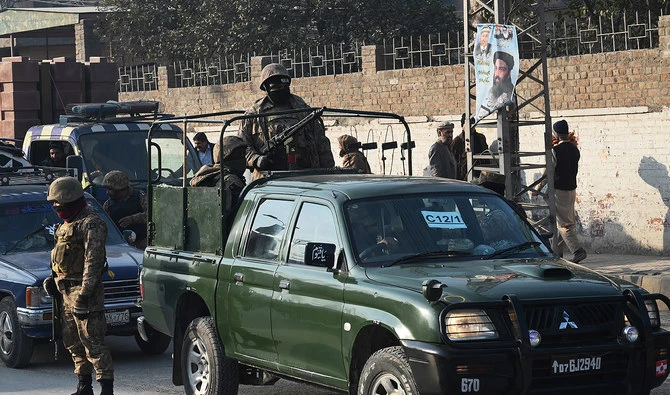
Pakistan Army personnel patrol stand guard on a street in Peshawar on February 7, 2024, (AFP/File)
Short Url
Updated 11 June 2024
Follow

11 militants gunned down in response to roadside bombing that killed Pakistani soldiers— army 

  • Militants gunned down in Lakki Marwat district in intelligence-based operation, says army 
  • Pakistan has seen surge in militancy since Nov. 2022 after fragile truce with militants ended

ISLAMABAD: Security forces killed 11 militants in northwestern Pakistan on Tuesday in response to a roadside bombing that killed seven soldiers last week, the army’s media wing said. 

A military truck was targeted by an Improvised Explosive Device (IED) blast on Sunday in Pakistan’s northwestern Lakki Marwat district. An army captain and six soldiers were killed in the attack.

Prime Minister Shehbaz Sharif attended the captain’s funeral in Chunian city on Monday, vowing that his government would eliminate “terrorism” from the country. 

The Inter-Services Public Relations (ISPR) said in a media release that the army launched an intelligence-based operation on Monday night in Lakki Marwat ” to bring perpetrators of the heinous act to justice.”

“Sanitization operation is being carried out to eliminate any other terrorist found in the area as the security forces are determined to wipe out the menace of terrorism from the country,” the army’s media wing said. 

It added that multiple “terrorist” hideouts were also destroyed during the operation. 

In a statement released by his office, Sharif praised Pakistan’s security forces for conducting the successful operation. 

“Security forces have always acted like an iron wall in the war against terrorism,” Sharif was quoted as saying by the Prime Minister’s Office (PMO). 

“The entire nation stands with the security forces. We stand with our martyrs and the victorious soldiers.”

Pakistan’s northwestern Khyber Pakhtunkhwa (KP) province, which borders Afghanistan, has witnessed several attacks on police, security forces and civilians amid a renewed wave of violence in recent months. 

While no group immediately claimed responsibility for the Sunday attack on the military, suspicion is likely to fall on the Tehreek-e-Taliban Pakistan (TTP), which has claimed dozens of recent attacks.

The South Asian country has witnessed a renewed surge in militant violence in its two western provinces, KP and Balochistan since the TTP called off its fragile truce with the government in November 2022.

Pakistan has blamed the surge in violence on militants operating out of neighboring Afghanistan. Kabul denies the allegations and says rising violence in Pakistan is a domestic issue that Islamabad must deal with itself.

EU, Pakistan sign €60 million loan agreement for clean drinking water in Karachi

Updated 17 December 2025
Follow

EU, Pakistan sign €60 million loan agreement for clean drinking water in Karachi

  • Project will finance rehabilitation, construction of water treatment facilities in Karachi city, says European Investment Bank
  • As per a report in 2023, 90 percent of water samples collected from various places in city was deemed unfit for drinking

ISLAMABAD: The European Investment Bank (EIB) and Pakistan’s government on Wednesday signed a €60 million loan agreement, the first between the two sides in a decade, to support the delivery of clean drinking water in Karachi, the EU said in a statement. 

The Karachi Water Infrastructure Framework, approved in August this year by the EIB, will finance the rehabilitation and construction of water treatment facilities in Pakistan’s most populous city of Karachi to increase safe water supply and improve water security. 

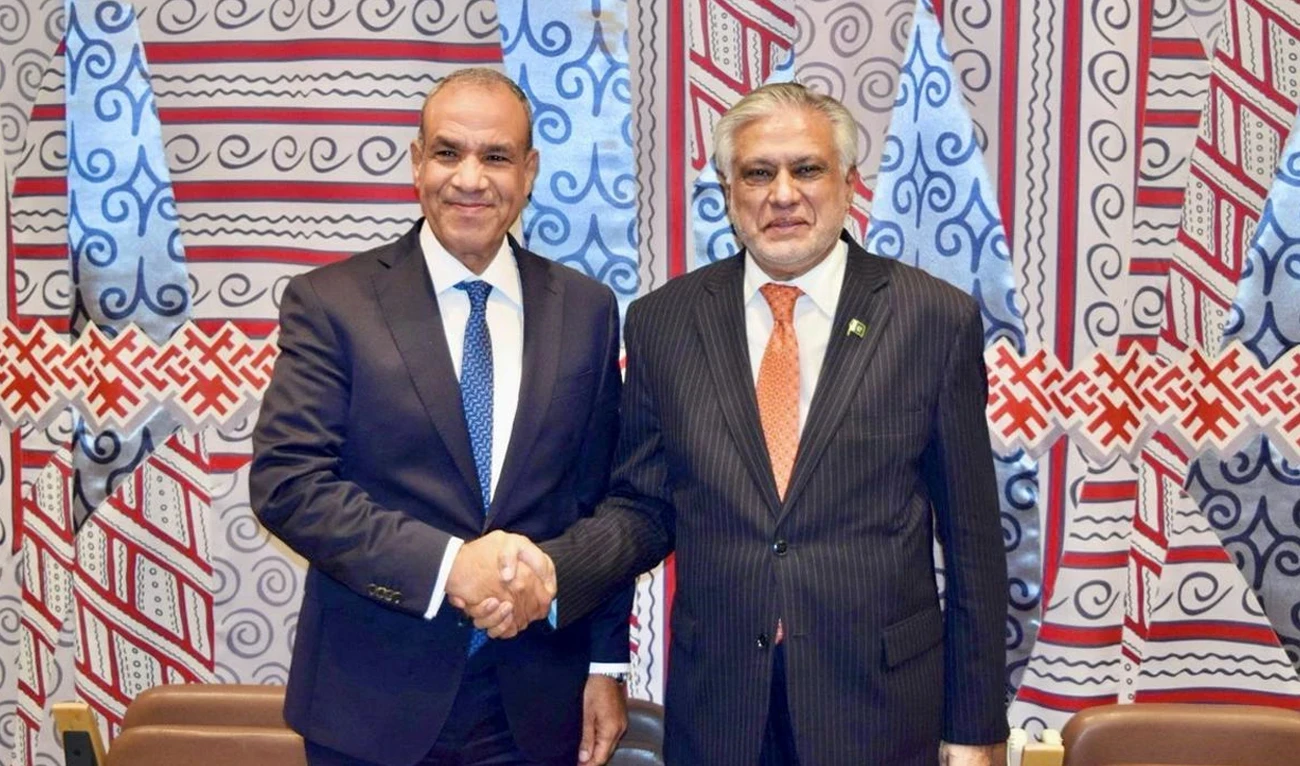
The agreement was signed between the two sides at the sidelines of the 15th Pak-EU Joint Commission in Brussels, state broadcaster Radio Pakistan reported. 

“Today, the @EIB signed its first loan agreement with Pakistan in a decade: a €60 million loan supporting the delivery of clean drinking water for #Karachi,” the EU said on social media platform X. 

Radio Pakistan said the agreement reflects Pakistan’s commitment to modernize essential urban services and promote climate-resilient infrastructure.

“The declaration demonstrates the continued momentum in Pakistan-EU cooperation and highlights shared priorities in sustainable development, public service delivery, and climate and environmental resilience,” it said. 

Karachi has a chronic clean drinking water problem. As per a Karachi Water and Sewerage Corporation (KWSC) study conducted in 2023, 90 percent of water from samples collected from various places in the city was deemed unsafe for drinking purposes, contaminated with E. coli, coliform bacteria, and other harmful pathogens. 

The problem has forced most residents of the city to get their water through drilled motor-operated wells (known as ‘bores’), even as groundwater in the coastal city tends to be salty and unfit for human consumption.

Other options for residents include either buying unfiltered water from private water tanker operators, who fill up at a network of legal and illegal water hydrants across the city, or buying it from reverse osmosis plants that they visit to fill up bottles or have delivered to their homes.

The EU provides Pakistan about €100 million annually in grants for development and cooperation. This includes efforts to achieve green inclusive growth, increase education and employment skills, promote good governance, human rights, rule of law and ensure sustainable management of natural resources.