


RIYADH: Saudi Arabia’s transition from oil power to renewable energy could reduce annual electricity costs by $30 billion by 2030, according to a senior S&P Global executive.
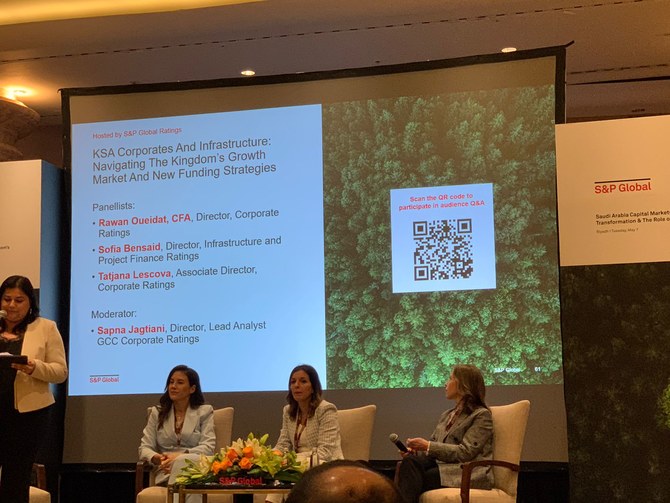
Speaking during a panel session at the 2024 Saudi Arabia Capital Markets Conference hosted by the firm in Riyadh, Director of Infrastructure and Project Finance Ratings Sofia Bensaid highlighted the Kingdom’s ambitious targets of 50 percent renewable electricity by 2030 and net zero emissions by 2060.
While Bensaid believes the target is achievable, she raised concerns regarding implementation, as the plan requires adding more than 20 gigawatts of renewables annually until 2030, totaling 130 GW in six years.
“Now in terms of CapEx (capital expenditure), we expect the whole rebuilding agenda to cost approximately $86 billion and will aim at replacing the entire oil-fired power fleet. But it’s very important to keep in mind that this $86 billion bill is raised by developers on a project finance scheme and hence does not sit on the government balance sheet,” Bensaid said.
She added: “Once this 130 GW is reached, the Kingdom’s annual electricity bill will reduce by approximately $30 billion.”
During the same panel, Director of Corporate Ratings at S&P Global Rawan Oueidat explained that national oil companies in the region are expected to maintain high capital expenditures but with modest growth compared to 2022-23 levels.
“We estimate that in aggregate, the region and national oil companies will be spending somewhere around $110-$115 billion annually, on average, at least until 2026,” Oueidat said.
However, recent capacity expansion pauses, like those in Saudi Arabia, raise concerns about cash flow visibility, especially for oilfield service companies.
This could translate into higher credit metrics for the oilfield service companies in Saudi Arabia.
Furthermore, the conference shed light on the Kingdom’s dual focus on non-oil divisions and renewable energy initiatives.
Government investments are driving expansions in non-oil sectors, which are expected to continue below the 5 percent growth rate.
Fields like tourism, consumer products, healthcare, and telecom are thriving, supported by demographic trends and favorable oil prices.
“They will continue to be fueled by public investments, but they’re also supported by mega trends as well in Saudi Arabia, such as population growth,” said Tatjana Lescova, associate director of corporate ratings at S&P Global, adding that S&P Global’s expectations are “relatively favorable, and the oil price is also helping, of course.”
She went on to say that sectors that are consumer driven “will continue to thrive,” adding: “Consumer spending is growing, it’s expanding, but relatively limited inflation levels compared to some other parts of the world are also helping the rest of our competitive pressures.”
Lescova further explained the positive outlook for various sectors in Saudi Arabia, such as consumer-driven industries like healthcare, which are thriving due to growing spending trends and relatively low inflation rates.
“But overall attraction is very positive. (The) healthcare sector will benefit from the positive population demographic dynamic, and there’s also widespread requirements of mandatory insurance across the region and Saudi Arabia as well,” she stated.
Lescova also flagged up the telecom sector as “performing really well over the past few years,” adding: “The telecom companies continue to invest in 5G infrastructure that boasts mobile data consumption, and in addition to this, they are also developing a lot of digital nontoken businesses.”
Additionally, during another panel session, Director of Sovereign Ratings at S&P Global Zahabia Gupta underlined Saudi Arabia’s ambitious Vision 2030 plan for substantial social and economic transformation.
She noted that the significant costs associated with various large-scale projects under this vision are estimated to be around a trillion dollars or more.
“As we get closer to 2030, we expect that PIF and the government will ramp up debt issuance for the implementation of these projects. We did an exercise to forecast public finances for Saudi Arabia until 2030,” Gupta said.
She added: “What we see right now is that total PIF and government debt issuances will come to about $250 billion from 2024 to 2030, that comes to about $35 billion of annual issuance. That’s quite a large absolute number, especially when you consider that most of this funding will be done through external (sources).”
Despite the substantial debt issuance, Gupta noted that Saudi Arabia will remain in a “comfortable” net asset position of around 47 percent of gross domestic product by 2027, adding: “Even by 2030, it would be about 30 percent of GDP.”
With support from PIF, this projection reflects that the government will only implement a portion of Vision 2030, while other entities, such as the private sector and foreign investors, will also contribute.
According to S&P Global’s latest report on May 6, the Saudi government’s assets are forecasted to remain strong amid steady economic diversification efforts aimed at reducing the Kingdom’s dependence on oil.
The increasing debt issuance to fund Vision 2030 projects may exert pressure on Saudi Arabia’s net asset position until the end of the decade.
However, the Kingdom will mitigate this impact through its prudent fiscal policies.
“S&P Global Ratings expects that growing debt issuance to finance Vision 2030 projects could pressure the sovereign’s fiscal metrics. In our base case, however, we expect the government’s net asset position will deteriorate but remain strong,” stated the credit-rating agency.
It added: “The ramp-up in fiscal deficits and debt could weaken the government’s balance sheet far sooner than returns on investment will accrue. Much will depend on the roles that foreign investment, the private sector, and capital markets will play in financing Vision 2030.”
The US-based firm highlighted that the Saudi government will continue to support PIF in various ways, including funding essential infrastructure for mega and giga-project sites.


