

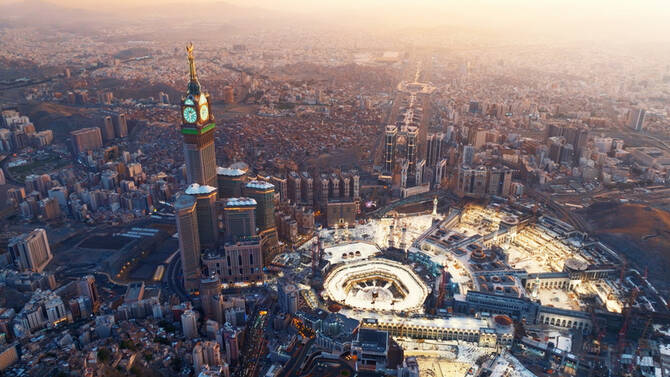
Makkah sees rising economic activity ahead of Ramadan

At this time each year, Makkah experiences a full seasonal economic cycle that supports small and medium-sized enterprises and boosts commercial activity. Getty
Short Url
Updated 16 February 2026
Follow

Makkah sees rising economic activity ahead of Ramadan

MAKKAH: Islam’s holiest city, Makkah, is experiencing heightened economic activity ahead of this year’s Ramadan, as markets, shopping centers, and hotels see a surge in visitors, reflecting the city’s dual religious and economic significance during the season.

A field survey by the Saudi Press Agency showed a marked uptick in retail and food sectors, with rising demand for staple goods, dates, Ramadan beverages, and hospitality and decorative items.

Traditional markets and modern shopping complexes have seen brisk activity from residents, expatriates, and visitors, supported by promotional offers launched by numerous businesses to attract consumers.

In the hospitality sector, early bookings for hotels and serviced apartments, particularly in the central area around the Grand Mosque, have increased, with occupancy expected to rise further in the first days of the holy month.

This surge is driven by the arrival of pilgrims and visitors from inside and outside the Kingdom to perform Umrah and prayers at the Grand Mosque.

Transport and logistics services have also been active, alongside intensified preparations by relevant authorities to ensure smooth traffic flow and easy access for worshippers.

Health and regulatory measures have also been strengthened to ensure food safety and service quality.

Ramadan remains one of the most important annual sales seasons, providing a wide range of options for various consumer segments. At this time each year, Makkah experiences a full seasonal economic cycle that supports small and medium-sized enterprises and boosts commercial activity.

The Makkah Municipality has confirmed that it stepped up inspections of markets and retail outlets across the holy city, as part of its field plan to ensure compliance with health and municipal regulations, product safety, and service quality.

Inspection teams, the municipality said, have conducted intensive rounds covering public markets, shopping centers, food outlets, industrial kitchens, and restaurants to verify food quality, storage methods, and hygiene standards, while ensuring establishments adhere to approved rules and regulations.

It added that that these monitoring campaigns continue around the clock, particularly during periods of heightened commercial activity.

The municipal authority also stressed the importance of citizens and residents reporting any concerns through official channels, strengthening community oversight and ensuring the highest public health and safety standards in line with Makkah’s status as a destination for millions of worshippers from within the Kingdom and beyond.

This growing economic activity highlights the vitality of Makkah’s market and its ability to respond to major religious seasons, reinforcing the city’s role as a spiritually and economically vibrant center and a global destination for Muslims during Ramadan.


Saudi Arabia’s foreign reserves rise to a 6-year high of $475bn

Updated 10 sec ago
Follow

Saudi Arabia’s foreign reserves rise to a 6-year high of $475bn

RIYADH: Saudi Arabia’s foreign reserves climbed 3 percent month on month in January to SR1.78 trillion, up SR58.7 billion ($15.6 billion) from December and marking a six-year high.

On an annual basis, the Saudi Central Bank’s net foreign assets rose by 10 percent, equivalent to SR155.8 billion, according to data from the Saudi Central Bank, Argaam reported.

The reserve assets, a crucial indicator of economic stability and external financial strength, comprise several key components.

According to the central bank, also known as SAMA, the Kingdom’s reserves include foreign securities, foreign currency, and bank deposits, as well as its reserve position at the International Monetary Fund, Special Drawing Rights, and monetary gold.

The rise in reserves underscores the strength and liquidity of the Kingdom’s financial position and aligns with Saudi Arabia’s goal of strengthening its financial safety net as it advances economic diversification under Vision 2030.

The value of foreign currency reserves, which represent approximately 95 percent of the total holdings, increased by about 10 percent during January 2026 compared to the same month in 2025, reaching SR1.68 trillion.

The value of the reserve at the IMF increased by 9 percent to reach SR13.1 billion.

Meanwhile, SDRs rose by 5 percent during the period to reach SR80.5 billion.

The Kingdom’s gold reserves remained stable at SR1.62 billion, the same level it has maintained since January 2008.

Saudi Arabia’s foreign reserve assets saw a monthly rise of 5 percent in November, climbing to SR1.74 trillion, according to the Kingdom’s central bank.

Overall, the continued advancement in reserve assets highlights the strength of Saudi Arabia’s fiscal and monetary buffers. These resources support the national currency, help maintain financial system stability, and enhance the country’s ability to navigate global economic volatility.

The sustained accumulation of foreign reserves is a critical pillar of the Kingdom’s economic stability. It directly reinforces investor confidence in the riyal’s peg to the US dollar, a foundational monetary policy, by providing SAMA with ample resources to defend the currency if needed.

Furthermore, this financial buffer enhances the nation’s sovereign credit profile, lowers national borrowing costs, and provides essential fiscal space to navigate global economic volatility while continuing to fund its ambitious Vision 2030 transformation agenda.