
ISLAMABAD: Pakistan is widening a sweeping privatization program following the sale of its national airline last year, with power distributors next in line and more state companies to be handed to the Privatization Commission, the finance minister said on Monday.
Pakistan’s government successfully divested a 75 percent stake in the Pakistan International Airlines (PIA) in December last year. The move was part of Islamabad’s broader privatization program, which aims to reduce fiscal losses inflicted by loss-making state-owned enterprises (SOEs) by either privatizing or restructuring them.
Pakistani officials have said the Privatization Commission plans to divest the country’s electricity distribution companies in two batches. The first phase will include the Islamabad Electric Supply Company, Gujranwala Electric Power Company and Faisalabad Electric Supply Company, followed by Hyderabad Electric Supply Company and Sukkur Electric Power Company in the second batch. Considerably high losses, inefficiencies and mounting subsidies in the power sector have dented Pakistan’s public finances over the years, making it a central focus of Islamabad’s reform agenda.
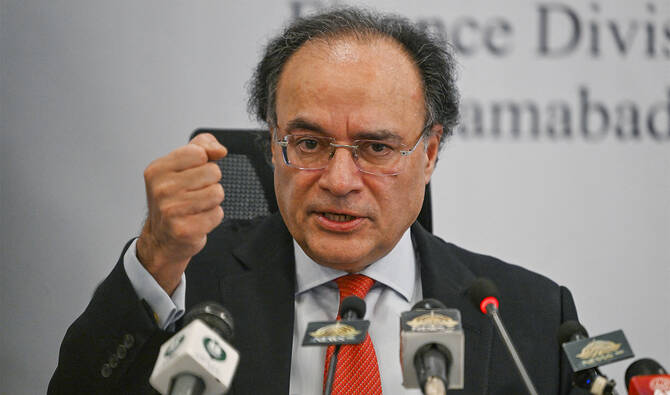
Speaking at a news conference about Pakistan’s privatization program, Finance Minister Muhammad Aurangzeb said there are five power distribution companies to be privatized this year, out of which the sell-side advisers for three are Alvarez & Marsel. He said the Turkish Investment Bank has been entrusted with the task of being the sell-side advisers for the other two companies.
“Overall, 26 SOEs have been handed over to the Privatization Commission,” Aurangzeb told reporters. “This decision is first made in the Cabinet Committee on SOEs, it then goes to the Cabinet Committee on Privatization, and then its overall approval is given by the prime minister and the cabinet.”
Aurangzeb vowed the government will take the privatization process forward with the same level of transparency as it had exhibited during the PIA sale last year.
“And this will be taken forward with a lot of speed because we will not stop at 26 SOEs,” the finance minister said. “We will also gradually hand over other state institutions to the Privatization Commission,” he added.
Speaking further about SOEs and their performances over the years, the minister said losses from the state entities decreased by about Rs74 billion [$264.6 million] over the last three years.
He said SOEs had reported losses of Rs905 billion [$3.24 billion] in 2023, Rs851 billion [$3.04 billion] in 2024 and Rs832 billion [$2.98 billion] in 2025.
Pakistan’s privatization push comes at the back of its efforts to ensure sustainable economic progress after a prolonged macroeconomic crisis that drained its foreign exchange reserves and triggered a balance of payments crisis.