


RIYADH: The region of Middle East and North Africa is known for its hot, dry climate and scarce water resources. The harsh climatic conditions are a contributing factor to the region’s perennial scourge of drought, desertification and land degradation.
These challenges result in imbalances in different ecosystems, harming especially the agriculture sector and imposing economic hardship on local populations. The growing importance of this regional issue has been a motivating factor for Saudi Arabia to host regular discussions.
This week, Environment Week, has been an opportunity to take stock of the challenges ahead and the progress made so far. Events organized during Environment Week highlighted Saudi Arabia’s leadership role in environmental preservation and sustainable development.
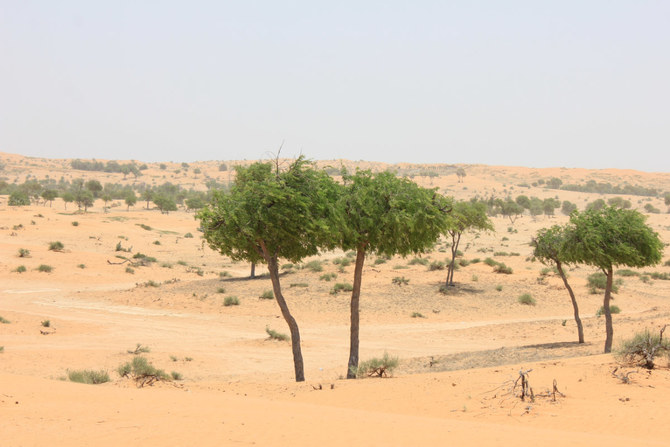
Desertification, the process by which fertile land transforms into arid desert, is a significant challenge confronting countries of the Middle East and North Africa. (Shutterstock)
Environmentalists were given a forum to exchange on a range of subjects, with the emphasis naturally on drought, desertification and land degradation. For this occasion, Arab News interviewed Ibrahim Thiaw, executive secretary of the United Nations Convention to Combat Desertification in Riyadh.
“It has become extremely difficult for humanity to cope with the frequency of challenges,” he said. “Saudi Arabia is playing a very important role of course. It is not a small economy, therefore the demand for support from Saudi Arabia is also growing.”

Ibrahim Thiaw, executive secretary of the United Nations Convention to Combat Desertification. AN photo by AN Abdulrahman Alnajim
Thiaw spoke of some of the outcomes of land degradation and drought such as the increase of irregular migration due to land degradation and drought. “You will likely see more competition of land and water, and therefore, more conflict,” he said.
Drought, a major problem in many Middle East countries, has put water resources under stress in tandem with rising temperatures. Both surface water and groundwater reserves are failing owing to declining precipitation and rising evaporation rates.

A picture shows a view of the dried-up bed of the al-Kalal River in the city of Badrah, near the Iran border, on August 28, 2023. Iraq's drought reflects a decline in the level of waterways due to the lack of rain and lower flows from upstream neighboring countries Iran and Turkey. (AFP)
As a result, rivers and lakes are drying up and water shortages have become a serious problem. Moreover, because of multiple environmental reasons, including drought, the region has been experiencing frequent sandstorms.
“There are around 50 countries that are sources of dust storms, but there are 150 countries that are affected by this phenomenon. Therefore, it has become a global issue,” Thiaw said, speaking about the impact of dust storms in one nation on another.
“You may use one country to shine a spotlight on dust storms, but these constitute a global phenomenon that we all need to address. To do that, you need global treaties like the UN Convention to Combat Desertification, which at the moment has 197 parties. So, it is a universal body and has a summit, a meeting every two years.
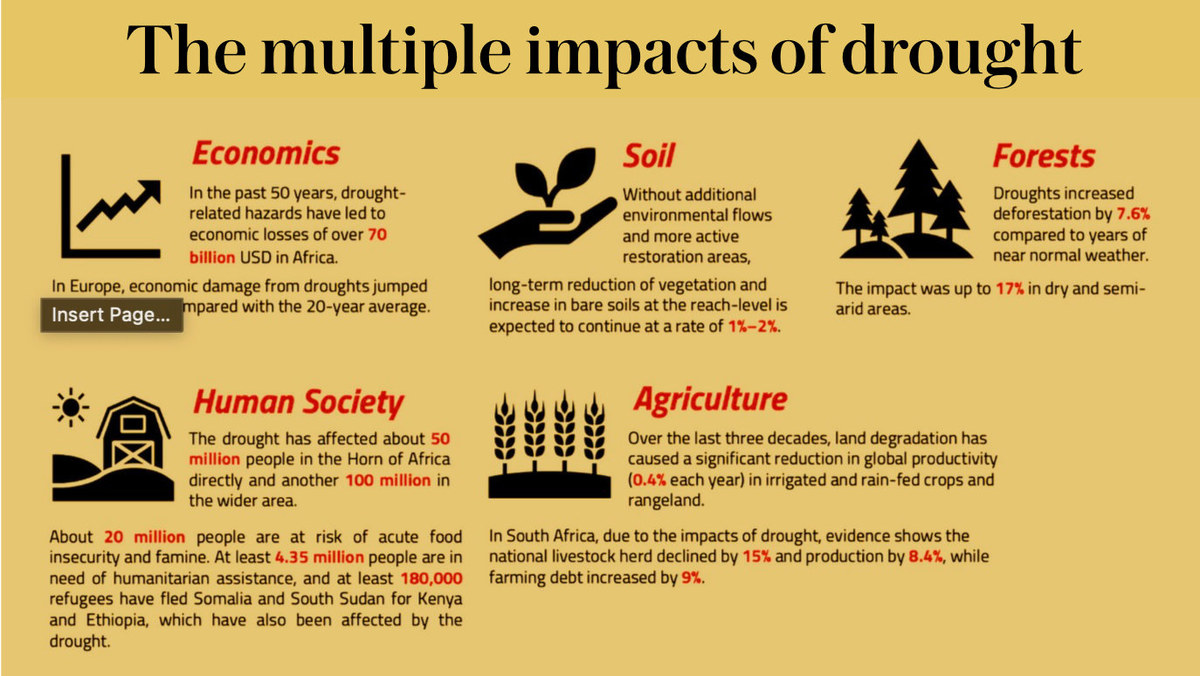
Infographic from the Global Drought Snapshot 2023 report of the International Dought Resilience Alliance and the UN Convention to combat Desertification.
“The next meeting will be held here in Riyadh in December 2024, where the 197 countries will come together at the level of heads of state, at the level of ministers and the level of experts, communities and NGOs and civil society organizations, to discuss just that, namely the consequences of land degradation and drought on the lives and livelihoods of communities.”
Furthermore, experts point out that drought and desertification influence each other. Desertification, the process by which fertile land transforms into arid desert, is another significant challenge confronting countries of the Middle East and North Africa. Unsustainable agricultural practices, overgrazing, deforestation and soil erosion all contribute to the problem.
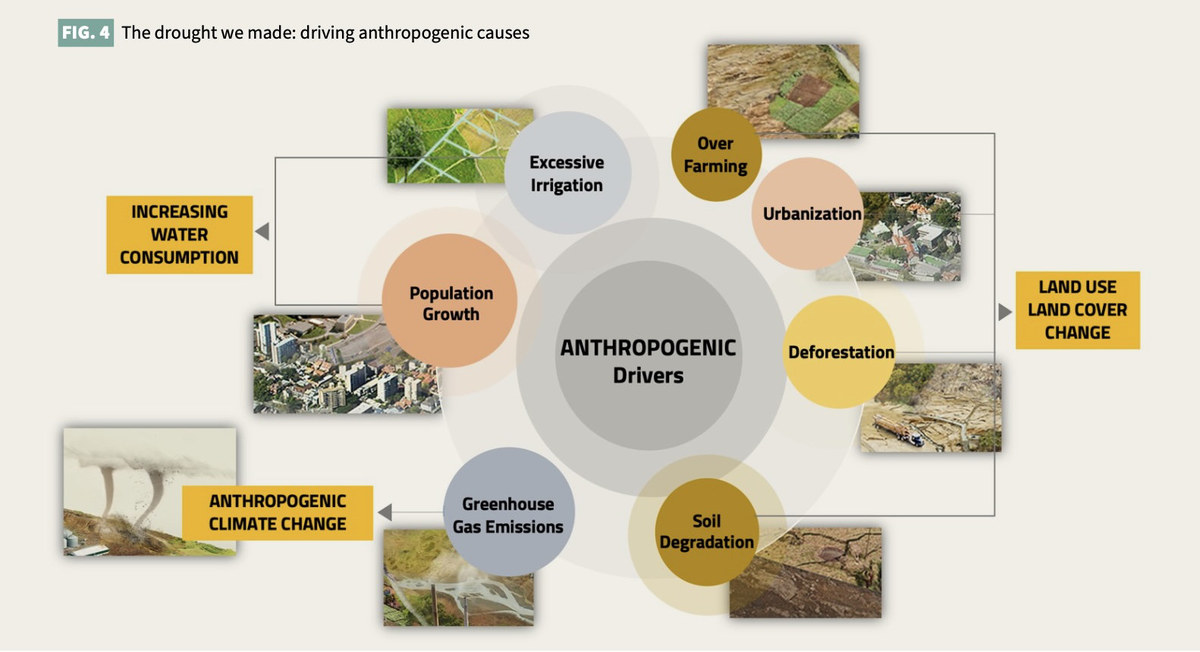
Infographic from the Global Drought Snapshot 2023 report of the International Dought Resilience Alliance and the UN Convention to combat Desertification.
Consequently, arable land is lost and food production decreases, exacerbating the problem of food insecurity. Desertification also leads to the displacement of communities, according to Thaiaw, as people are forced to migrate in search of more habitable areas.
Speaking to Arab News on the occasion of Environment Week in Riyadh, Elizabeth Mrema, deputy executive director of the United Nations Environment Program, offered her views on the crisis of desertification.
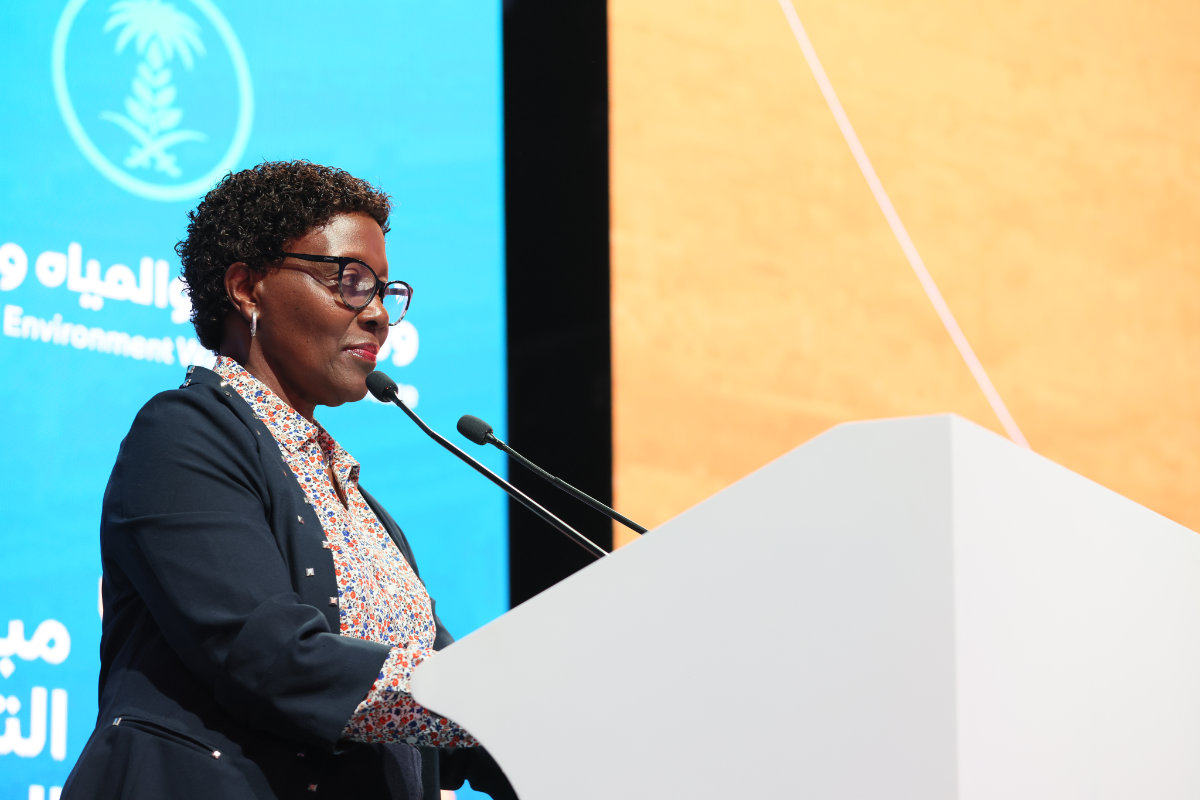
United Nations Environment program’s deputy executive director, Elizabeth Mrema. (Supplied)
“As far as Saudi Arabia is concerned, the country has clearly seen its impact and treated it as a priority for this year. I am saying ‘this year’ because at the UN Environmental Assembly at the end of February, Saudi Arabia took the lead on an initiative to combat degradation. It went through and was adopted, and that was on a global level,” said Mrema.
“Beyond that, this country next month, on June 5, will host World Environment Day. This day is celebrated every year. It is global because it was adopted by the UN General Assembly. This year, it is being hosted by Saudi Arabia.
“This year Saudi Arabia will host the UN Conference to Combat Desertification. It will be hosted here with the theme ‘Our land, our future’ again, Land is the focus.”
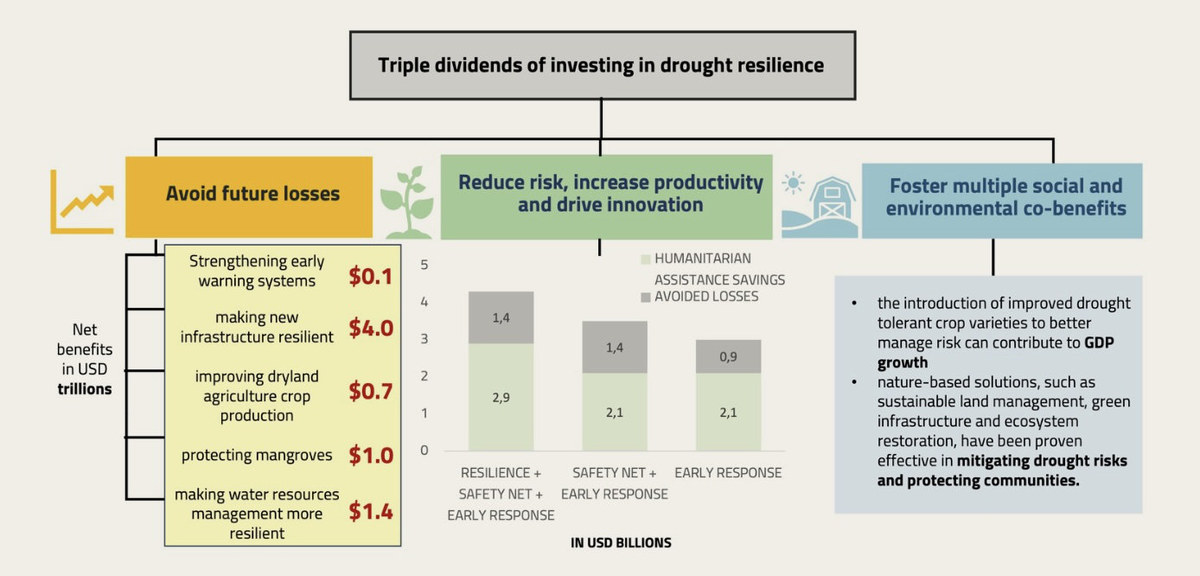
Infographic from the Global Drought Snapshot 2023 report of the International Dought Resilience Alliance and the UN Convention to combat Desertification.
Additionally, the combination of drought and desertification in one area leads to land degradation, further compounding the Middle East's environmental crisis. Soil erosion, salinization, and depletion of soil nutrients are some of the results of land degradation.
As agricultural productivity declines worldwide, farmers face key challenges in securing their livelihoods, in addition to the fact that the environmental problems heighten ecosystem vulnerability, which also leads to biodiversity loss and ecosystem imbalance.
“Saudi Arabia is showing the world that this is a global issue. The initiatives which have been taken by the government in recent years demonstrate the commitment in dealing with these issues,” said Mrema.
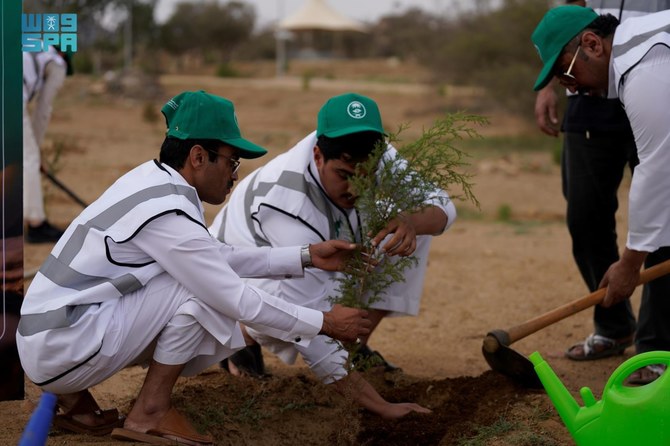
The Saudi Green Initiative Day reflects Saudi Arabia’s vision and dedication to fostering a culture of sustainability (SPA)
“I look at the Saudi Vision 2030, I look at the environmental strategies of 2018, I look at the Saudi Green Initiative. I look at the Middle East Green Initiative with a commitment to reach a regional level to plant 50 billion trees, 10 of which Saudi Arabia has committed to plant in this country. And not in committed in words, but put an institution to lead the road, to make sure that this is happening.”
Addressing the three challenges of drought, desertification and land degradation in the Middle East requires a multifaceted approach. Thiaw and Mrema were of the view that governments, international organizations and local communities need to work together to implement sustainable water management strategies, promote efficient irrigation technologies and invest in renewable energy sources.

Additionally, they said, reforestation efforts and the protection of natural habitats can help reduce desertification and land degradation.
Raising awareness about the importance of sustainable land use practices and supporting affected communities is an important step toward long-term solutions for both the Middle East and North Africa region and the world.
To sum up, countries of the Middle East and North Africa are suffering from effects of intensifying drought, desertification and land degradation. Urgent action is required to reverse this trend and ensure regional environmental sustainability.
By adopting sustainable methods, investing in water management, and promoting conservation actions, communities of the region will be able to reduce the severity of these challenges and assure themselves of a more resilient future.


