Saudi nonprofit sector records 173% growth surge since 2018

1 / 3
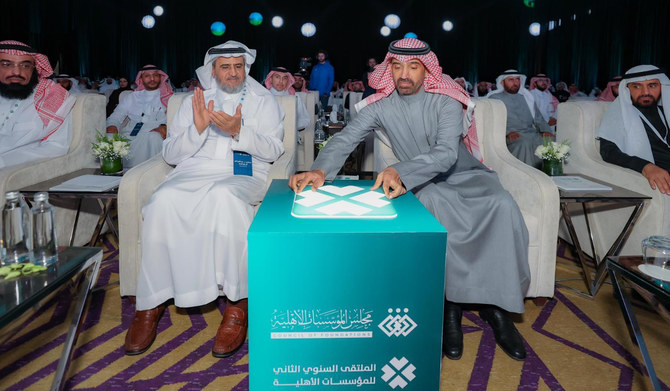
Ahmad Al-Rajhi applauded the center's leadership for supporting the nonprofit sector. (SPA)
2 / 3
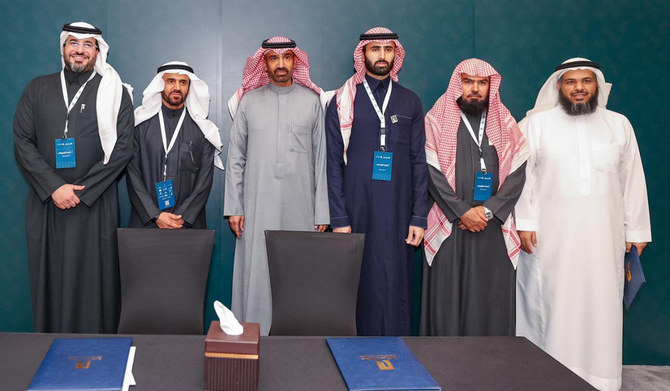
Ahmad Al-Rajhi pose for a group photo with officials. (SPA)
3 / 3
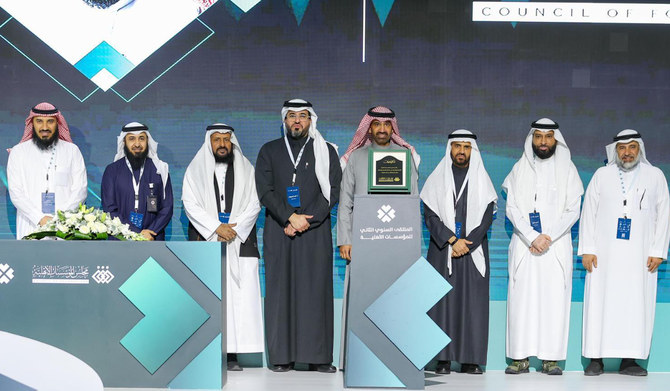
Ahmad Al-Rajhi pose for a group photo with officials. (SPA)
Short Url
Updated 18 February 2024
Follow

Saudi nonprofit sector records 173% growth surge since 2018

  • Al-Rajhi also inaugurated the second Saudi-British Fellowship Program, led by the Leaders Development Co. in collaboration with the University of Manchester, which aims to empower leaders

RIYADH: The Saudi minister of human resources and social development has announced a remarkable 173 percent increase in nonprofit organizations since 2018.

Ahmad Al-Rajhi also noted a surge in beneficiary satisfaction, which has reached 86 percent — surpassing the target for 2025. The number of specialized nonprofit organizations has similarly risen since 2018, with over 800,000 volunteers and government contracts worth SR6 billion ($1.6 billion).


A number of government and nonprofit entities signed memorandums of understanding with the Council of Foundations, observed by Ahmad Al-Rajhi. (SPA)

During the second annual forum for nonprofit organizations, “Partnerships in the Non-Profit Sector,” organized by the Council of Foundations in Riyadh on Sunday, Al-Rajhi emphasized the pivotal role of the council and its collaboration with the National Center for the Non-Profit Sector.

Al-Rajhi, who is chairman of the center’s board, praised the leadership’s support for the nonprofit sector and commended the council’s efforts and achievements which contributed to the realization of Saudi Vision 2030 goals.

HIGHLIGHT

Ahmad Al-Rajhi noted a surge in beneficiary satisfaction, which has reached 86 percent — surpassing the target for 2025.

The Saudi minister witnessed the signing of memorandums of understanding between the Council of Foundations and various government and nonprofit entities. These included agreements with the National Center for Non-Profit Sector, Elm, Prince Mutaib bin Abdulaziz Al-Saud Charitable Foundation, and Leaders Development Co.

He launched several council initiatives, including the Partnerships platform designed to foster nonprofit sector collaborations, and the Intilaqa initiative, which promotes women’s involvement in developmental work within the nonprofit sector and encourages women entrepreneurs to support nonprofit organizations.

Al-Rajhi also inaugurated the second Saudi-British Fellowship Program, led by the Leaders Development Co. in collaboration with the University of Manchester, which aims to empower leaders. In addition, he witnessed the launch of studies and materials aimed at enhancing knowledge and administrative awareness within the nonprofit sector.

Abdulrahman Al-Rajhi, chairman of the Council of Foundations, said the forum sought to boost integration, coordination and knowledge exchange among nonprofit organizations. This edition was focused on increasing awareness about the vital role of partnerships in the nonprofit sector, fostering collaborations with other sectors, and sharing valuable local and global partnership experiences.


Saudi space technology plays growing role in conflict and disaster zones: NSG executive

Hassan Al-Johani, vice president of business development at Neo Space Group, speaks to Arab News at the World Defense Show.
Updated 7 sec ago
Follow

Saudi space technology plays growing role in conflict and disaster zones: NSG executive

  • Company analyzes damage from natural disasters, including flash floods

RIYADH: Saudi-built space systems are moving beyond data collection to play a direct role in operational decision-making, particularly in high-stakes situations like conflict zones and natural disasters, according to one industry executive.

Hassan Al-Johani, vice president of business development at Neo Space Group, spoke on the sidelines of the World Defense Show in Riyadh, which has Arab News as a media partner, about how the company’s technology is used in real-life scenarios.

Al-Johani pointed to disaster management as an example of how integrated space services can directly influence outcomes on the ground.

The company uses high-resolution Earth observation imagery in optical, radio and infrared spectrums, to analyze damage from natural disasters, including flash floods.

He said this information can then be turned into actionable intelligence and shared directly with teams operating in affected areas, allowing them to assess damage to roads and determine the best routes for delivering equipment and emergency aid.

“We can utilize that in geospatial intelligence and communicate it to teams in the field using advanced satellite communications,” Al-Johani said.

The company’s satellite technology allows people to communicate in crisis-hit areas when traditional communication infrastructure has been damaged.

He added: “Even when communication fails, even when there’s disruption in infrastructure, we have the ability to understand what has happened, but also communicate it to people (who) need to take decisions in real time to save lives and property.”

Demonstrations at the World Defense Show, he said, were designed to show how this integrated approach worked in practice.

“We are not promoting one domain or one technology, but rather a unified architecture that brings together the best of the latest technologies,” he said.

The company’s technology has military uses, allowing users to determine the best locations for deploying troops and equipment, and its satellite technology allows secure communications in war zones.

He also highlighted the technical design choices behind ensuring continuity of service, particularly in contested or disrupted environments.

Artificial intelligence, he added, is increasingly part of the company’s system.

“We’re not utilizing just traditional geospatial intelligence, but rather AI-powered intelligence,” Al-Johani said.

This layered approach, he explained, is intended to reduce dependence on any single system or data source.

He added: “If one layer fails, then you have other layers to supplement and ensure the continuity of the value delivered to the clients.”

Beyond technology, Al-Johani said discussions at the World Defense Show reflected a broader shift in how Saudi Arabia approaches the space and defense sectors.

“Saudi Arabia has demonstrated that we are not looking to be buyers, but rather partners and builders,” he said.

“That means that we have to have an engaging dialogue with partners from around the world, understanding which parts of the ecosystem we need to build on.”

He said this approach ultimately supported local capability building and long-term sector development, adding that it was targeted at “finding a meaningful partnership that delivers win-win for everyone, (and) ultimately contributes to building this country, this industry and the space sector.”