


DUBAI: Yemen’s Iran-backed Houthis fired three missiles at two merchant ships in the Red Sea on Wednesday in their latest attack in the commercially vital waterway, the White House said.
The report came after the Houthis vowed to keep up their attacks despite repeated US and British strikes against them.
One missile missed its target and a US Navy destroyer shot down the other two, National Security Council spokesman John Kirby said.
The continuing Houthi action “means we’re obviously still going to have to do what we have to do to protect that shipping,” he added.
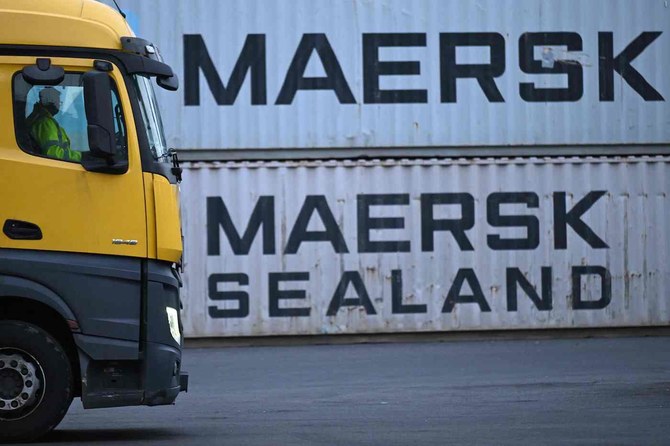
US Central Command said the missiles were fired “toward the US-flagged, owned, and operated container ship M/V Maersk Detroit” without mentioning a second vessel being targeted.
No injuries or damage to the ship were reported, CENTCOM added.
Danish shipping giant Maersk earlier said two ships belonging to a US subsidiary and bound for the Red Sea turned back after hearing explosions while transiting the Bab Al-Mandeb strait between the Horn of Africa and the Arabian Peninsula.
A US navy escort accompanying the Maersk Detroit and the Maersk Chesapeake also “intercepted multiple projectiles,” the company said.
“The crew, ship, and cargo are safe and unharmed. The US Navy has turned both ships around and is escorting them back to the Gulf of Aden,” it added.
United Kingdom Maritime Trade Operations, a security agency run by Britain’s navy, said it had received reports of “an explosion approximately 100 meters” from a vessel 50 nautical miles south of the Yemeni port of Mokha, which overlooks Bab Al-Mandeb.
British maritime risk management company Ambrey corroborated the UKMTO and Maersk reports, adding that both vessels had last called in Oman.
Houthi attacks since mid-November have disrupted trade in the Red Sea, which connects Europe and Asia and carries around 12 percent of international maritime traffic.
The rebels say they are targeting Israeli-linked vessels in support of Palestinians in Gaza, which has been ravaged by the Hamas-Israel war that has inflamed tensions across the Middle East.
Several shipping firms have diverted away from the Red Sea, instead taking the longer and more expensive route around the Cape of Good Hope in South Africa.
It follows difficult years for the industry during the Covid-19 pandemic, when freight rates reached unprecedented levels due to blockages in supply chains.
The United States and Britain have carried out two rounds of joint strikes this month aimed at reducing the Houthis’ ability to target shipping.
The US military has also launched a series of unilateral air raids on the militia’s missiles.
It said its latest strikes early on Wednesday destroyed two Houthi missiles that posed an “imminent threat” to ships in the area.
The Houthis have reacted to the US and UK strikes with defiance, firing at more ships and declaring American and British interests to be legitimate targets.
Washington is also seeking to put diplomatic and financial pressure on the Houthis, redesignating them as a terrorist organization last week after dropping that label soon after President Joe Biden took office.


