

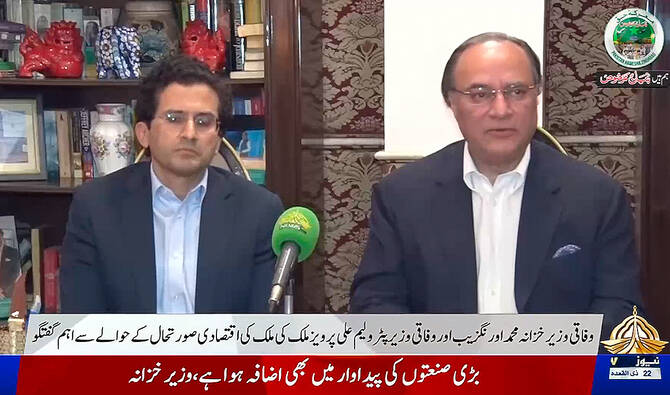

ISLAMABAD: Pakistan expects to access Chinese capital markets through its first Panda Bond issuance next week, Finance Minister Muhammad Aurangzeb said on Saturday, as the country seeks to strengthen external financing amid rising energy import costs linked to the Iran war and disruptions around the Strait of Hormuz.
Pakistan, which relies heavily on imported fuel and liquefied natural gas (LNG), has faced mounting pressure on its external account since the conflict disrupted regional energy routes earlier this year.
The government has sought to stabilize the economy under an International Monetary Fund (IMF) program while managing higher oil import costs and maintaining foreign exchange reserves.
“God willing, next week you will hear the good news that for the first time we will be accessing Chinese capital markets through Panda Bond,” Aurangzeb said during a televised news conference with Petroleum Minister Ali Pervaiz Malik.
The remarks came a day after the IMF executive board approved two loan disbursements worth about $1.32 billion for Pakistan under its ongoing support programs.
Aurangzeb said Pakistan expected its foreign exchange reserves to reach a level equivalent to three months of import cover by the end of June, while stressing that the government remained focused on maintaining macroeconomic stability despite regional uncertainty.
“Between March and April, our import bill on oil has exceeded $1 billion,” he said.
Despite these challenges, the minister said Pakistan expected its economy to grow close to 4 percent during the current fiscal year, compared with 3.1 percent growth last year.
Meanwhile, the petroleum minister said Pakistan had managed to avoid fuel shortages despite severe disruptions in regional energy markets.
He said Saudi Arabia had continued crude oil supplies through Red Sea routes after shipments through the Strait of Hormuz were disrupted, while Kuwait and other regional partners had also helped maintain fuel availability.
Malik said Pakistan expected positive developments on LNG supplies within days, suggesting the country may avoid expensive spot market purchases.
“In a day or two, you will also get the good news that we did not have to go and buy RLNG for 18 to 20 dollars,” he said, referring to re-gasified liquefied natural gas.
Aurangzeb cautioned that the economic impact of the war in Iran would linger even if the conflict eased soon.
“Even if it ends tomorrow morning ... because the energy infrastructure has been hit, it will still take months to recover and go back to the situation where we were,” he said.


