Israel ready ‘for any scenario’ after strike kills Hamas deputy in Lebanon

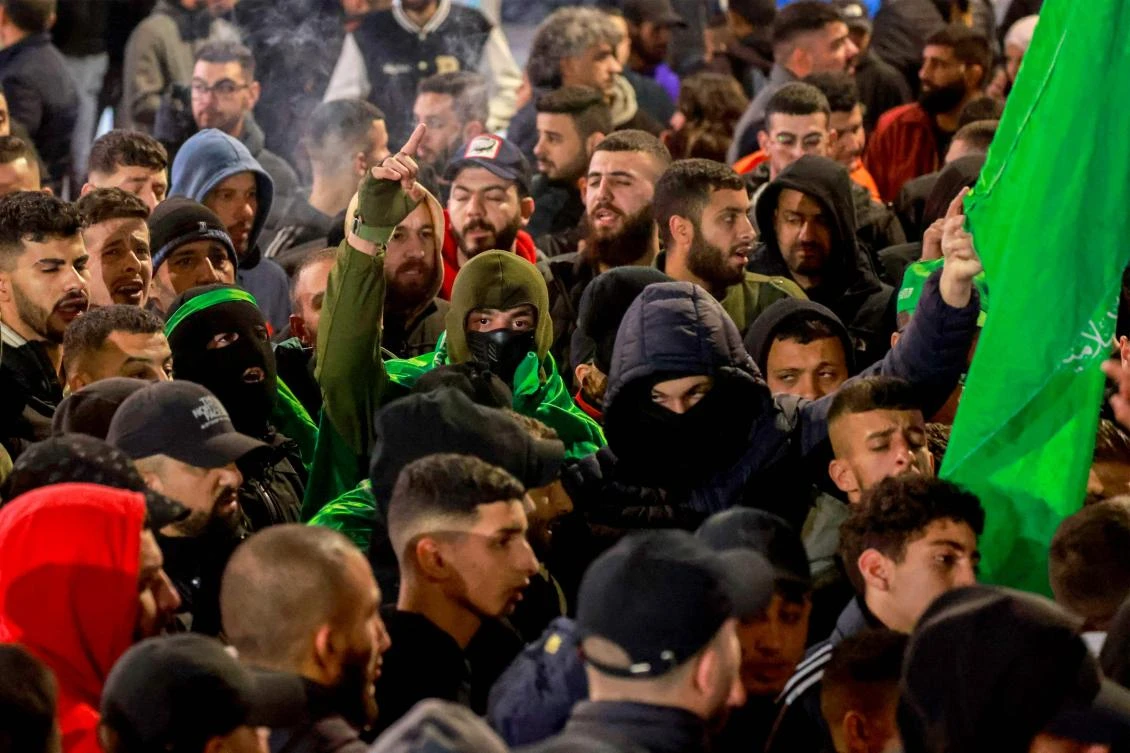
Palestinian Hamas suporters in the West Bank city of Ramallah protested on Jan. 2, 2024, against the Israeli strike in Lebanon that killed Hamas’ deputy leader Saleh Al-Aruri earlier. (AFP)
Short Url
Updated 03 January 2024
Follow

Israel ready ‘for any scenario’ after strike kills Hamas deputy in Lebanon

  • Israel’s army say soldiers in Gaza killed ‘dozens of terrorists’ in fighting on Tuesday
  • Fears grow of war spreading after Lebanon attacks

Jerusalem: The Israeli army has said it is “prepared for any scenario” after a strike in Beirut that killed Hamas’s deputy chief, stoking fears the war in the Gaza Strip could boil over into wider regional conflict.
A high-level security official in Lebanon told AFP that Saleh Al-Aruri was killed along with his bodyguards in a strike by Israel, which has vowed to destroy Hamas after the movement’s shock October 7 attacks.
A second security official confirmed the information, while Hamas TV also reported Israel had killed Aruri in Lebanon.
Israeli army spokesman Daniel Hagari did not directly comment on the killing, but said afterwards that the military was in “very high state of readiness in all arenas, in defense and offense. We are highly prepared for any scenario.”
Israel has previously announced the deaths in Gaza of Hamas commanders and officials during the war, but Aruri is the most high-profile figure to be killed, and his death came in the first strike on the Lebanese capital since hostilities began.
The strike adds to widespread fears that the nearly three-month-old Israel-Hamas war could become a wider regional conflagration.
Hamas said Aruri’s death would not lead to its defeat, while its Lebanon-based ally Hezbollah vowed the killing would not go unpunished, calling it “a serious assault on Lebanon... and a dangerous development.”
Lebanese Prime Minister Najib Mikati condemned the killing and said it “aims to draw Lebanon” further into the war.
Aruri, who lived in exile, is accused by Israel of masterminding numerous attacks.
Following his death, Hamas chief Ismail Haniyeh said that a movement “whose leaders fall as martyrs for the dignity of our people and our nation will never be defeated.”
Hamas’s bloody October 7 attack on Israel resulted in the deaths of around 1,140 people, most of them civilians, according to an AFP tally based on official Israeli figures.
Militants also took around 250 hostages back to Hamas-ruled Gaza, of whom 129 remain in captivity, according to Israeli figures.
After the attack, the worst in its history, Israel began a relentless bombardment and ground offensive that has killed at least 22,185 people, mostly women and children, according to Gaza’s health ministry.
Israel’s army said soldiers in Gaza had killed “dozens of terrorists” in fighting on Tuesday, and had also raided a weapons storage compound in the southern city of Khan Yunis.
In the aftermath of a strike on the Nuseirat refugee camp in central Gaza, Palestinians rushed to rescue victims and retrieve bodies from the rubble.
“There are about 12 martyrs until now, mostly children. What was their fault? Among them my one-month-old son, what did he do to Israel?” asked Ghazi Darwish. “My other son is five years old, he was also martyred.”
Further south in Khan Yunis, the Palestine Red Crescent Society said Israel had twice struck its headquarters, resulting in “five casualties and three injuries” among displaced people who had sought refuge there and at a nearby hospital.
“They told us to go to the south, which is safe, but they are liars,” shouted Fathi Al-Af, pointing to his wounded daughter on a stretcher on the floor of Nasser Hospital after the Red Crescent strike.
The head of the World Health Organization (WHO) denounced the alleged strikes as “unconscionable.”
The strikes in Khan Yunis continued overnight into Wednesday morning, with the Hamas health ministry reporting “numerous” deaths.
United Nations agencies have voiced alarm over Gaza’s spiralling humanitarian crisis, which has left 2.4 million people under siege, most of them displaced and crowded into shelters and tents during winter rains.
“Hamas people are hiding in their houses and the tunnels, while we don’t find food or drink and are dying of cold,” said Wojud Kamal Al-Shinbary, who like many Gazans had made her way to Rafah, in the far south.
The WHO has warned of the risk of famine and disease, with only a minimal amount of aid entering.
On Tuesday the UK said a British ship had delivered 87 tons of Gaza aid to Egypt from Cyprus, the first shipment via a new maritime corridor from the Mediterranean island.

In the occupied West Bank, where the official Palestinian news agency Wafa reported multiple Israeli operations overnight, AFPTV images showed scores of people in the streets of Ramallah to protest at Aruri’s killing.
Palestinian prime minister Mohammad Shtayyeh also condemned the killing, and warned about the “risks and consequences that could follow,” his office said.
Israeli strikes in neighboring countries on groups acting in support of Hamas have fanned fears of a wider conflict.
In a call with Israeli war cabinet member Benny Gantz after Aruri’s killing, French President Emmanuel Macron urged Israel to “avoid any escalatory attitude, particularly in Lebanon.”
A strike inside Syria last month that was blamed on Israel killed a senior commander of the foreign operations arm of Iran’s Islamic Revolutionary Guard Corps.
Yemen’s Iran-backed Houthi rebels, meanwhile, have also launched attacks at Israel and against cargo ships in the Red Sea in solidarity with Hamas, with the US military assembling a multinational task force to protect the vital shipping lane.
The Houthis fired two missiles late Tuesday toward merchant ships traveling in the Red Sea near the strategic Bab el-Mandeb Strait, the US military said, though no ships in the area reported damage.
The French mission to the UN said the Security Council — of which France and the United States are permanent members — would discuss the Houthi attacks in a meeting on Wednesday.
burs-smw/mtp

Syrian army pushes into Aleppo district after Kurdish groups reject withdrawal

Updated 55 min 21 sec ago
Follow

Syrian army pushes into Aleppo district after Kurdish groups reject withdrawal

  • Two Syrian security officials told Reuters the ceasefire efforts had failed and that the army would seize the neighborhood by force

ALEPPO, Syria: The Syrian army said it would push into the last Kurdish-held district of Aleppo ​city on Friday after Kurdish groups there rejected a government demand for their fighters to withdraw under a ceasefire deal.
The violence in Aleppo has brought into focus one of the main faultlines in Syria as the country tries to rebuild after a devastating war, with Kurdish forces resisting efforts by President Ahmed Al-Sharaa’s Islamist-led government to bring their fighters under centralized authority.
At least nine civilians have been killed and more than 140,000 have fled their homes in Aleppo, where Kurdish forces are trying to cling on to several neighborhoods they have run since the early days of the war, which began in 2011.

HIGHLIGHTS

• Standoff pits government against Kurdish forces

• Sharaa says Kurds are ‘fundamental’ part of Syria

• More than 140,000 have fled homes due to unrest

• Turkish, Syrian foreign ministers discuss Aleppo by phone

ِA ceasefire was announced by the defense ministry overnight, demanding the withdrawal of Kurdish forces to the Kurdish-held northeast. That would effectively end Kurdish control over the pockets of Aleppo that Kurdish forces have held.

CEASEFIRE ‘FAILED,’ SECURITY OFFICIALS SAY
But in a statement, Kurdish councils that run Aleppo’s Sheikh Maksoud and Ashrafiyah districts ‌said calls to leave ‌were “a call to surrender” and that Kurdish forces would instead “defend their neighborhoods,” accusing government forces ‌of intensive ⁠shelling.
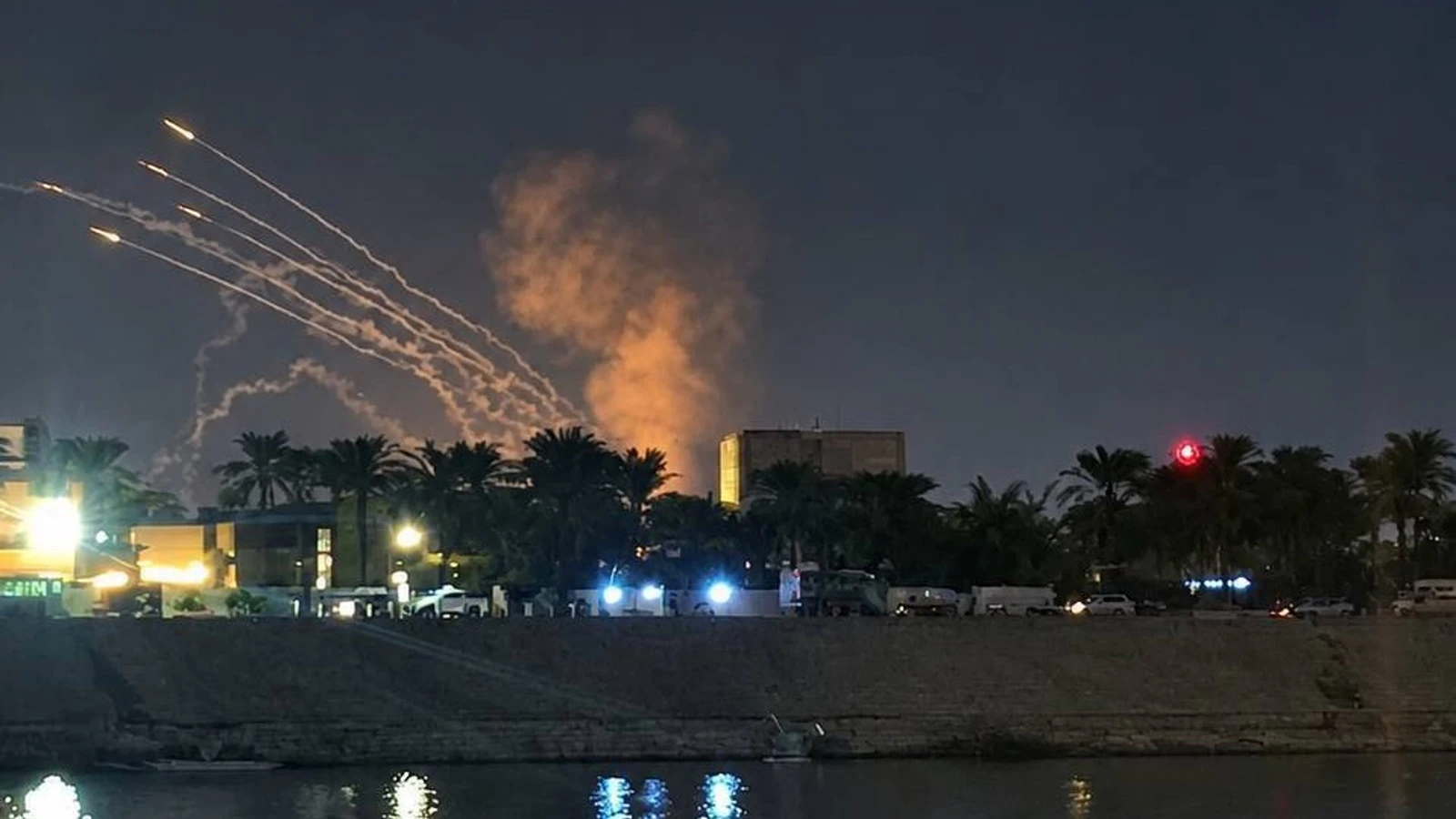
Hours ​later, the ‌Syrian army said that the deadline for Kurdish fighters to withdraw had expired, and that it would begin a military operation to clear the last Kurdish-held neighborhood of Sheikh Maksoud.
Two Syrian security officials told Reuters the ceasefire efforts had failed and that the army would seize the neighborhood by force.
The Syrian defense ministry had earlier carried out strikes on parts of Sheikh Maksoud that it said were being used by the Kurdish-led Syrian Democratic Forces (SDF) to launch attacks on the “people of Aleppo.” It said on Friday that SDF strikes had killed three army soldiers.
Kurdish security forces in Aleppo said some of the strikes hit a hospital, calling it a war crime. The defense ministry disputed that, saying the structure was a large arms depot and that it had been destroyed in the resumption of strikes on Friday.
It ⁠posted an aerial video that it said showed the location after the strikes, and said secondary explosions were visible, proving it was a weapons cache.
Reuters could not immediately verify the claim.
The SDF is ‌a powerful Kurdish-led security force that controls northeastern Syria. It says it withdrew its fighters from ‍Aleppo last year, leaving Kurdish neighborhoods in the hands of the Kurdish ‍Asayish police.
Under an agreement with Damascus last March the SDF was due to integrate with the defense ministry by the end of 2025, ‍but there has been little progress.

FRANCE, US SEEK DE-ESCALATION
France’s foreign ministry said it was working with the United States to de-escalate.
A ministry statement said President Emmanuel Macron had urged Sharaa on Thursday “to exercise restraint and reiterated France’s commitment to a united Syria where all segments of Syrian society are represented and protected.”
A Western diplomat told Reuters that mediation efforts were focused on calming the situation and producing a deal that would see Kurdish forces leave Aleppo and provide security guarantees for Kurds who remained.
The diplomat ​said US envoy Tom Barrack was en route to Damascus. A spokesperson for Barrack declined to comment. Washington has been closely involved in efforts to promote integration between the SDF — which has long enjoyed US military support — and Damascus, with which the ⁠United States has developed close ties under President Donald Trump.
The ceasefire declared by the government overnight said Kurdish forces should withdraw by 9 a.m. (0600 GMT) on Friday, but no one withdrew overnight, Syrian security sources said.
Barrack had welcomed what he called a “temporary ceasefire” and said Washington was working intensively to extend it beyond the 9 a.m. deadline. “We are hopeful this weekend will bring a more enduring calm and deeper dialogue,” he wrote on X.

TURKISH WARNING
Turkiye views the SDF as a terrorist organization linked to the outlawed Kurdistan Workers’ Party and has warned of military action if it does not honor the integration agreement.
Turkish Foreign Minister Hakan Fidan, speaking on Thursday, expressed hope that the situation in Aleppo would be normalized “through the withdrawal of SDF elements.”
Though Sharaa, a former Al-Qaeda commander who belongs to the Sunni Muslim majority, has repeatedly vowed to protect minorities, bouts of violence in which government-aligned fighters have killed hundreds of Alawites and Druze have spread alarm in minority communities over the last year.
The Kurdish councils in Aleppo said Damascus could not be trusted “with our security and our neighborhoods,” and that attacks on the areas aimed to bring about displacement.
Sharaa, in a phone call with Iraqi Kurdish leader Masoud Barzani on Friday, affirmed that the Kurds were “a fundamental part ‌of the Syrian national fabric,” the Syrian presidency said.
Neither the government nor the Kurdish forces have announced a toll of casualties among their fighters from the recent clashes.