


RIYADH: Saudi Arabia is currently one of the biggest producers of camel milk and a host of new ventures are making the business a lucrative one in the transformation of the country’s economy.
The Kingdom has an annual output of approximately 0.271 million tons of the product, and Saudi Arabia’s sovereign wealth fund has set up a new firm, Sawani Co., to catalyze the growth of the sector as part of its efforts to transform the country’s economy.
The move comes at a time when the Public Investment Fund’s various investments in the Saudi food and agriculture sector to support its produce industries gain momentum.
“Saudi Arabia has extensive experience and knowledge of the camel dairy industry, and enormous potential to expand its operational capabilities and wider ecosystem,” said Majed Al-Assaf, head of Consumer Goods and Retail in the Middle East and North Africa Investments Division at PIF, in a statement.
He added: “These factors represent a competitive advantage across the entire supply chain, which will enable significant growth of the industry, and eventually lead to the export of camel dairy products to regional and global markets.”

Ahmed Gamaleldeen, CEO of Sawani, affirmed the company’s position in its sector, telling Arab News: “Sawani Co. has an essential role to play in elevating standards within the camel dairy sector. Based in Saudi Arabia with a global reach, our organization seeks to actively contribute to the development of the sector, highlighting the merit of camel-based products from both a health and commercial standpoint.”
He added: “We are committed to raising awareness of camel products through our operations and initiatives, helping to continue a longstanding tradition of sustainable camel milk production to serve Saudi Arabia, the region and other parts of the world.”
While seeking to become a leading producer of camel dairy products, the company will also place sustainability at the center of all stages of production, distribution, and marketing as well as raise awareness of the health benefits of camel dairy products among consumers.
Sawani looks to work with the private sector to boost production capacity and drive sustainable growth of the camel dairy industry.
This includes raising the standards of the domestic production ecosystem through modernizing operations and introducing best scientific practices, improving knowledge localization and transfer and investing in the sector’s latest manufacturing technologies.

Saudi Arabia has extensive experience and knowledge of the camel dairy industry, and enormous potential to expand its operational capabilities and wider ecosystem.
Majed Al-Assaf, head of Consumer Goods and Retail in the Middle East and North Africa Investments Division at PIF
Highlighting the company’s aspirations within the camel dairy industry, Gamaleldeen said Sawani has both regional and international ambitions.
“With a myriad of health benefits associated with camel-based products, our aim is to showcase the product’s commercial viability as a solution for consumers who are lactose intolerant, diabetic or seeking nutrient-dense dairy products,” he said.
The CEO added that Sawani’s long-term strategy is rooted in “Saudi Arabia’s rich camel heritage and sustainable cohesion with one of nature’s most loyal and giving creatures.”
According to research company IMARC, the camel dairy market across the Gulf Corporate Council region reached a value of $702.4 million in 2022, and is expected to see a compound annual growth rate of 4.51 percent from 2023 to 2028.
Camels have long served as a crucial food, natural and cultural resource of the Middle East region.
They provide meat and milk as well as play a role in heritage rituals throughout Saudi Arabia and the greater Middle East. It is estimated that there are around 1.6 million camels in the Kingdom, with over half residing in the provinces of Riyadh, Makkah and the Sharqiya or Eastern Province.
Compared to cow’s milk, camel’s milk has lower levels of fat – perfect for those who are wishing to maintain a healthier lifestyle.

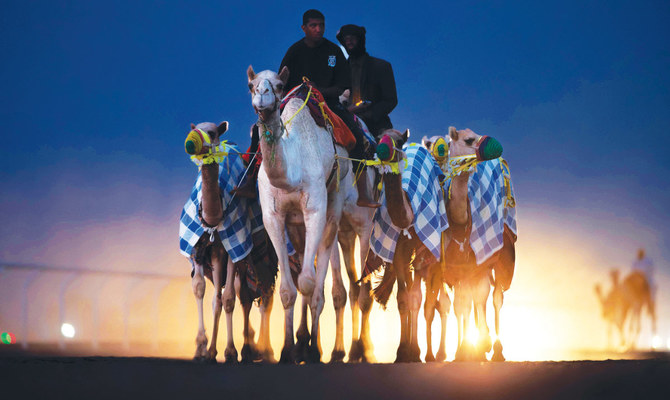
Sawani looks to work with the private sector to boost production capacity and drive sustainable growth of the camel dairy industry. (Supplied)
It contains high amounts of vitamins A, B, E and C, and is also rich in calcium, iron, protein and antioxidants.
The UN Food and Agriculture Organization has endorsed products made from camel milk, saying such goods are greater in nutritional value than goat and cow’s milk in terms of vitamins, minerals and protein.
The Kingdom’s investment in the industry reflects Saudi Vision 2030 to diversify the economy away from its reliance on hydrocarbons.
In the Kingdom, three licensed projects are specializing in camel milk and its various uses, while three other initiatives have been granted preliminary licenses to manufacture consumable camel milk products.

We are committed to raising awareness of camel products through our operations and initiatives, helping to continue a longstanding tradition of sustainable camel milk production.
Ahmed Gamaleldeen, CEO of Sawani
According to Shujaa Al-Bogmi, an associate professor at Imam Mohammad Ibn Saud Islamic University, Sawani’s investment in the camel industry will have a great impact on the growth of the market both locally and internationally.
It will not only raise the production standards for products made from camel milk, but also result in an increased demand for the products from the Gulf region.
An eagerness to make products from camel milk has already jump-started in the Kingdom.
In September, Sawani launched Noug, the first camel milk café opened in Riyadh, specializing in milk, cheese, butter and even gelato.
HIGHLIGHT
The Kingdom has an annual output of approximately 0.271 million tons of the product, and Saudi Arabia’s sovereign wealth fund has set up a new firm, Sawani Co., to catalyze the growth of the sector as part of its efforts to transform the country’s economy.
As IMARC noted in its report, the increasing awareness of the health benefits of camel milk as well as the potential of the market for the product make it a favorable investment opportunity for government initiatives and a crucial catalyst for growth.
Investment in the market also has the potential to promote sustainable farming practices in the Kingdom.
To this end, Sawani is offering financial incentives and subsidies to encourage the growth of the camel dairy sector. Such support extends to both large-scale commercial farms and small-scale farmers, promoting inclusivity and sustainable growth in the industry.
As Gamaleldeen notes: “Sawani Company is dedicated to driving growth in Saudi Arabia’s camel dairy sector. As consumers become aware of the health benefits of camel-based dairy products, we aim to amplify awareness of products, ethically sourced from an animal that has remained a source of pride for the people of the Kingdom.”


